Original article: Ucrania y mercenarios
By Vladimir Belinsky, Russian Ambassador
Those following international developments are noticing that the conflict in Ukraine is nearing its conclusion. Several factors support this perspective and warrant closer examination of the future.
The most significant point was raised by President Putin during the Valdai Forum, noting that Russian troops advanced 2.5 times more in September than in previous months.
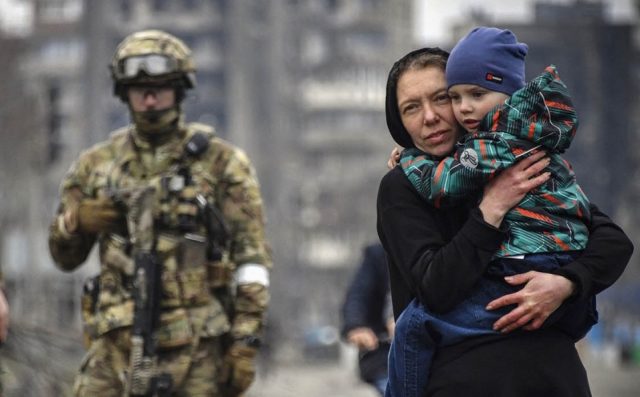
In addition to this objective situation, there has been a marked shift in the activities of the Ukrainian Armed Forces. As they lose ground, they are resorting to terrorizing the Russian population with increased attacks on civilians (422 fatalities reported from April to June compared to 266 in January to March), as well as targeting civil infrastructures such as refineries (15 attacks in August versus 13 and 9 in the previous two months) – clear indicators of terrorist methods.
It’s important to note that Russia is not in a rush to escalate the situation, since territory is not the primary goal – it’s enough to mention that our country occupies one-seventh of the planet’s land mass. The real objective is to eliminate the causes of the conflict, ensuring the safety of both our military and civilians on both sides.
Speaking of causes, they involve demilitarizing and denazifying Ukraine, which over 35 years of lost sovereignty has become a “sort” of anti-Russia, reducing its role on the world stage to a mere proxy for the West in its war against our country.
Despite efforts to silence some facts, it cannot be forgotten that the bloody coup in Kyiv in 2014 unleashed a war against everything Russian. Massive bombings targeted the population of Donbass, labeled as “species” whose fate, according to Zelensky’s formula, was a “suitcase – train – Russia.”
The Russian language and media were banned, journalists were murdered; Orthodox churches were destroyed, and priests were assaulted; and even Russian culture faced obliteration through the burning of works by Dostoevsky, Tolstoy, Chekhov, among others. This conduct echoes what we last saw under the Third Reich… What else could it be but a new form of Nazism serving geopolitical interests?
I must also mention the actions of Ukrainian embassies in this regard. They engage little other than denigrating Russia and whitewashing the crimes of the regime in Kyiv, attempting to “cancel” Russian culture and shut down Russian Houses. Overall, they are propagating this hybrid war against our country to neutral or friendly nations, pushing for the internationalization of the conflict to far-flung regions.
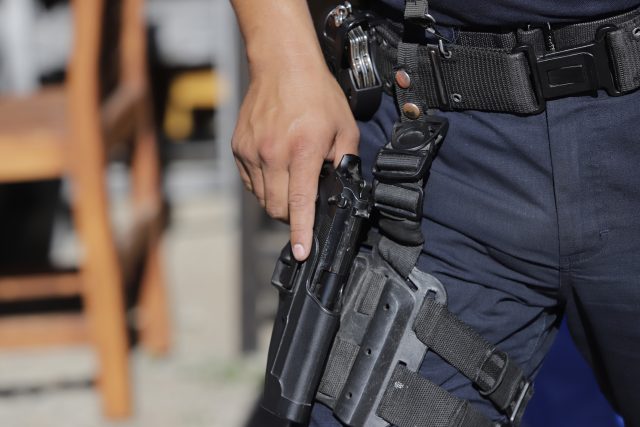
Another sign of urgency driven by the defeatism gripping the streets of Kyiv is the involvement of Ukrainian embassies in promoting mercenaries. They are searching worldwide for fighters, as the fight “to the last Ukrainian” imposed by Western sponsors is reaching its end.
In this context, they attract individuals, primarily from vulnerable sectors, who end up as “cannon fodder” in a foreign war. Several neighboring countries have already banned this practice, as it directly involves security issues and the fight against organized crime, among other concerns.
Foreign Minister Lavrov explicitly addressed this: “Mercenarism is a dangerous practice; it comprises individuals who only know how to commit terrorist acts, shoot, and kill. Ultimately, when their mission in any country concludes, they are left to go elsewhere to commit violence and are likely to return home eventually.”
To summarize, I would like to mention a well-known example of the “boomerang effect.” Al-Qaeda and Bin Laden were cultivated in Afghanistan from the 1980s against the USSR. Later, in the late 1990s, they were used in the Caucasus to destabilize the situation in Russia. And on September 11, 2001, that same group returned to New York to bring down the Twin Towers.
In this sense, there is no evil that is “good,” as Nazism and terrorism are equally repugnant to all. To prevent history from repeating itself, we must learn from its lessons.
Vladimir Belinsky, Russian Ambassador
Obtén tu Pasaporte y apoya a El Ciudadano
Elimina la publicidad, accede a contenido exclusivo y sé parte de la comunidad.
Cancela en cualquier momento · Sin permanencia