Original article: “Un cachetazo a la universidad pública”: rectores y sindicatos responden al nuevo recorte de Milei con paro y marcha federal
University Leaders and Unions Protest Javier Milei’s Funding Cuts with Nationwide Strike and March
«It’s a slap in the face to public universities.» With this statement, Alejandra Zinni, rector of the National University of Quilmes, encapsulated the widespread discontent within the Argentine university system following the recent funding cuts implemented by Javier Milei‘s administration, leading to a call for a nationwide strike and march in response.
In yet another negotiation meeting, the far-right government offered the same minimal increase of 3% that had already been rejected at the beginning of September. This increment was deemed extremely inadequate given a debt that hovers around 32% and which the government is legally obligated to address according to funding regulations passed nearly a year ago.
Rather than finding common ground, the meeting further exacerbated the divide. According to reports from Página/12, libertarian officials insist they are acting within the law, but the reality proves otherwise. Members of the university community feel that this lack of action represents «a disrespect,» «an assault on sector workers,» and «a mockery.»
Strike Actions and a New Nationwide March
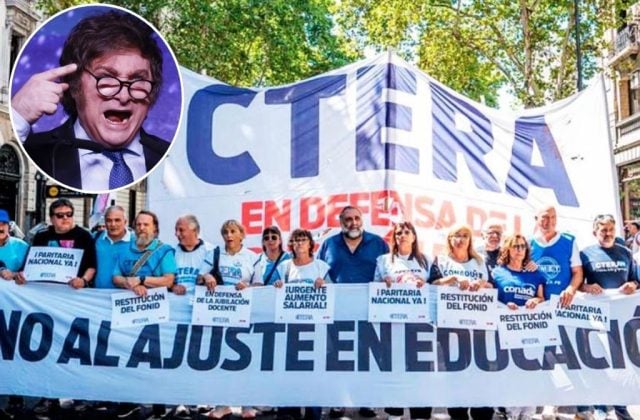
Last Friday, a strike took place, and another one is scheduled for next Tuesday across all national universities. The University of Buenos Aires (UBA) has announced a series of measures for 23 days, including rotating strikes beginning this Monday at the rectorate, continuing on Tuesday at the School of Medicine, Wednesday at Architecture and Design, Thursday at Pharmacy and Biochemistry, and Friday at Engineering. This plan is set to extend until October 22.
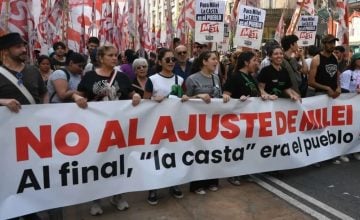
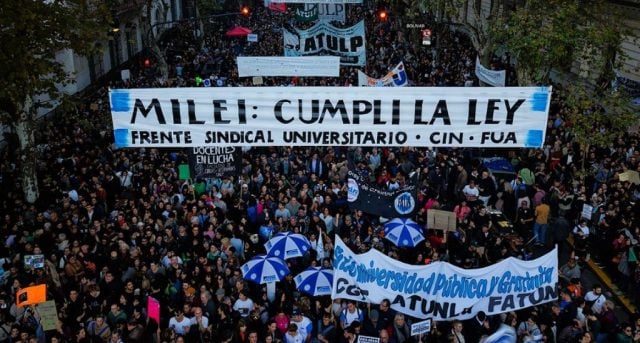
A general announcement has also been made for the fifth nationwide university march on Thursday, October 15, although the exact location is yet to be determined; some suggest Plaza de Mayo, others the courts, or the Congress.
Anselmo Torres, rector of the National University of Río Negro and vice president of the National Interuniversity Council, labeled the negotiations as «a total failure.»
«They repeated the same proposals from the previous meeting. Naturally, the response from all unions, both teaching and non-teaching, was negative. It didn’t even cover inflation since June, which was when we last received an increase,» he stated in comments reported by Página/12.
«The march for October 15 has been agreed upon, but the location is still unclear, and that is what we will decide in upcoming meetings,» he emphasized.
Clara Chevalier, general secretary of Conadu, was even more critical: «It was shameful; it will go down as one of the darkest pages in the history of our national education system.»
She expressed her discontent regarding how the so-called «libertarian» administration summoned them merely to «repeat what they had already said» and pointed out that «the tone and atmosphere maintained by the authorities from the Undersecretariat of University Policies is not suitable for a negotiation session.«
For this reason, she called on the public to join the protests to demonstrate that «universities are a heritage we do not want to lose.»
A Budget That Does Not Ensure University Operations
Another demand from the faculty relates to the budget for 2027 presented by Milei, which aims to allocate 4 trillion Argentine pesos less than what has been requested for the sector.
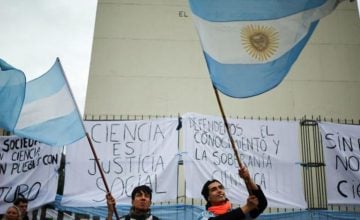
While educational institutions are requesting 11 trillion pesos, the government has offered only 7.5 trillion, representing a 32% cut. This gap puts universities on the brink of closure and revives fears of suspending classes in the first semester of next year.
«With great difficulty, universities will be able to pay salaries, and there won’t be any funds left for general operations (electricity, water, security, etc.), much less for other activities,» warned Página/12.
When compared to past decades, the budget allocated to the university sector stands at only 0.53 percent of GDP, significantly lower than the 0.87 percent in 2015. If the proposed budget is confirmed, operational expenses will decrease by 50 percent, and scholarships by 70 percent compared to 2023.
In this regard, Alejandra Zinni denounced that the sector has been without government compliance with the funding law for over 330 days, and that the proposal presented is insufficient to ensure operational viability.
«The national budget law has been presented, and again what we see is a sustained deficit. It is meager, sorrowful, and shows a profound ignorance of the higher education system. It does not provide for a substantial restoration of salaries or operational expenses, investments in science and technology, or infrastructure,» she criticized.
«It’s a slap in the face to public universities and the chances for upward social mobility,» concluded the rector of the National University of Quilmes.
Featured Image: Agencia 4P.
Obtén tu Pasaporte y apoya a El Ciudadano
Elimina la publicidad, accede a contenido exclusivo y sé parte de la comunidad.
Cancela en cualquier momento · Sin permanencia
Artículos Relacionados
Milei Responds to Nationwide Teacher Strike with Inspections and Threats of Fines Against Unions
Hace 2 meses