Original article: ¿Qué quedó realmente de Octubre? Aprendizajes de la Revuelta desde la periferia poniente de Santiago, donde producir pan era producir pueblo
By José Luis Riquelme Salazar and Manuel Núñez Carrasco
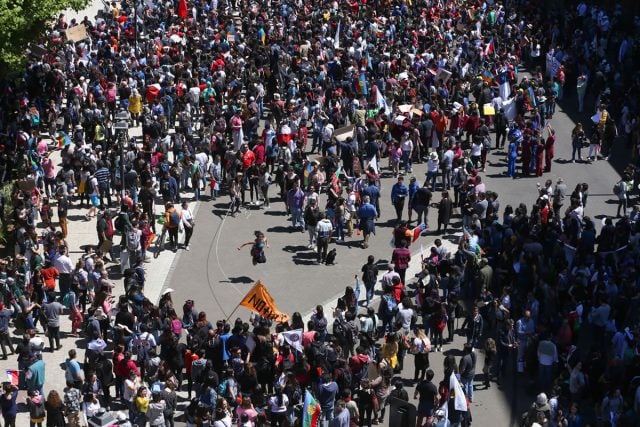
Nearly seven years after the October Uprising, much of the discourse surrounding its significance seems to have shifted toward evaluating its outcomes. Questions arise about what has lingered from the movement, the extent of progress made by the forces that spearheaded it, the constitutional setbacks encountered, and whether the popular movement finds itself in a different position today compared to before 2019.
We previously argued that the fallout is not all that remains from the Uprising and that assessing it solely through institutional outcomes hinders recognition of the political capacities, memories, and relationships formed during that period.
We questioned if we were looking for the effects of the Uprising in the right places.
Now, we wish to explore a bit further. Perhaps the issue does not lie solely in where we search, but also in our very idea of politics as we determine what constitutes politically significant effects.
If our focus remains on governments, elections, constitutional processes, institutional power dynamics, or new mobilizations, a significant portion of what transpired will inevitably appear as failure or disappearance.
While acknowledging those setbacks, we must ask if the categories we use to observe them are adequate to comprehend what occurred.
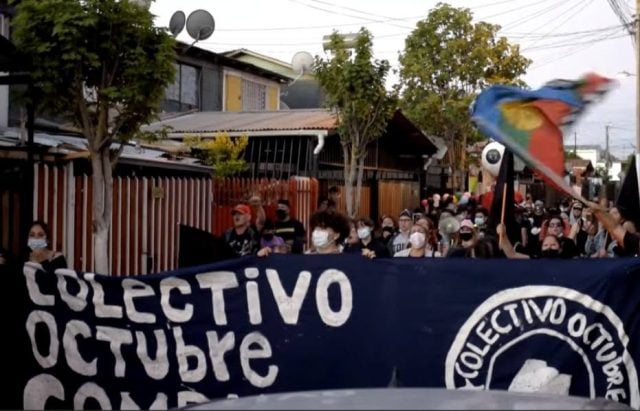
The experience of the Colectivo Octubre Combativo in Padre Hurtado provides an opportunity to approach the issue from a different perspective.
This is not because it represents the Uprising as a whole or because it is a model to be replicated, but because it allows for observing dimensions of politics that often vanish when treated as a separate activity from the everyday production of our existence.
We Will Not Go Towards the People
Antifascist writer Cesare Pavese penned in 1945 a phrase that may help frame the issue: «We will not go towards the people. Because we already are the people.» To propose «going towards the people,» he added, implies forgetting «what flesh we are made of.»
This assertion retains an unsettling relevance. A considerable part of leftist traditions has viewed its relationship with the popular classes from a certain exteriority: reaching out to them, raising their consciousness, organizing them, representing them, or leading them.
The problem lies not necessarily in each of these practices but in imagining that political education, activism, or theoretical knowledge separates those who possess such attributes from the social relations they aim to transform. Similar issues often arise within public administration.
Participants of Octubre Combativo did not need to reach out to an exterior class. We were and are workers, residents, students, activists, and individuals from diverse backgrounds, shaped by work, precarity, debt, caregiving, and the concrete ways we reproduce our existence.
However, recognizing ourselves as part of a class does not resolve the problem either. Pavese immediately poses another obstacle: «the solitude of man, our solitude and that of others.»
Rather than turning his words into doctrine, we are interested in the questions they inspire: How do we live and reflect as those who already are the people?
The Manufacture of Solitude
Contemporary capitalism has deepened a paradox. Our existence relies on increasingly extensive social relationships, while their problems are experienced individually. Precarity may appear as a personal failure; debt as an individual responsibility; unemployment as personal blame.
Feelings of loneliness, depression, or problematic substance use among youth cannot be divorced from the social conditions in which they arise and are experienced.
Adding to this is a culture that turns existence into a competition: rise before others, sleep less, train more, seize every minute, undertake, compete, and continuously increase productivity.
Success and failure emerge as results of proper self-management, even when the conditions organizing our possibilities are deeply social.
Marx already mocked in 1857 the «Robinsonades» of political economy: the fiction of explaining society starting from isolated individuals. His starting point was different: individuals who produce in society.
What concerns us is the critical operation that occurs there: what society has historically produced may end up appearing as a natural feature of human beings. Paradoxically, a particular society is needed to create the individual who can then envision independence from it.
When Producing Bread Meant Building Community
During the Uprising, a fissure appeared in this experience. Debt, low pensions, job precarity, and territorial inequalities momentarily ceased to be perceived solely as individual misfortunes and began to be recognized as expressions of a shared historical configuration.
In experiences such as Octubre Combativo, something additional occurred. Some of these issues not only began to be interpreted collectively but were also confronted by forging new collective relationships.
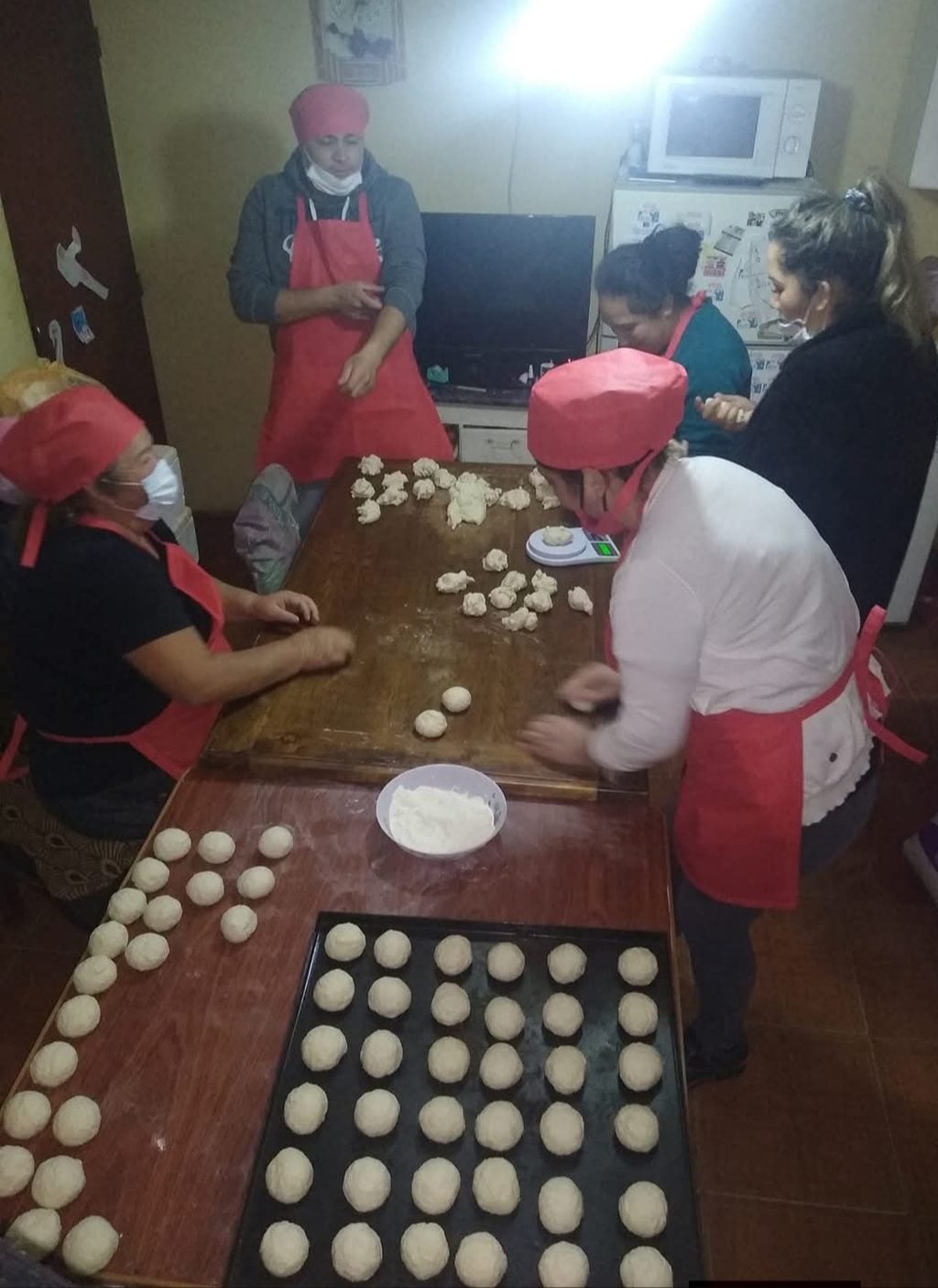
In Padre Hurtado, on the western fringe of the city, protest and confrontation coexisted with communal kitchens, cultural activities, recovery of spaces, supply networks, self-managed fairs, and a popular bakery.
These were not separate moments; first protest and then community work, rather they intertwined dimensions. A formulation arising from this very experience expresses it precisely: solidarity and struggle.
The popular bakery illustrates this on a concrete scale. Baking bread is not inherently an anti-capitalist activity. What matters is through which relationships it is produced. Articulating labor, knowledge, raw materials, infrastructure, and needs also implies learning, sharing skills, distributing tasks, and producing connections.
Work without employers, work for the community, and work in a new community. Producing bread also meant producing the ‘us’ that baked that bread.
The War for Light
The popular fair at Christmas 2020 showcases another aspect of this process. It opened a workspace for neighbors who could not bear the costs of the official fair, effectively generating a practically recognized authority within the territory.
When the municipality cut off the electricity supply, what was remembered within the experience as the «war for light» began. Members of the collective first managed to restore the service, and when the meters were subsequently destroyed, they obtained a generator that allowed the fair to continue.
Addressing material needs, sustaining jobs, and politically contesting territory formed part of a single practice.
However, to reduce this transformation solely to the popular bakery or the fair would be an error. The organization connected spaces, times, and activities typically separated: the square with the houses; the houses with the communal kitchen; the kitchen with the protest; technical knowledge with community needs; mobilization at night with the tasks of the following day.
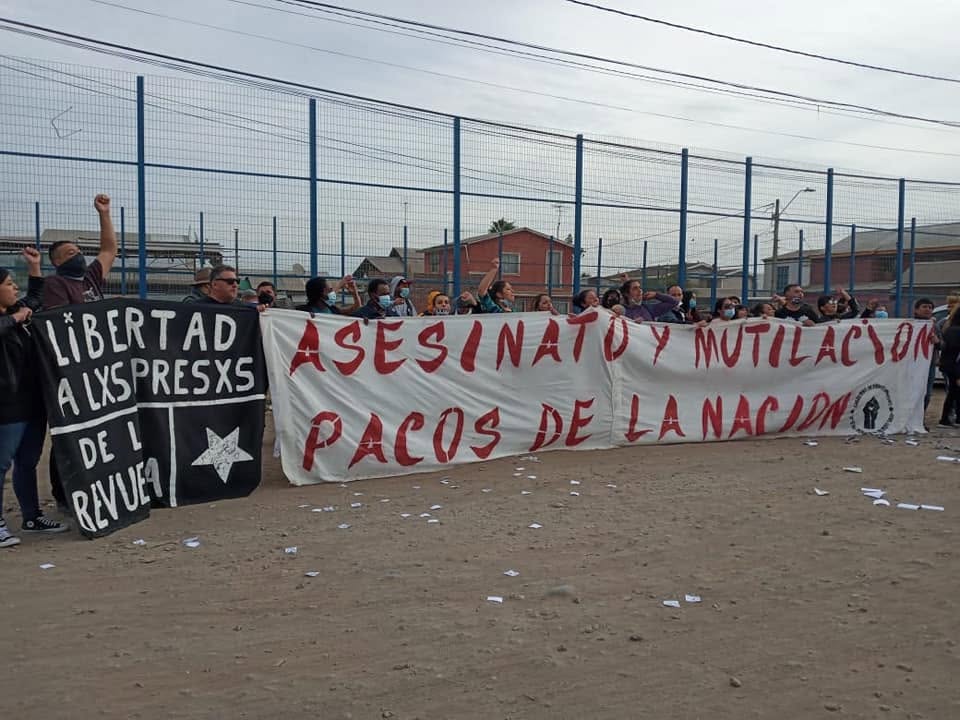
It also connected other struggles often viewed as separate: the freedom of political prisoners, the demands of the Mapuche people, international claims, popular memories, and the demand for justice for Ariel Moreno, a neighbor slain by state agents during the Uprising.
The Seizure of the Everyday
The organization did not have an exclusively ‘political’ space to which one could go and then return to life outside it. Houses, streets, and squares shifted in purpose. Knowledge and objects circulated differently. Something was deterritorialized only to be reterritorialized through new relationships.
A house could become a place for organization or production; a labor skill could transform into community capability; a municipality-managed square could be reclaimed and turned into a site for work, deliberation, supply, celebration, and protest.
Octubre Combativo did not merely operate within a territory: it contributed to producing it. From this basis, we can also question the divide between public and private. We tend to recognize a demonstration, an election, or a governmental dispute immediately as political, while nourishment, caregiving, domestic work, and much of the reproduction of our existence are seen as private or familial matters.
This divide is not a natural fact. It is historically produced. Octubre Combativo did not abolish it but practically disorganized its operation during specific moments. Politics spread through the square and the houses, day and night, protest and production, caregiving and confrontation.
It was while trying to understand experiences like these that we began to speak of the seizure of the everyday. Initially, we understood it as an expansion of political capacity towards the material organization of life.
Today, we believe we can extend this: it was not simply about bringing politics to spaces where it was previously absent, but collectively intervening in the relationships through which we produce and reproduce our existence.
Reconceiving Defeat
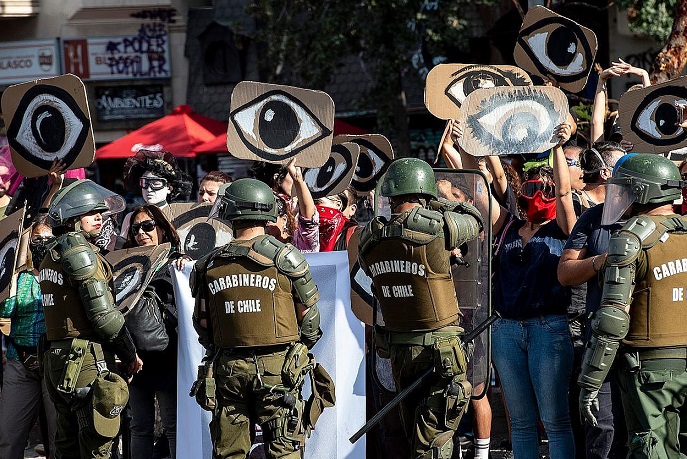
This also alters how we think about defeat. The constitutional process instigated by the institutional order was defeated. Numerous organizations vanished. Mobilization dwindled. Transformative forces failed to convert that historic opening into a lasting transformation of Chilean society. Denying this does not help to understand October.
However, an institutional, electoral, or even organizational defeat alone does not constitute a complete theory of politics. If politics also encompasses our collective capacity to intervene in the relationships through which we produce existence, it is not sufficient to determine how much of October’s demands was institutionalized.
We also need to ask what capacities were exercised, what relationships were produced, and what historical possibilities were experienced, even if they later receded.
What October Still Leaves Open
Perhaps one of the tasks left by October is to reinvent our conception of politics.
Reinventing does not mean starting from scratch or arbitrarily creating. We start from existing relationships, needs, contradictions, memories, knowledge, and capabilities. However, recognizing these determinants does not imply assuming that the future form of their transformation is already written.
Critique allows us to restore the historicity of what appears natural and, in doing so, reopen its transformative potential. The historical existence of a possibility does not equate to the historical necessity of its realization.
That is why we need categories capable of addressing the concrete problems of our class and that can also be transformed by experience, rather than treating them as manuals that reality must obey.
The People Counts on Other Peoples
Here we find an epistemological dimension: the people cannot continue to be seen as an object for subjects who view themselves as external to it. An ontological dimension: the isolated individual does not constitute our starting point, because we produce our lives and ourselves in social relationships.
And a political dimension: transforming society cannot be reduced to contesting who manages institutions separated from the life we collectively produce.
None of this detracts from the critique of capitalism. On the contrary. If exploitation, commodification, precarity, oppression, and domination permeate the relationships through which we produce existence, popular politics cannot limit itself to better managing its consequences.
The possibilities opened in October are not merely the remnants of a defeated illusion. They form part of a historical potency that may reemerge in forms we do not yet know.
Student and worker struggles, the historical resistance of the Mapuche people, Latin American rebellions, Palestinian resistance, and countless struggles worldwide do not constitute a singular fight, but nor are they entirely disconnected histories. They are heterogeneous expressions of a resistance history against exploitation, domination, colonialism, and oppression. October is part of that history.
The Question That Remains Open
The people counts on other peoples. That is why we never abandon the possibility of a radically different society.
This does not mean repeating the political projects of the twentieth century or finding a finished model to impose on reality. If we wish to retain the term Revolution, we must rethink it from our historical conditions and from the experiences through which peoples craft their struggles.
The same goes for the communist horizon: not as a pre-written response, but as an anti-capitalist perspective for overcoming relations of exploitation, oppression, and domination.
The Uprising did not achieve that transformation, but it profoundly strained the boundaries of the Chilean capitalist society. Across multiple territories, capacities arose that practically contested who could organize, care for, supply, occupy space, and decide about communal life.
For a time, transformation ceased to be viewed solely as something demanded of others and began to be experienced as something produced through collective activity.
Colectivo Octubre Combativo was one such experience. Localized, temporal, heterogeneous, and marked by difficulties. But it allows us to see something that traversed the Uprising in many territories: those of us designated to work, consume, incur debt, and be administered could also produce organization, territory, supply, care, and political capacities.
Thus, a seemingly small image can encapsulate a much larger perspective: Producing bread could also mean producing the ‘us’ that produced that bread.
Perhaps this is one of the questions that October still leaves open: How can we produce, from our current conditions, relationships capable of confronting exploitation and domination, while also fostering the collective capacities necessary to overcome them?
Seizure of the everyday, revolution, communism: none of these words can serve us as manuals. Their forms will have to emerge from our own historical experience.
José Luis Riquelme Salazar and Manuel Núñez Carrasco are social science researchers at Central University of Chile and University of Santiago, and participants in the experience of Colectivo Octubre Combativo.
Obtén tu Pasaporte y apoya a El Ciudadano
Elimina la publicidad, accede a contenido exclusivo y sé parte de la comunidad.
Cancela en cualquier momento · Sin permanencia