Original article: Escuela de Invierno reunió a más de 350 participantes para debatir desafíos de la izquierda y la formación política
Winter School Gathers Over 350 Participants to Discuss Leftist Challenges and Political Education
From July 22 to July 25, a significant political and educational event took place in Santiago, Chile, organized by the Alejandro Lipschütz Institute of Sciences (ICAL), the Rosa Luxemburg Foundation, and the Diploma in Latin American Critical Thinking at the University of Chile.
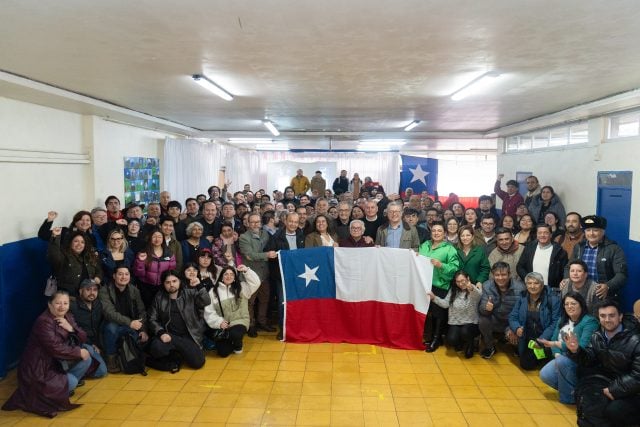
With over 350 participants, the event brought together activists, leaders, and members of popular, union, feminist, student, territorial, and political organizations from Argentina and Chile, solidifying its role as a space for education, critical reflection, and knowledge exchange.
Additionally, the event featured the presence of Torge Löding, director of the Rosa Luxemburg Foundation’s Southern Cone Office.
In a context marked by the rise of ultra-right movements, deepening ecological crises, and social inequalities, the Winter School aimed to recover the critical legacies of Luis Emilio Recabarren, Rosa Luxemburg, and José Carlos Mariátegui to address contemporary tasks.
Through dialogue between these emancipatory traditions and contemporary popular organization experiences, the School promoted discussions on democracy, popular power, internationalism, territoriality, and the challenges of reconstructing emancipatory projects to shape the course of societies in the 21st century.
The opening day was highlighted by talks from Patricia Lizarraga, coordinator of the Rosa Luxemburg Foundation; Marco Álvarez, coordinator of the Diploma in Latin American Critical Thinking at the University of Chile; and Fernando Carmona, director of ICAL.
The presentations underscored the importance of strengthening political education, promoting the exchange of experiences in popular organization, and consolidating permanent spaces for collaboration against advancing reactionary and conservative projects.
The agenda began with a panel reflecting on the global rise of ultra-right movements, with a specific focus on Latin America. Elisa Franco from the Diploma in Latin American Critical Thinking identified key characteristics of current ultra-right governments in the region and the challenges they face in responding to the economic and social crisis affecting Latin America.
Similarly, international journalist Leticia Martínez examined the nature of Javier Milei’s government in Argentina, highlighting its main limitations and the obstacles it faces in resolving the crisis.
Following that, a critical reflection was held on the emancipatory traditions initiated by Rosa Luxemburg, Luis Emilio Recabarren, José Carlos Mariátegui, and Alejandro Lipschütz.
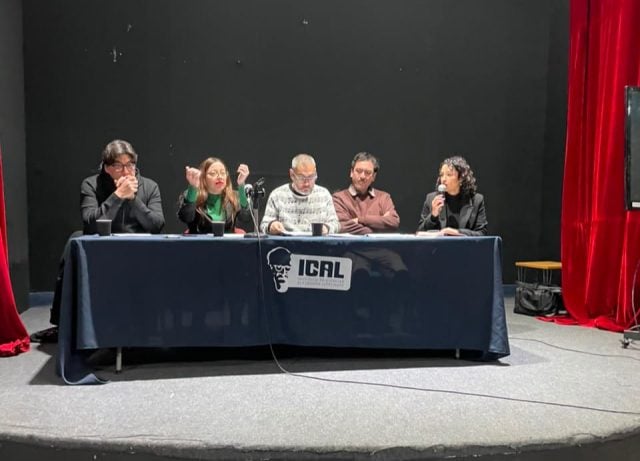
Moderated by Daniela Osorio, a panel composed of Hernán Ouviña, Daniel Jadue, Millaray Huaiquimilla, and Jaime Navarrete analyzed the potential to recognize «subterranean affinities» among their main reflections, aiming to illuminate a Chilean and Latin American Marxist tradition in a political and strategic context.
Second Day
The second day commenced with a presentation on Rosa Luxemburg’s thought and praxis, reclaiming the relevance of her contributions for contemporary emancipatory projects.
Subsequently, a panel featuring representatives from popular movements in Chile and Argentina —Natalia Garrido, Noelia Nair Feldmann, Osvaldo Zúñiga, Camila Montecinos, and Diego Montón— debated experiences in territorial organization, popular power, and political project construction arising from urban and rural struggles, with a particular focus on territorial defense and common goods.
Additionally, aimed at establishing a dialogue between different experiences in territorial political construction, Pedro Lovera engaged in conversation with Victoria Berniche and Matías Gregorio of Ciudad Futura (Argentina), along with the mayor of Recoleta, Fares Jadue (Chile).
The closing day featured a dialogue on the 21st-century socialist project, discussing the role of the popular field, the limits of progressivism, and the current challenges facing the Latin American left.
From the academic committee of the Diploma in Latin American Critical Thinking at the University of Chile, it was noted that «this experience reaffirms the necessity to project new avenues for political education, strengthen collaboration between organizations, and unite collective efforts to foster spaces for reflection, experience exchange, and joint construction of alternatives for Latin America.»
Bringing these traditions into dialogue aligns with the goal of reclaiming a conception of politics that goes beyond mere resistance, striving to build alternatives.
Their legacies invite reflection on contemporary forms of popular organization, territorial power experiences, municipalism, transformative public policies, and the strategies necessary to challenge common sense and create emancipatory horizons for the 21st century.
Obtén tu Pasaporte y apoya a El Ciudadano
Elimina la publicidad, accede a contenido exclusivo y sé parte de la comunidad.
Cancela en cualquier momento · Sin permanencia