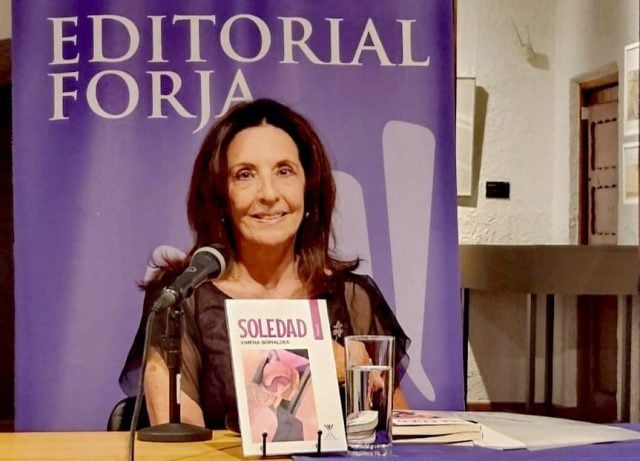
Original article: Ximena Güiraldes y su nueva novela: “Quise contar una historia de amor en países que se sacuden del horror”
By Mariana Hales
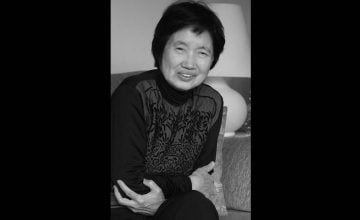
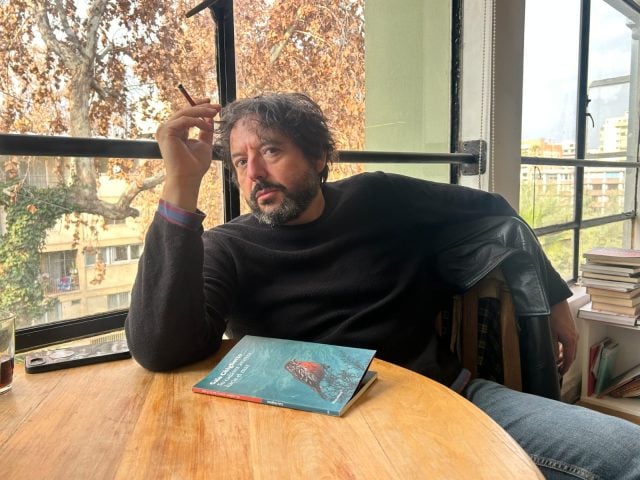
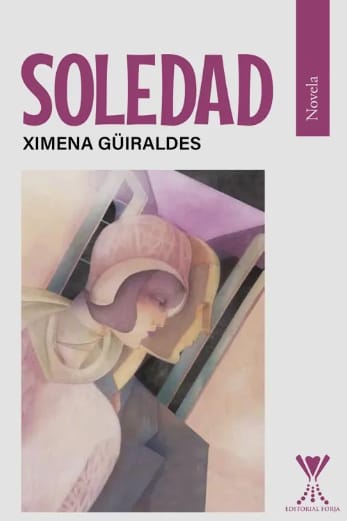
With Soledad, her debut novel, Ximena Güiraldes bursts onto the contemporary narrative scene with an intimate and profound voice that invites readers to experience the story rather than just read it.
Published by Editorial Forja, the novel weaves a tale rich in eroticism, memory, and emotion, intertwining love, abandonment, and identity search in a sensory language that stirs and resonates. As noted by Chilean screenwriter and author José Ignacio Valenzuela, Soledad is a book that engages all the senses, a brief yet intense work that leaves a lasting impression.
Set between Argentina and Chile during the final years of the dictatorships and the onset of democratic transition, the novel follows the intimate journey of a young woman marked by overprotection, uprooting, and loss. In this intersection of personal history and political context, Güiraldes crafts an honest and uncompromising narrative, where lived experiences and silenced truths are in constant dialogue.
Inspired by Mon Laferte’s song Tu falta de querer, Soledad establishes its author as a mature storyteller, adept at transforming universal emotions into a deep and memorable literary experience. We discussed this and much more with Ximena Güiraldes.
Soledad originates, as you have mentioned, from the song Tu falta de querer by Mon Laferte. What moved you about that song and how did it become the seed for this novel?
I have a profound connection to music; in my short story collection Vidrios Empañados, most of the stories relate to music. In the case of the novel Soledad, my connection to «Tu falta de querer» was instantaneous. Its raw intensity, the pain of abandonment, the vulnerability of that woman—almost a girl—“I feel mutilated and so small,” her desperate attempt to understand “how you stopped loving me,” and its melodic beauty inspired the character and allowed the story to flow. Every time I listen to the song —which I do often—I envision Soledad.
The story unfolds between Argentina and Chile during a period marked by dictatorships and the democratic transition. Why did you choose this historical context for your novel, and what narrative possibilities did it offer you?
It allowed me to tell a love story within a political environment in two countries shaking off horror, showcasing the complexity of human relationships, their essential contradictions, their lights and shadows, and contrasting the two main characters, each with opposing political and cultural backgrounds.
Did you directly experience that historical time, or is it a reconstruction based on collective memory, family stories, and research?
I actively participated in the recovery of democracy, took risks, and got personally involved, but obviously, Soledad, while containing historical reality, is constructed as a novel, without pretensions, written with truthfulness, which I believe added depth and emotion.
In this sense, how much of Soledad is autobiographical or based on real experiences, and how much is fiction?
I think there is nothing autobiographical. However, there is a personal understanding and awareness of what I experienced at certain moments. All of these experiences, stored in my memory, provided context for a love story that is intimate, painful, sensual, but ultimately transformative, which is what I sought to convey.
The protagonist grapples with abandonment, desire, and solitude, but also embarks on a quest for identity. How was the process of constructing that intimate and contradictory voice?
That’s a hard question. It was, in fact, an intense process of introspection to find within the broad spectrum of emotions, feelings, pains—our capacity for resilience and the need to move forward—that we all experience to some extent, in order to strike the right chord and discover the voice that would resonate with the character.
Various writers have highlighted the intensity and maturity of your narrative language. Do you feel Soledad marks a turning point compared to your previous works?
Absolutely.
It has been said that this is a novel written from a powerful feminine voice, capable of reaching any reader. Who did you imagine reading Soledad while writing, and what do you hope resonates after the final page?
According to writer and literary critic Javier Edwards, who presented my novel, “… Some may want to label it a feminine novel, but in reality, this is a story where the voice of a woman speaks to anyone willing to listen and understand. Women will inherently resonate with the novel, but it is also a valuable lesson for those of us reading from the other side.”
From that perspective, I think it is interesting to know the intimacy of a woman told by a woman. Her world, her intimacy, her sensuality has traditionally been narrated through a male voice. I believe it is always a challenge to read and feel as a woman feels, without being mediated by another voice, and for that voice to resonate long after the final period.
El Ciudadano
Obtén tu Pasaporte y apoya a El Ciudadano
Elimina la publicidad, accede a contenido exclusivo y sé parte de la comunidad.
Cancela en cualquier momento · Sin permanencia