Original article: «Se detuvo por unos naranjillos»: Kast insiste en defensa de Aclara y su proyecto de tierras raras (video)
«Six little naranjillos in a very large study halted a project that, eventually, because today it is uncertain whether it will happen or not due to significant resistance, could have a projected mining investment of $5 billion over time,» stated Kast when questioned by a young woman about the possibility that the mining company Aclara could be held accountable for the wildfires.
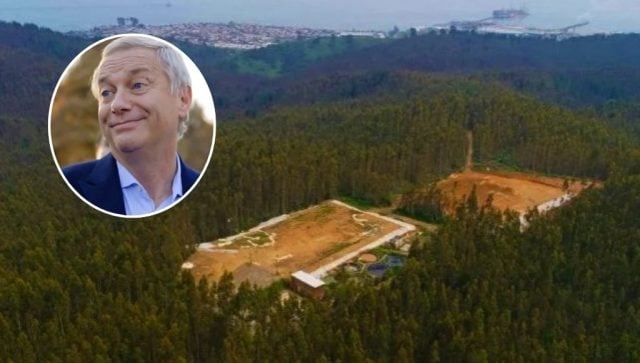
During his visit to Lirquén, one of the areas most affected by forest fires in Biobío and Ñuble, elected president José Antonio Kast reiterated his support for the rare earth project promoted by Aclara Resources in the commune of Penco, amidst concerns about its potential impacts and strong opposition from local communities and organizations.
While visiting the area, the republican leader approached a street located on a hill above communities that were devastated by fire and engaged in dialogue with a group of volunteers.
However, before speaking to the press, he was approached by a young woman directly in front of him, who inquired about his thoughts on Aclara’s potential responsibility for the fire.
According to the Corporation for Penco Parks, flames reached sections of Fundo Coihueco, including areas where Aclara, through its subsidiary REE UNO SpA, intends to exploit rare earth elements, in what the organization described as “the worst fire in decades” in the Penco–Lirquén axis.
In this context, the young woman asked Kast directly: «What do you think about Aclara and its possible responsibility in this?» In response, the republican reiterated his support for mining projects, even when, as with the «Rare Earth» case, it might impact air, soil, and water with mining operations less than two kilometers away from populated areas, health centers, and educational institutions.
Kast: The Project Stopped Because of Some Little Naranjillos
The moment was captured in a video circulating on social media, showcasing the full conversation, as reported by The Clinic.
–Kast: What do you think?
–Young woman: I’m asking you.
–Kast: But what do you think?
–Young woman: I’m waiting for the investigation.
–Kast: That’s right.
–Young woman: You too?
–Kast: I don’t think anyone can use something like this to generate this (…).
–Young woman: So, you’re going to take the question elsewhere.
–Kast: I can take that question elsewhere too; I told an elected official from the area that people here have to travel north for 14-day shifts to work in mining. A project is being developed here that was halted because of some little naranjillos. I invite you to see where the naranjillos are now. This refers to one of the arguments from the Environmental Evaluation Service for prematurely terminating Aclara Resources’ project after deficiencies were found in the studies submitted by the company, including the lack of consideration for species in conservation categories like the naranjillos (Citronella mucronata).
–Young woman: Environmental studies are important and serve a purpose.
–Kast: Yes, I agree. But six little naranjillos in a very large study halted a project that, eventually, because today it is uncertain whether it will happen or not due to significant resistance, could have a projected mining investment of $5 billion over time. And how many jobs were there, because in Tomé and Penco, there are no jobs, so people have to go north for 14-day shifts.
The right-wing politician also based his arguments on examples of how mining could benefit the area, neglecting the environmental impacts. “If this had been a viable mining project, there could have been a thousand, two thousand jobs generated, which might have been lost in Lota where the mines were. The mines closed. Those people were trained to be hairdressers, gas fitters, and today they have no jobs,” he argued.
“I don’t know how much land that company bought. 100, 200, 1,000 hectares, and they were going to create a limited mining project in one spot. If one certifies that there is no contamination, because that needs to be objective. If I have an environmental authority and they set specific standards and I comply, that’s an objective matter,” he emphasized, according to the cited source.
As part of his support for mining, José Antonio Kast, who will assume the presidency in March, referred to the also controversial and highly criticized mega-port project, Dominga.
«It would have brought to the people of La Higuera, in a small, poor commune, drinking water, electricity, quality education, and many benefits for the people. This isn’t against the environment; it’s with the environment, but always thinking about people, and that’s something one must understand,” Kast concluded.
Aclara Trusts Kast’s Efforts to Support Rare Earths
From the mining company Aclara, they have expressed confidence that with José Antonio Kast’s arrival at La Moneda, the necessary permits will be processed more efficiently.
The company plans to begin construction of its «Rare Earth» project by the end of 2026, contingent on securing the necessary permits from the SEA according to the schedule.
According to Bloomberg and Mining.com, with the government change set for March, Aclara sees “room to accelerate” the initiative, with costs amounting to $175 million.
In fact, the company’s CEO, Ramón Barua, expressed confidence that “we could receive a lot of support from the next government to streamline what we’re doing.”
Obtén tu Pasaporte y apoya a El Ciudadano
Elimina la publicidad, accede a contenido exclusivo y sé parte de la comunidad.
Cancela en cualquier momento · Sin permanencia
Artículos Relacionados
Community Voices Emerge as Penco Takes Rare Earth Mining Project to Court Over Water and Health Threats
Hace 2 meses