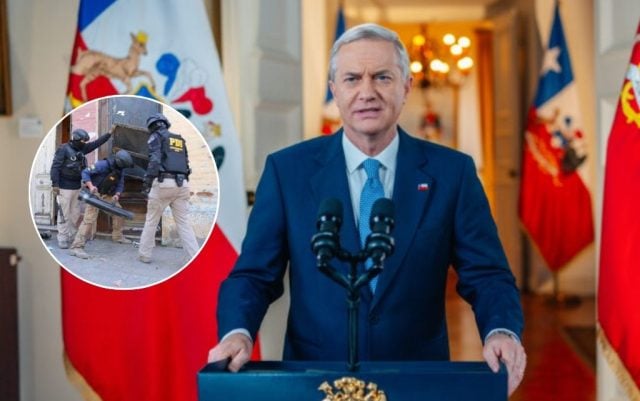
Original article: Kast y Schoenstatt: El desembarco de la obediencia y el secreto pontificio al poder
By Eneas Espinoza G., Bachelor in Social Communication, founder of the Survivors Network Chile
With José Antonio Kast’s arrival at the Palacio de La Moneda, not only does conservative right-wing politics return to power, but it marks the first time an active member of the Institute of Families of Schoenstatt governs Chile.
Kast has votes of obedience and allegiance to powers beyond the Chilean political system. How many of his decisions will be made for the good of the country, and how many will be influenced by the movement to which he belongs? What will take precedence in his administration? To what extent do his loyalties to Schoenstatt weigh in the final equation against his commitment to the country, the Constitution, and the laws?
Moreover, how will he confront the new wave of abuse allegations within the Catholic Church from his position as President?
A Government with a Schoenstatt Identity
Kast’s faith is not a private matter; it is a central pillar of his management. Together with his wife, María Pía Adriasola, he belongs to the highest level of lay commitment within the movement. This identity has already manifested in concrete political milestones:
- Chaplain of La Moneda: In one of his first decisions, Kast appointed Father Mariano Irureta, also a Schoenstatt member, as the next chaplain of the presidential palace.
- Relationship with the ecclesiastical hierarchy: In February 2026, the elected president held his first official meeting with the Permanent Committee of the Chilean Episcopal Conference (CECh) to coordinate the national agenda.
- The «engine» of governance: Kast has defined his faith as the «engine» of his government, sparking intense debate about how his Marian and conservative spirituality will influence public policies in the country.
Crisis and Allegations within the Movement
Despite the political rise of its members, the Schoenstatt Movement is facing a global legitimacy crisis due to multiple allegations of sexual abuse, power abuse, and breaches of conscience.
1. The «Purification of Memory» Report in Chile
In October 2024, the Secular Institute of the Parents of Schoenstatt in Chile published a historic report covering the period from 1965 to 2024. In this document, the institution acknowledged sexual abuse committed by eight of its priests against 28 victims, 18 of whom were minors.
Among those named is the late Bishop Francisco José Cox, accused of multiple abuses, whose transfer to Germany by the movement has been denounced as a cover-up tactic and a «wall of silence».
2. Questions Regarding the Founder: José Kentenich
The figure of the founder is also under scrutiny. Research by historian Alexandra von Teuffenbach in the Vatican archives (2020) revealed:
- Abuse of conscience and power: documents detailing manipulation and coercion of the Sisters of Mary in the 1950s.
- Beatification process suspended: Due to these revelations and an allegation of sexual abuse in the U.S. (1958-1962), the Vatican suspended his beatification process in 2022. The Bishop of Trier determined that it has not been clarified whether the system of «Kentenich obedience» is compatible with human freedom.
3. Recent International Case
In November 2024, the arrest in Argentina of priest Patricio Cruz Viale, accused of serious sexual abuse, reaffirmed the criticism regarding the effectiveness of the movement’s prevention protocols.
The Manipulation Structure: Abuse of Conscience and Control
Beyond cases of specific sexual attacks, the focus of these allegations lies in a systemic character of abuse of conscience and intimidation. In this regard, experts and former members detail specific mechanisms of control:
- Violation of inner sanctum: It was documented that Kentenich forced his subordinates to reveal their innermost thoughts and sins outside of confession, intertwining spiritual direction with administrative hierarchy.
- The spiritual schedule: A «growth» tool that compels the meticulous recording of daily activities and thoughts, interpreted by psychology as a form of obsessive self-surveillance.
- Emotional dependency and «fatherhood»: The concept of «spiritual fatherhood» fosters blind obedience. In Chile, victims have recounted how priests used this bond to invalidate their judgment, presenting abuse as a «spiritual test».
- Isolation and discrediting: Those who question internal dynamics are often labeled as «sick» or accused of wanting to «harm the Church», experiencing social isolation within the community that acts as a psychological barrier to reporting.
The Role of María Pía Adriasola and the Institute of Families
As the future First Lady, María Pía Adriasola’s role is crucial. In the Institute of Families, marriage is to be a «reflection of the Holy Family».
- Complementarity ideology: Based on Kentenich’s principles, it promotes the idea that women have a specific (Marian and maternal) nature that differentiates them from men, limiting female autonomy under spiritual pretext.
- The «custody of the Sanctuary»: Within Schoenstatt, the wife holds internal moral authority but must maintain the «natural hierarchy» of the family.
- Pressure in private life: Testimonies from former members of the Institute of Families accuse economic and social pressures to conform parenting and private life to the movement’s manuals, under the threat of exclusion from the «life current» of the Sanctuary.
The Stance of President Kast
Confronted with this complex scenario, José Antonio Kast has maintained a strategy of separation:
- He has condemned sexual abuse in general but remains completely silent regarding the allegations of abuse of conscience against founder Kentenich.
- He defines Schoenstatt as a community of laity that «does much good», distancing himself from the criminal behaviors of specific individuals.
For the new President, Schoenstatt represents a network of power and elite contacts (businessmen and professionals) that share a code of conduct, loyalty, and silence. The challenge of his administration will be to govern a pluralistic country while inhabiting one of the most questioned religious structures today, due to its mechanisms of control over freedom and human conscience.
How It Will Reflect in His Presidency
To delve deeper into how the Schoenstatt doctrine could shape José Antonio Kast’s public agenda, it is necessary to analyze the intersection between «Kentenich Pedagogy» and his government programmatic proposals.
The spirituality and methods of Schoenstatt could directly influence State management in three key areas:
1. Education: The «freedom of teaching» model and character formation
In Schoenstatt’s view, education is not only instruction but the formation of «strong personalities» who self-govern.
- Influence on politics: A strong push for Educational Vouchers and funding that follows the student is expected, allowing institutions with specific religious ideologies (such as schools linked to the movement) to compete on equal footing with the state.
- The role of the family: Since the movement considers the family the «primary cell of education,» Kast would prioritize parents’ preferential rights over state programs for comprehensive sexual education (ESI), which he regards as «indoctrination».
2. Family and Women Policies: «Complementarity» in the Civil Code
As mentioned, María Pía Adriasola advocates for the specific nature of women based on the Marian model.
- Legislative impact: This could translate into active resistance to any expansion of reproductive rights (like the full decriminalization of abortion) and a focus on public policies of «protection of motherhood» that block any expansion of rights regarding caregiving tasks.
- Ministry of Women: There is a debate on whether Kast’s administration will seek to transform the Ministry of Women into a Ministry of Family, faithful to the Kentenich vision where the individual is only fully realized within the hierarchically structured family.
3. Public Function and Ethics: The «Caste» and Power Network
The Schoenstatt structure fosters extreme loyalty ties and a network of elite professional contacts.
- Appointments: The designation of a Schoenstatt chaplain is just the beginning. There are concerns that trusted positions in strategic ministries will be filled by members of the Institute of Families or by professionals trained at the Catholic University affiliated with the movement, creating a «management bubble» with the same codes of silence that the institution operates.
- Justice and transparency: Given the allegations of abuse of conscience and the history of «preventive transfers» (like that of Francisco José Cox), Kast’s administration will face the challenge of demonstrating judicial independence. Any sign of state protection towards movement figures under investigation could trigger an immediate integrity crisis.
4. Foreign Relations and «Value Sovereignty»
Schoenstatt is an international movement with strong presences in Germany, the United States, and Argentina.
- Diplomacy: It is likely that Kast will seek alliances with conservative governments that share his «values agenda» (such as sectors of the Republican Party in the U.S. or European conservative right), distancing himself from multilateral organizations promoting gender or diversity agendas.
5. Abuses in the Church: Loyalty to the Movement and Papal Secrecy over National Laws
Chilean law establishes a duty to report any suspicion of child sexual violence to criminal justice for anyone working with minors in any institutional environment, including ecclesiastical ones.
This directly contradicts Vatican law, especially how Schoenstatt operates: the movement’s internal structure, based on obedience and control of conscience, demands secrecy in handling any allegations.
In practice, in all cases to date, Catholic authorities have prioritized internal investigation models, placing canonical law above Chilean law, which constitutes an aggravated crime by involving state authorities or officials.
It remains to be seen whether Kast’s administration will deepen this line and make it official policy, where victims of child sexual violence would remain unprotected and abusers connected to the Church shielded by their para-justice system.
A definition of this type would signify operating outside Chilean law and violating international treaties ratified by the State, which hold constitutional rank. So far, none of this seems to deter Schoenstatt members.
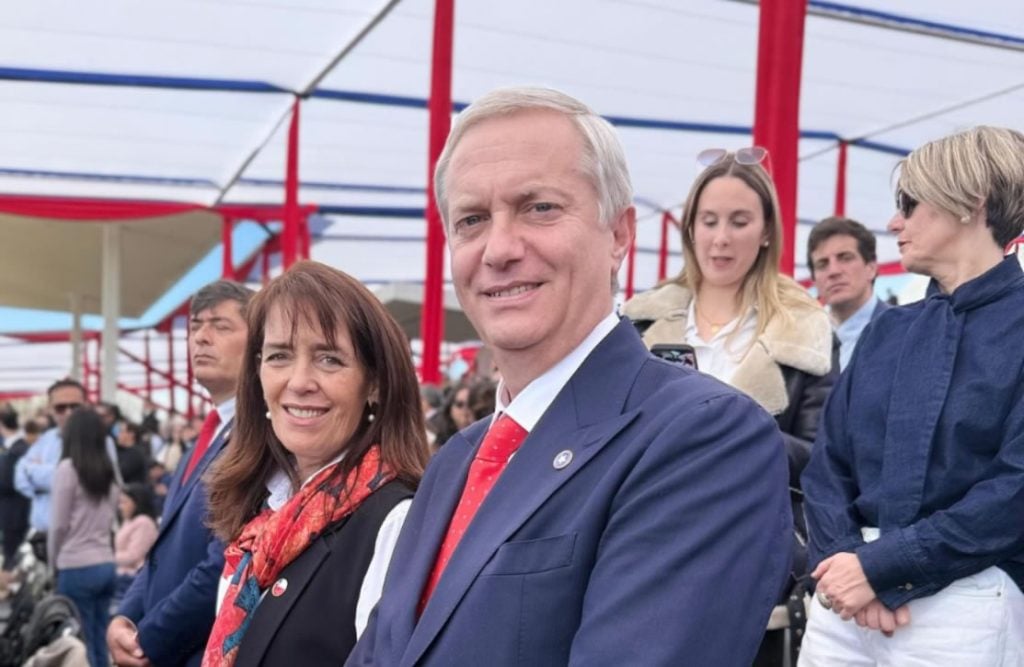
Defense of Karadima
José Antonio Kast maintained his defense of Fernando Karadima during the initial years of the scandal.
In 2011, he even reaffirmed before the court his statements on the priest’s innocence, despite the fact that his own brother, Hans Kast, was the first cleric to formally report the abuses.
Regarding a possible retraction, his evolution has been as follows:
- Change in qualification: As judicial and canonical evidence progressed, Kast ceased defending Karadima’s complete innocence and began to characterize his behavior as grooming (the seduction of young people by adults).
- General condemnation: In recent years, especially during his 2025 presidential campaign, he has opted for a general condemnation of sexual abuses committed by clergy members, but without a public self-critique or explicit retraction regarding his support for Karadima.
- Family distancing: He has distanced himself from his family’s history on this issue, focusing his discourse on the abuses as «criminal behaviors of specific members» and not a systemic failure of the religious institutions to which he belongs.
More than a formal retraction, Kast has transitioned from active defense to a strategic silence and a generic condemnation of criminal acts once they were ratified by the justice system.
By Eneas Espinoza
Obtén tu Pasaporte y apoya a El Ciudadano
Elimina la publicidad, accede a contenido exclusivo y sé parte de la comunidad.
Cancela en cualquier momento · Sin permanencia