Original article: Imaginando un Algarrobo posible
By Diego Pinto, Colective of Critical Geography Gladys Armijo and Academic Department of History and Geography, UMCE; and Javier Karmy, Journalist, Community Environmental Table of Algarrobo
After 28 years without an update, the modification of the Comunical Regulatory Plan of Algarrobo (PRC) has become an urgent demand for authorities. This is the minimum requirement for citizens starting any discussion about the territory they inhabit.
This situation is unprecedented given the highly technical nature of the process, the opacity of state agencies involved, and the typically low levels of citizen participation in PRC modifications.
However, in Algarrobo, the diverse and multifaceted citizenry has taken the initiative. Community-based organizations, businesses, and residents have spent years conducting forums, talks, and workshops to discuss the future of their commune.
A significant consensus among various stakeholders is that maintaining the same Comunical Regulatory Plan from 1998 is no longer viable. It is imperative to update the plan, as continuing with the current one will lead to further cementing for real estate developments, adversely affecting the residents of Algarrobo.
This commune has not had the institutional opportunity to discuss its future. What has been accomplished thus far underscores that it has been the grassroots community that has raised the urgency to modify the PRC through various workshops organized by different entities over the years.
This has created a common voice that has permeated municipal and regional institutions, achieving its first victory by restarting the process of modifying Algarrobo’s communal regulatory plan.
It is important to recall that the PRC modification began with the company Surplan but was suspended in 2024, halting the update process at a diagnostic stage that civil society organizations widely criticized due to discrepancies between the information provided and the actual territory.
On April 7, 2026, the regional government of Valparaíso, led by Rodrigo Mundaca, allocated funds to resume the Plan Update process. An amount of $168,345,000 has been announced for this new endeavor, and the municipality of Algarrobo should now be drafting the terms for the bidding process. Following this, there will be a timeline for publication and the selection of the company that will carry out this new project, limited to those registered in a very specific registry managed by MINVU.
This update process is expected to take at least three years from the time the consulting firm wins the public bidding. However, as mentioned, the community has been preparing for over five years for this significant moment, which is also intertwined with the modification of the Intercommunal Regulatory Plan – Southern Coastal Border (PRI), currently underway.
Everything done thus far has been crucial in generating interest and spreading awareness of the complexities and limitations of the PRC and PRI modification processes. This is a unique opportunity, as discussions will occur almost simultaneously at both the intercommunal and communal levels—a precedent not seen in previous PRC changes, requiring heightened attention to participation venues at both tiers.
Consequently, the various organizations will be able to raise their demands in these settings, while remaining aware of the institutional limitations inherent in these processes where, while citizen observations can be made, they are non-binding.
Nevertheless, participants can advocate for unaddressed issues during meetings, request information, and by law, an institutional response must be provided promptly to every observation made.
Moreover, after citizen participation instances conclude, there will be opportunities for conversation where diverse actors continue to raise their fundamental topics, making it crucial for the citizenry to engage informally in these discussions and monitor what transpires.
Citizens must ponder the type of city they wish to inhabit, not abstractly, but rather, what they would like to have and not have in their territory, what they want to be able to do and not do, and what they wish to see and not see. By doing so, residents from various sectors of the commune can arrive prepared to articulate the topics they wish for a better quality of life.
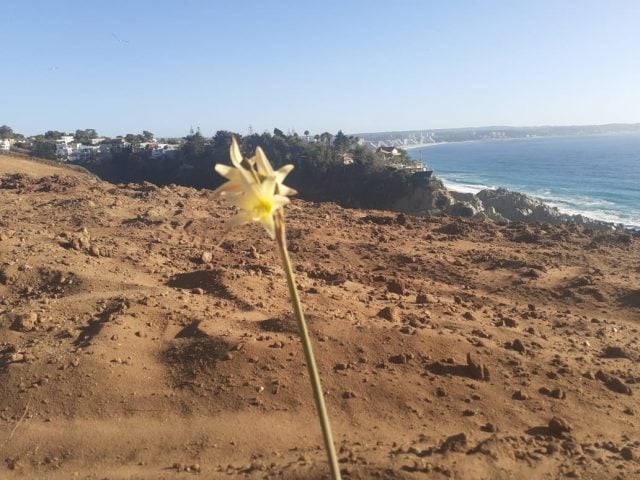
The quality of living in this Algarrobo city has been impacted by the real estate sector, altering the coastal landscape where summer visitors once thrived, now replaced by restaurants, a deregulated rural area that has fragmented its territory with subdivisions and parcels, where also large-scale real estate projects have devastated vast natural areas, and a local population with precarious services, distanced from the tourist hub and, therefore, forced to travel greater distances (which also translates to more time and resources).
Furthermore, the expansion of the San Antonio port in Algarrobo could lead to the establishment of an industrial zone for containers and port machinery, potentially transforming a large area of Algarrobo into a ‘dormitory city’ for workers from the provincial capital’s port.
Algarrobo is not isolated from what transpires with the Intercommunal Regulatory Plan (PRI), as decisions made there directly impact the entire communal territory, necessitating that the Comunical Regulatory Plan aligns with the Intercommunal Regulatory Plan.
Today, there is an opportunity to envision, dialogue, and participate in shaping a city that meets the needs and dreams of its residents. This raises questions about the future, about the role of an active citizenry seeking to build a place to call home, wanting to participate and decide, and unwilling to accept merely a proposal imposed by a consultancy backed by a municipality that is, it should be noted, in debt to Punta Fraile, starting with significant unmet promises in a crucial process for the future of Algarrobo.
Various stakeholders have been working for years to build a vision for the city, a shared desire for improvement, expanding boundaries and pathways, dreaming of how to inhabit an Algarrobo that is broad in horizon, more democratic, and equitable in its territory, where nature is prioritized and the sun lights up a new dawn.
Diego Pinto and Javier Karmy
Obtén tu Pasaporte y apoya a El Ciudadano
Elimina la publicidad, accede a contenido exclusivo y sé parte de la comunidad.
Cancela en cualquier momento · Sin permanencia