Original article: Organizaciones entregan carta al MMA pidiendo el reingreso urgente a Contraloría de las normas de calidad del aire: «Por la salud de los chilenos»
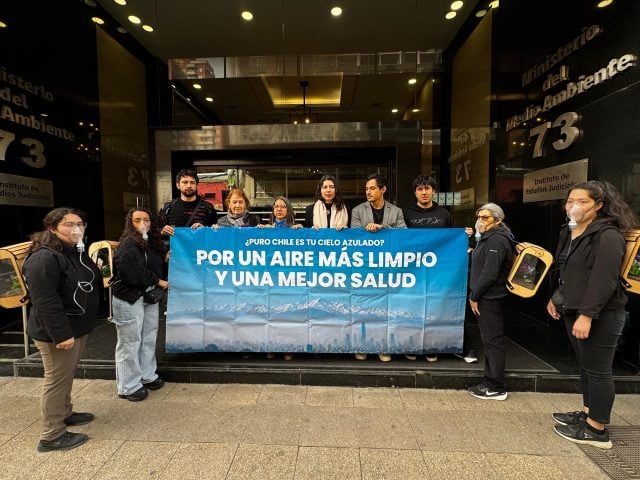
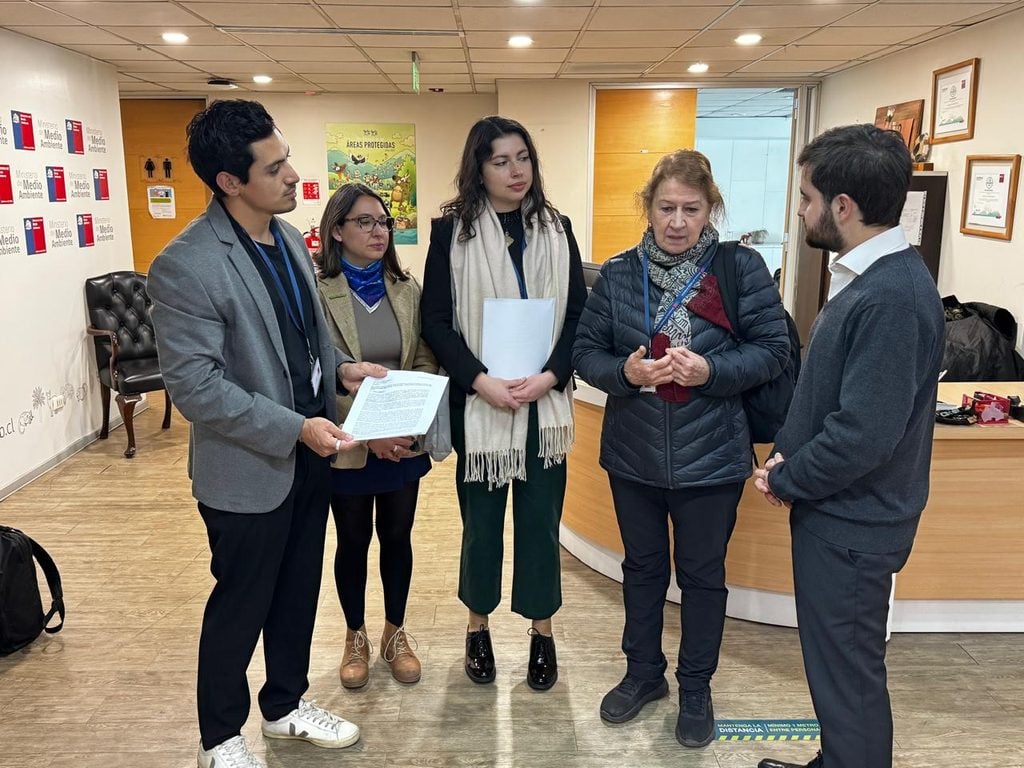
Civil society, environmental, and academic organizations, supported by the Medical College, submitted a letter to Environment Minister Francisca Toledo on Tuesday, September 1, requesting the immediate resubmission of two decrees aimed at strengthening air quality standards and emissions from thermal power plants.
These include D.S. No. 3/2026, which revises the Primary Air Quality Standard for PM2.5, and D.S. No. 8/2025, which updates the Emission Standard for Thermal Power Plants.
Both instruments have completed the main stages of their regulatory processing and were approved by the Ministerial Council for Sustainability and Climate Change. Their publication is pending following their removal from the review process by the Comptroller’s Office, alongside 41 other environmental decrees, on March 12, after the current government of José A. Kast took office.
According to the General Economic and Social Impact Analysis (AGIES) underpinning the new PM2.5 standard, implementing the new measure would prevent 14,660 premature deaths from cardiopulmonary causes between 2026 and 2035—equivalent to about 1,466 deaths annually—along with over 8,400 hospitalizations and 426,841 emergency visits for asthma during the same period.
Dr. Yuri Carvajal, president of the National Department of Environment at the Medical College, emphasized that the delay in enforcing these standards directly impacts public health.
«From a health perspective, the urgency is clear. The new PM2.5 standard could prevent 1,500 premature deaths each year from cardiopulmonary causes between 2026 and 2035, in addition to thousands of hospitalizations and hundreds of thousands of emergency visits for asthma,» the physician warned.
He added, «Resubmitting these decrees to the Comptroller’s Office is not merely an administrative task; it is a concrete measure to reduce diseases and deaths that are currently preventable.»
Two-Thirds of Chile’s Population Exposed to Harmful Pollution
While the new standards remain unenforced, Chile continues to operate under the PM2.5 air quality standard established in 2011.
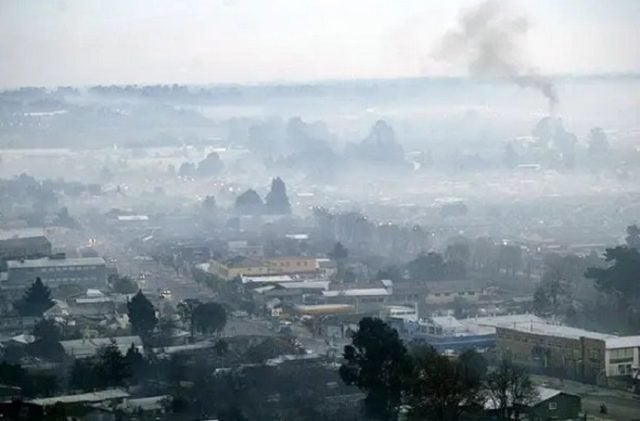
In this context, the letter warns that 126 municipalities exceed the proposed annual standard and that around two-thirds of the national population is exposed to pollution levels considered harmful by scientific evidence, a situation that becomes even more serious during winter months due to increased particulate matter concentration.
The update to the thermal power plant standard, meanwhile, introduces limits on heavy metals like nickel and vanadium for the first time and reduces limits on mercury, particulate matter, sulfur dioxide, and nitrogen oxides, which is particularly relevant for regions such as Coronel, Arauco, Huasco, and Mejillones.
Sara Larraín, director of Chile Sustentable, highlighted that the regulated public processes to update Decrees No. 3 and No. 8 spanned years, satisfying various technical and regulatory stages before being approved by the Ministerial Council and Segpres.
«The resubmission of these decrees is essential not only because it will lead to more stringent environmental standards that protect public health, but also because it will save billions of pesos for families and the state by reducing costs associated with pollution-related diseases and healthcare,» Larraín emphasized.
Silvana Espinosa, climate and ecosystems expert at Greenpeace, remarked, «It is hard to understand the delay on this matter, especially when we know how many people across the country are adversely affected by these postponements.»
Benjamín Carvajal from the NGO Uno Punto Cinco emphasized, «The Ministry stated it is working to improve air quality in Chile. These two decrees are precisely the tools that will fulfill that promise, and they have been ready for months. The documents are written; all that is needed is the Ministry’s decision to resubmit them to the Comptroller’s Office.»
«Every month of delay counts in terms of preventable lives and illnesses,» the organizations asserted, reiterating the need for the government to urgently reactivate the processing of both decrees.
We will continue to provide updates.
Obtén tu Pasaporte y apoya a El Ciudadano
Elimina la publicidad, accede a contenido exclusivo y sé parte de la comunidad.
Cancela en cualquier momento · Sin permanencia
Artículos Relacionados
Medical Association Urges Government to Reinstate Environmental Regulations Impacting Public Health
Hace 2 meses