Original article: Economía se debilitó más de lo previsto en solo tres meses: Banco Central da fuerte tijeretazo al crecimiento
The Central Bank has made a significant reduction to its economic growth forecast for Chile in 2026, cutting it from an estimated range of 1.0-1.75% in June to just 0.25-0.75% in its Monetary Policy Report (IPoM for September. This adjustment, reflecting a decrease of up to 1.0 percentage point at the upper limit of the forecast, has been prompted by a quicker-than-expected deterioration in the nation’s productive activity.
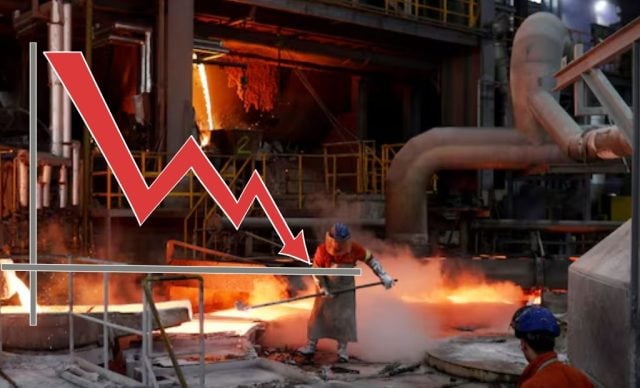
In the span of only three months, the outlook has drastically shifted due to the effects of declining internal demand, reduced mining production, falling investment, worsening employment, rising fuel prices, and weakened private consumption, among other factors.
Declining Internal Demand
According to the bank’s report, Chile’s economy has weakened throughout the year, with internal demand decelerating during the second quarter. This phenomenon coincided with a decline in the labor market, confidence indicators, and the adverse effects of rising fuel prices on the income of businesses and households. While the impact of supply factors was dominant on GDP earlier this year, recent developments reflect poor internal spending performance.
Specifically, it noted that internal demand grew by only 0.1% quarter-over-quarter in its seasonally adjusted series during the second quarter (0.1% year-over-year, original series). This had repercussions for non-mining sectors, highlighting weaknesses in retail, certain services—including restaurants and hotels, transportation—and construction, which experienced a more sustained decline.
Meanwhile, copper mining «continues to be affected by lower ore grades and process interruptions at several major operations.«
Lower Mining Production Hits Economic Activity
In July, the Monthly Economic Activity Index (Imacec) fell by 1.5% year-on-year, largely influenced by diminished mining production and adverse weather conditions affecting various sectors.
In the non-mining component, decreased performances in trade, services—particularly personal services—and manufacturing stood out, primarily due to declines in fuel and chemical production prompted by weather conditions.
Contraction of Private Consumption
The IPoM indicates that private consumption slowed in the second quarter, with contractions observed across various components when compared to the first quarter. Specifically, it experienced a reduction of 0.5% quarter-over-quarter in seasonally adjusted terms (+1.2% year-on-year, original series).
The report highlighted a drop in spending on non-durable goods (-0.9% quarter-over-quarter, seasonally adjusted; -0.3% year-on-year, original series), with a particular emphasis on reduced fuel consumption. Additionally, spending on durable goods and services also showed declines. Concurrently, government spending slowed compared to the first quarter (-3.8% quarter-over-quarter, seasonally adjusted; +1.8% year-on-year, original series).
Destruction of Formal Jobs and Unemployment at 9.5%
In its analysis, the Central Bank linked the performance of private consumption with a context where some of its determinants have deteriorated and referred to the «destruction of jobs on the margin, particularly formal employment.»
It also indicated that the unemployment rate for the quarter ending in July rose to 9.5% (9.3% in seasonally adjusted terms).
According to the financial institution, employment has displayed weak performance following the Covid-19 pandemic. An environment that has been compounded by persistent factors such as rising labor costs—which have already been documented in previous reports—and «new data highlighting the significance of the automation process that has occurred in the Chilean economy in recent years, driven by the high exposure of certain occupations to these changes and a reduction in the relative cost between technology and labor.»
Sustained Decline in Investment
The IPoM revealed that gross fixed capital formation (FBCF) contracted again quarter-over-quarter, but with less intensity than at the beginning of 2026. This decline is attributed to the drop in levels of public investment spending recorded in the first half.
«In its seasonally adjusted series, investment fell 0.3% quarter-over-quarter in the second quarter (no annual change in the original series). The result was mainly explained by the construction and other works component, which recorded quarterly and annual declines (-0.5% quarter-over-quarter, seasonally adjusted; -2.4% year-on-year, original series)», stated the issuing body.
In the report, it was explained that this reduction is linked to the completion of some large investment projects—mainly mining—and the sustained weakness in the real estate sector.
«The machinery and equipment series exhibited low dynamism (0.1% quarter-over-quarter, seasonally adjusted; 3.7% year-on-year, original series). This latter, according to information gathered from microdata, is still primarily tied to a moderation of investment in the energy and mining sectors,» it specified.
Lack of Confidence from Businesses and Consumers
Internal demand significantly decelerated in the second quarter, coinciding with a fall in confidence among businesses and consumers. In this regard, the Central Bank noted that various consulted sources revealed that businesses and individuals perceived a deterioration in the economic environment during the second quarter of this year.
It indicated that from the consumers’ perspective, their evaluation of the labor market significantly deteriorated from March, considering factors like «job stability, job loss, and future unemployment probabilities.» A similar situation was observed in the public’s perception of the country’s economic situation regarding household purchasing, indicating greater consumption caution.
The financial body referenced information from the July Business Perception Report (IPN), establishing that in light of perceived lower demand, businesses have implemented limited price adjustments, absorbing all or part of cost increases and to contain the deterioration of their margins, «have reduced expenses by renegotiating or changing suppliers, eliminating unnecessary spending and purchasing supplies in smaller quantities.»
At the same time, current concerns have led businesses to postpone investments, «awaiting definitions on public policies and regulations» from the government of José Antonio Kast.
Additionally, around half of the companies have opted to delay or cancel hiring.
«While the proportion of firms declaring they have sought personnel in the last six months has decreased compared to the beginning of the year, the number reporting layoffs has increased. In some more affected sectors, like construction and automotive trade, there is a noted reduction in the scale of operations,» emphasized the issuing body.
Deterioration in Economic Expectations
The September IPoM warned that economic expectations among businesses and households have deteriorated compared to the end of last year, particularly from the second quarter of this year, as a result of a combination of external and internal factors that have heightened caution in decisions concerning consumption, investment, and hiring.
Thus, the Central Bank painted a picture where the deceleration of demand, investment, and lower mining production explain the sharp reductions in projections, shaping a scenario of widespread weakness that the issuing institute asserts should continue to be closely monitored.
Obtén tu Pasaporte y apoya a El Ciudadano
Elimina la publicidad, accede a contenido exclusivo y sé parte de la comunidad.
Cancela en cualquier momento · Sin permanencia
Artículos Relacionados
Chile Lagging in South America: IMF Drastically Cuts Growth Forecast to 0.6% with Joblessness on the Rise
Hace 2 semanas