Original article: “Estamos frente a un proceso neocolonial en Latinoamérica”: Claudia Rocca analiza el lawfare y pone el foco en el caso Jadue
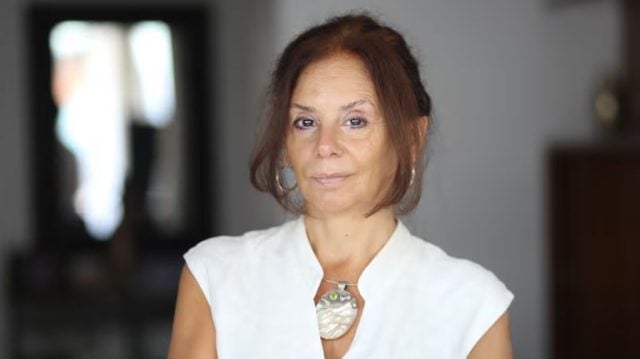
«We’re facing a neocolonial process in Latin America,» stated Argentine international law expert and human rights advocate Claudia Rocca while analyzing the complex landscape the region is navigating. She warned that this trend finds one of its most effective and dangerous tools in lawfare—the strategic use of judicial and media systems to legally pursue, neutralize, or eliminate political adversaries.
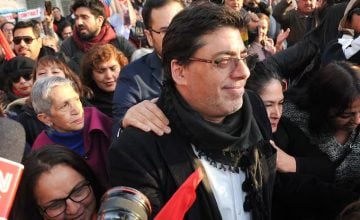
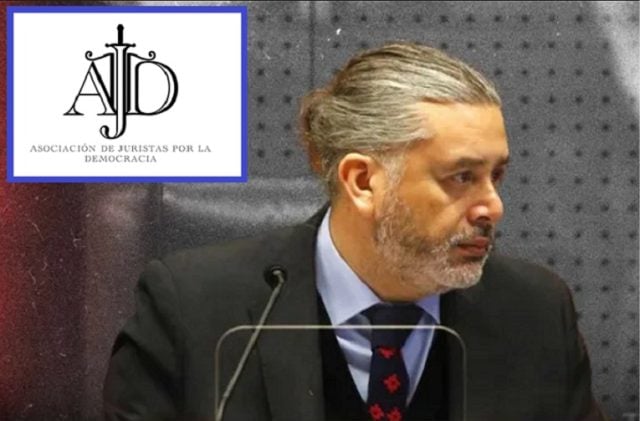
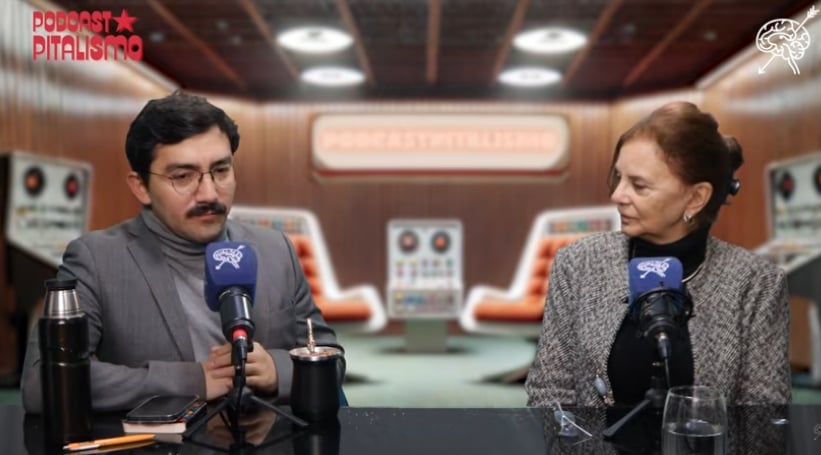
In a conversation with Podcastpitalismo, hosted by El Ciudadano’s director, Javoer Pineda Olcay, the current continental president of the American Association of Jurists discussed the case of former Recoleta mayor Daniel Jadue, indicating that it encapsulates several key components of lawfare.
«From the outside, what is most striking, especially as non-nationals viewing this regionally, is the political and geopolitical component in the case of Daniel Jadue,» she articulated.
Economic and Geopolitical Interests Behind Judicial Persecution
Rocca sees a direct relationship between judicial persecution and the economic interests at stake. «There’s an evident sequence of impact on economic interests, such as public pharmacies and housing issues. This is something that continuously and sadly occurs in our Latin America: touch certain powerful economic interests, and you will face legal challenges,» she warned, establishing a pattern that transcends Chile’s borders.
She also cited a clear political and geopolitical component, noting that the architect, sociologist, and former local leader «belongs to a political force and ideology that firmly opposes this new hegemonic power structure.»
«The organization I belong to, which has been active in America for over 50 years, defines its mission as fighting against all forms of colonialism, and we are indeed facing a neocolonial process in Latin America. In the case of Daniel Jadue, this component is evident—there’s an attempt to thwart a rapidly rising political career, posing a direct threat to the interests of this new neocolonial wave in our Latin America,» she emphasized.
The Crisis of International Law and the New Hegemonic Power
To understand these statements, Rocca contextualizes the phenomenon within a profound crisis of the international system and international law itself. According to her analysis, this crisis stems from significant transformations in the economic power structure in the West. «This crisis originates from the West itself. Contrary to what past decades have led us to believe, it is the Western power center that demonstrates a failure to adhere to international law on various fronts,» she noted.
Rocca detailed how this non-compliance manifests in interventions and violations of territorial sovereignty, the right to self-determination, and the principle of non-interference, as well as through armed attacks, invasions, and extreme situations like “the kidnapping of the president of a sovereign nation, holding him almost as a war hostage.” She added that there is increasing questioning and calls for the dissolution of international bodies simply for performing their functions.
«All of this immense structure that has been built over decades, especially since the 70s, focused on the protection of human rights and the rules of international and humanitarian law now feels like a corset that will not tolerate this new economic power composition,» she argued.
This new composition, far from seeking accumulation based on productive merging and consumption, relies on «speculative transnational financial corporations, extractivists, and tech firms, all intertwined with their interests, along with a weapons conglomerate that certainly needs to continue fabricating armed conflicts to maintain its formidable power and accumulation,» she added.
Death Economy
Within this context, Rocca introduced the term «death economy» during her interview with Podcastpitalismo to describe the prevailing model, citing declarations made in Davos claiming that «5 billion people are surplus to requirements.»
«This, of course, imposes regimes in each of the countries that fall under this political current, which disregards human development and fails to provide dignified living conditions, because it is not a life economy, it is a death economy,» she elucidated.
It is in this fertile ground where lawfare finds its justification, and the Argentine lawyer defines this phenomenon as «the utilization of the judicial power for a type of war.»
«Today we are subjected to various forms of warfare; we are in the midst of a hybrid war, and its goal is the elimination of certain political and social leaders. It is not limited to just political leaders—it is precisely those who resist or can catalyze social will against this death economy project,» she posited.
The Santa Fe Documents: The Plan to Infiltrate the Judiciary
At this point, the jurist paused to explain why the judicial system is the chosen target for these operations.
«Why is the judiciary or judicial powers susceptible to this? This was also planned. The Santa Fe documents from the 1980s are rarely discussed,» she revealed. Specifically, she referenced the Santa Fe II document from 1984, «generated by a group of CIA experts in Santa Fe, USA, which clearly lays out the consolidation of power within the Latin American region,» she noted.
According to Rocca, this document in its Chapter 3 «clearly provides guidance on how to penetrate judicial powers in Latin America.» From that point, an alliance was formed that reinforced the Atlas Foundation, later known as Atlas Network. But Rocca warned that lawfare «not only encompasses the judiciary but also the media power.»
«These are the two means through which it establishes itself. First is media condemnation, the extensive dissemination, which is one of the fundamental elements of lawfare, and then comes the judicial condemnation or process,» she explained.
Lawfare in Latin America
During her conversation with Podcastpitalismo, the lawyer identified four essential components of lawfare: first, violations of due process rules, the natural judge, and impartiality; second, extensive media dissemination; third, a clear political component involving «political interests aiming to remove certain personalities that could obstruct this installation, this new power»; and fourth, a geopolitical component.
This last component is evident, according to Rocca, in «a whole web of communications; we see USAID (United States Agency for International Development) operating, an American agency with a clear tendency toward managing, financing, and otherwise controlling media with distinct American interests. We also observe international communications, agents, and officials intervening, while the OFAC (Office of Foreign Assets Control) freezes assets by simple administrative resolution, turning individuals into civilian casualties.»
To illustrate how this web operates, Rocca mentioned a series of regional cases that, in her view, share these characteristics. One of the most cruel cases, she claims, is that of Jorge Glas, who served as Ecuador’s Vice President from 2013 to 2018.
«We have very cruel cases, such as that of Jorge Glas, where he is being subjected to a slow death,» she denounced, recalling that he faces «a range of violations that we never would have thought a country could breach regarding the diplomatic immunity of another, particularly one belonging to the same region, sharing regional blocs and historical traditions, while also violating its diplomatic body, and nothing has been done about it.»
According to the jurist, Glas is imprisoned with his sentence served, yet he faces additional absurd charges, and he is subjected to «cruel, inhumane, and degrading treatment, as evidenced by images of him that are truly shocking due to his deterioration.»
Another case is that of former Peruvian President Pedro Castillo, where «even the United Nations’ Arbitrary Detention Group has highlighted the illegality of the proceedings.»
«They are asking the Peruvian State for explanations, but they are refusing. Again, we see the crisis is exacerbated as these new currents persistently refuse to comply with the instructions, indications, and recommendations of the system,» she stated.
The jurist also mentioned the case of former Argentine President Cristina Fernández de Kirchner, which she characterized as a case «riddled with irregularities.»
«There’s an absurdity where the minister of the cabinet is exonerated but the presidency is blamed,» Rocca observed while criticizing the voluminous nature of these cases. «1,500 documents, impossible for a normal person to read,» she pointed out.
In Ecuador, she referred to the case of former President Rafael Correa, where «they come to accuse him based on psychic influence—an imaginative resource that these judges have created.»
Claudia Rocca’s exposition on Podcastpitalismo painted a picture where lawfare is neither an isolated phenomenon nor merely a legal dispute, but rather a coordinated strategy within a broader neocolonial process. The crisis of the rule of law, the vulnerability of judicial systems, and the complicity of certain media create an ecosystem that, according to her analysis, seeks to eliminate any resistance to an economic model that prioritizes speculative financial accumulation over human life. The case of Daniel Jadue, affecting concrete economic interests in pharmacies and housing, and his potential to thwart the plans of this new hegemonic power, emerges as an emblematic example of how the judicial and media systems become instruments of a hybrid war.
You can review the full interview with lawyer Claudia Rocca on Podcastpitalismo below:
*Featured photo: Jose Nicolini.
Obtén tu Pasaporte y apoya a El Ciudadano
Elimina la publicidad, accede a contenido exclusivo y sé parte de la comunidad.
Cancela en cualquier momento · Sin permanencia