Original article: Bajos puntajes y cierre de escuelas: Mirando la crisis educativa desde una perspectiva pedagógica
By Miguel Caro Ramos, History and Geography Teacher, Doctor in Education, Academic, and Coordinator of the Pedagogical Experimentation Center at UMCE
Following the 2026 PISA report, the debate has reignited over Chile’s consistent low performance in this assessment and its continuous gap from the OECD average.
These concerns are compounded by criticisms regarding the stagnation of results in the SIMCE test for over a decade, regardless of transient variations.
Both performances are linked to the low ability of our educational system to achieve satisfactory results in standardized tests, both national and international, but they also reflect our understanding of learning and what constitutes educational quality.
For instance, it raises questions about the real value of these assessments in fostering holistic development or their predictive value regarding future performance, as well as their role in life projects and the various citizenship challenges faced by new generations. These are topics that rarely surface in public discourse.
However, if we broaden our view of the role of school education, we might realize that we are perhaps chasing an illusion, based on the assumption that learning a set of language and mathematics content and skills can enable performance across various knowledge areas and even help tackle the other educational challenges our country faces.
If we temporarily set aside this miraculous assumption and consider the profound crisis of coexistence, participation, and interest in knowledge currently experienced in society and schools, perhaps our urgent questions could shift.
We might ask whether schools are doing anything to help us confront the complex dilemmas of social living, such as teaching appreciation for the sociocultural diversity of the country or acquiring tools to adequately handle conflicts, develop critical thinking, and exercise informed active citizenship.
We could explore whether the holistic development of new generations is being guaranteed, by addressing the emotional dimensions of learning, or fostering solidarity and empathy throughout different stages of schooling.
All these aspects are emerging in a broad crisis of civilizational limits, which the notion of standardized academic learning does not address, yet could be systematically approached from a more expansive educational and pedagogical perspective.
Viewing the educational challenge in this light, we might find that none of these elements are properly incorporated into curricular policies, and that the official teaching content consists of an endless list of objectives and subjects, disconnected from each other, detached from contextual realities, and completely distant from the challenges that both concern and tension us as a society.
We may realize that this disconnect is a significant part of the issue of low scores, as there is a growing consensus in specialized literature that information saturation (or infoxication), the decontextualization, and fragmentation of knowledge do not foster the capacities for generalization and abstraction that lend meaning to learning, nor do they cultivate complex or critical thinking (Bruner, 1987; Morin, 2005; Han, 2022).
Furthermore, we might discover that the learning pursued generates information overload, cultural disconnection, and disaffection, leading to a disinterest in acquiring the type of instrumental achievements measured by standardized tests.
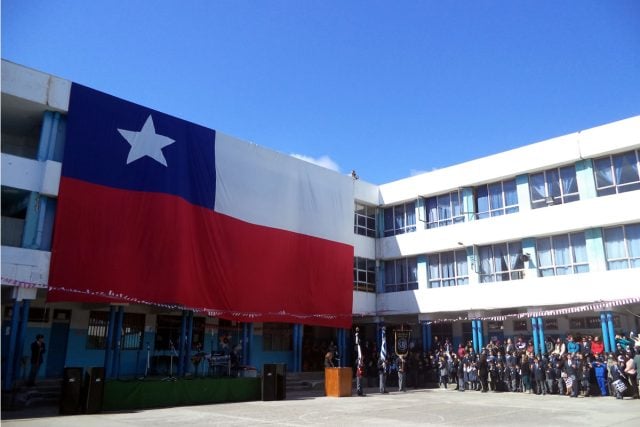
The consequence of this situation is the impending closure of schools following the 2026 SIMCE results. Approximately 80 institutions may face closure under regulations if they achieve low scores again, which will cause significant educational and socio-emotional harm to entire communities, as these closures represent a social punishment for the most vulnerable students and families, whether or not they took the test.
The problem is that the educational discourse itself seems to be of little importance, with scores serving as the sole, blunt representation of quality. This measure defines schools as «good» or «bad» without truly understanding whether these are the only modes of learning capable of satisfying educational needs that are much more complex than standardized academic performance.
Yet the vital contradiction lies in an educational system that, on one hand, emphasizes the importance of inclusion, diversity, holistic development, and citizenship, while on the other hand, imposes a curriculum standardization regime, evaluative controls, and draconian punishments.
It is unlikely that a problem of this magnitude can be overcome through coercive and administrative measures, or through training and management theories for leadership, data analysis, or classroom support, if there is no clear understanding of the goals for leading, analyzing, or supporting, nor which pedagogical perspective can orient these complex educational challenges—as this is precisely the pending discussion.
In reality, it is challenging to envision a solution if we do not address the profound lack of pedagogical and curricular discussion and the precariousness of professional reflection caused by standardization and the technocratic-managerial approach of the system.
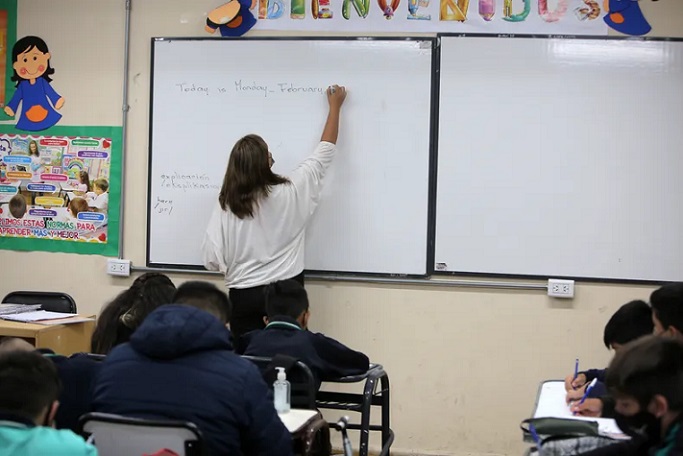
Here, the hypothesis of the added value of schools begins to falter, as it places the results on the school as an isolated entity, ignoring the systemic dimension of the educational process, while attributing to the classroom (and teachers) the almost exclusive burden of the results.
Such educational reductionism obscures the convergence of multiple factors that crucially influence the intended goals, neglecting significant aspects that occur outside the classroom, many of which happen outside the school.
We lose sight of the complexity and diversity of contexts in which a standardized logic fails, and do not consider the critical absence (by regulation) of spaces and time for essential tasks occurring outside the classroom that directly impact it, such as class planning, material design, and reflection and experience sharing among teachers.
This approach effectively undervalues the substantial weight of public policies and their goals and tensions, as well as the conditions for professional practice.
However, these are the issues that began to surface after the COVID-19 pandemic in discussions among various public entities, specialists, and international organizations, who (even engaging in unusual self-criticism) have questioned whether it is correct to surrender completely to a race for scores, or whether the content of learning should be an overloaded curricular standard of knowledge and academic skills.
They wonder if it is time to open up to educational options that are more aligned with real-life circumstances, offering a more holistic approach to learning (OECD, 2020; UNESCO, 2021).
In this context, discussions have begun about transitioning to a new generation of curricular policies that align with the contexts and the «contemporary problems» faced by communities (Opertti, 2021; UNESCO, 2022).
Additionally, there is a push for a new approach to teacher professional development, not through the classic and questionable efficacy of course certification, but through strengthening the capabilities for in-service decision-making that enable context-based curricular development and collaborative reflection on each context’s educational needs.
In this framework, there is a strong emphasis on enhancing teachers’ agency and creating substantial, culturally relevant learning experiences, connected to the challenge of contributing to a socially and environmentally sustainable model, engaging in discussions about the values and tools essential for navigating times of civilizational decline and democratic deliberation.
The opposite is to persist in the constantly failed belief that learning is synonymous with academic content and skills, that its indisputable representation is the score achieved in two standardized tests, and that the inevitable path to achieving this is to close schools.
Miguel Caro Ramos
Obtén tu Pasaporte y apoya a El Ciudadano
Elimina la publicidad, accede a contenido exclusivo y sé parte de la comunidad.
Cancela en cualquier momento · Sin permanencia