Original article: “Estructura de injerencia externa”: Brasil pide investigar fondos de EE.UU. a tres días de las elecciones
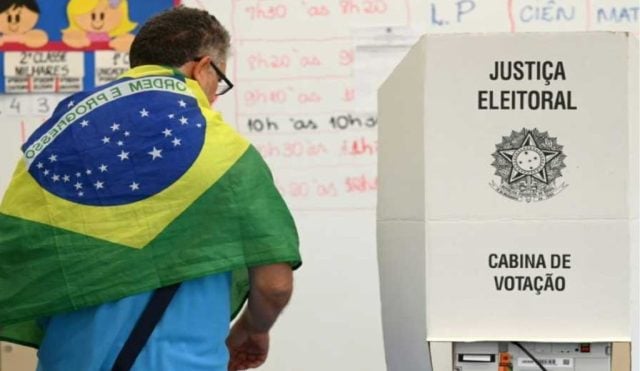
With just three days remaining before Brazil’s presidential elections, amid claims of an «external interference structure», the Attorney General’s Office (AGU) requested the Federal Police and the Public Prosecutor’s Office conduct an investigation into whether the United States funded local groups to meddle in the political discourse and undermine the legitimacy of the Supreme Federal Court (STF).
This request followed reports that the US Administration allocated one million dollars (5.2 million reais) to a project aimed at financing organizations that challenge the STF and oppose what the White House describes as «judicial excesses». The AGU is seeking to identify those responsible and the recipients of these funds within Brazil.
The Guardian published an investigation on Wednesday revealing that former President Donald Trump’s administration diverted over 175 million dollars from the Human Rights and Democracy Fund (HRDF) at the State Department to a series of grants for organizations promoting an extreme right agenda abroad, specifically targeting the STF.
While the British newspaper did not specify who received the funds, it noted that Trump had attacked the Brazilian Supreme Court and imposed economic sanctions against Judge Alexandre de Moraes, who presided over the trial of former President Jair Bolsonaro for the attempted coup, as well as against other judges on the bench.
According to The Guardian, the funds include support for a group advocating for the rights of white Afrikaners in South Africa, initiatives against the Supreme Court of Brazil, and programs for ideological allies in Europe upholding «Western civilizational standards».
Citing a source, the newspaper indicated that on the legal deadline—being the last day of the fiscal year—the State Department awarded the grants despite Congressional objections.
Senator Jeanne Shaheen, the leading Democrat on the Foreign Relations Committee, had placed holds on 10 funding allocations totaling 22 million dollars related to Brazil, South Africa, Nigeria, the United Kingdom, and European countries. Nevertheless, Secretary of State Marco Rubio signed a memorandum and bypassed the holds, with the State Department distributing the funds just hours before the deadline.
Following this maneuver, Shaheen criticized that the Congress had allocated these funds in a bipartisan manner for human rights, yet Trump would use them «to promote extreme right organizations and programs in established democracies».
«This is a waste of resources and undermines the values and relationships of the United States with democratic partners, including allies in Europe,« the legislator warned.
Critics are focusing on 43 grants totaling 176.9 million dollars—from 205 million allocated by Congress for the Democracy and Human Rights Fund—designated for right-wing and conservative causes. This move, noted the British newspaper, could «anger American allies due to interference in domestic politics.»
Sources claim that the grants are backed by the upper echelons of the White House, including Vice President J. D. Vance.
US Interference in Brazil
In line with this, TeleSUR highlighted that Washington also imposed tariffs on Brazilian products and opened investigations into unfair trading practices, amid tensions with Brasília. In July, Brazil denied visas to two State Department officials, identified by The Washington Post as part of a strategy against the integrity of Brazil’s electoral system. In September, a report from ABIN revealed that the United States was planning to intervene in the elections on October 4 to realign the political and economic views in Latin America.
Washington also revoked the visa for Brazil’s ambassador in the United States, and President Donald Trump met with Flávio Bolsonaro, son of Jair Bolsonaro and a competitor against the current president Luiz Inácio Lula da Silva in the elections taking place this Sunday, October 4.
Networks Against the Institutional Framework of Brazil’s Judiciary
The AGU cautioned about the seriousness of these precedents and raised alarms that US public resources may have funded networks in Brazil to interfere in the political debate and «destabilize and undermine the institutional framework of Brazil’s Judiciary». Therefore, it demanded an «immediate» investigation and the identification of those receiving these millions of dollars.
«If confirmed, the acceptance of foreign capital to promote systematic and organized attacks against national sovereignty and the functioning of the country’s institutions could reveal a structure of external interference in Brazil’s internal affairs,” the AGU stated in the communications sent to the Police and the Prosecutor’s Office.
Obtén tu Pasaporte y apoya a El Ciudadano
Elimina la publicidad, accede a contenido exclusivo y sé parte de la comunidad.
Cancela en cualquier momento · Sin permanencia
Artículos Relacionados

Brazil's Supreme Court Denies Javier Milei's Request to Visit Jair Bolsonaro Amid Political Tensions
Hace 2 meses