Original article: Estados Unidos y todo el daño causado a la isla de Guam y sus planes militares para condenar a su población otra vez
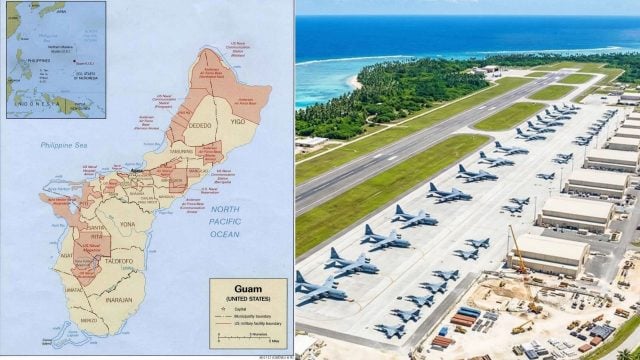
Guam, the unincorporated U.S. territory in the western Pacific, is entering a new phase of militarization that, according to activists and official documents, will exacerbate decades of environmental harm, cultural displacement, and social pressure on its Chamorro people. The ongoing discourse about the future of Guam is filled with concerns over the damage inflicted by the U.S. government and its military plans, forcing the island’s 170,000 inhabitants—who are U.S. citizens without voting rights in Congress or presidential elections—to bear the cost.
Unprecedented Military Escalation
The Pentagon is deploying its most ambitious missile defense system to Guam, a project valued at approximately $8 billion, designed to intercept ballistic, cruise, and hypersonic missiles. The 3rd Battalion, 43rd Air Defense Artillery Regiment (3-43 ADA) will officially activate in October 2026, incorporating the Patriot, THAAD, and IFPC systems into a multi-layered, 360-degree architecture, replacing the single-layer model that has been in use since 2013. Lockheed Martin has already demonstrated an artificial intelligence combat manager to coordinate all these systems.
Additionally, Camp Blaz, the first new Marine Corps base in over 70 years, was built at the cost of clearing more than 400 hectares of limestone forest and relocating ancestral Chamorro graves, according to the Center for Biological Diversity. The associated live-fire training area, located near the Ritidian National Wildlife Refuge, could force the closure of the refuge and limit access to nearby waters.
Ironically, the mass relocation of Marines from Okinawa that justified part of this expansion has stalled. By late 2025, only 105 logistics specialists had been confirmed to arrive, and in January 2026 it was revealed that the Marine Corps intends to keep units in Okinawa that were supposed to be relocated to Guam. This uncertainty has not halted construction or the pressures faced by the island.
A Toxic Legacy That Contaminates Water
Military contamination in Guam is not new, but declassified documents reveal its current severity. The pesticide dieldrin, banned in the U.S. since 1987 and classified as a probable carcinogen, has been detected in the drinking water of the community of Yigo, near Andersen Air Force Base, with levels exceeding the Provisional Action Level set by the EPA of Guam in November 2024. Despite unsafe levels being known since 2008, residents were not warned until 2025.
On December 23, 2025, the Guam EPA and the federal EPA sent a joint letter to the Joint Region Marianas demanding a work plan to investigate the source of contamination, with a deadline set for February 27, 2026. Dieldrin does not degrade quickly in soil or water, accumulates in fatty tissues, and can take many years to break down. Andersen Base has also reported fuel spills, pesticides, and chemicals in landfills and storage areas.
Legal Battle Reaches the Supreme Court
On October 7, 2026, the U.S. Supreme Court heard oral arguments in the case Department of the Air Force v. Prutehi Guåhan, a dispute over whether the Air Force must conduct environmental assessments under the National Environmental Policy Act (NEPA) before continuing the detonation of World War II munitions on Tarague beach, which sits above the island’s primary aquifer.
The Air Force argues that the Resource Conservation and Recovery Act exempts it from such reviews, but several justices expressed skepticism. Justice Sonia Sotomayor pointed out, «Congress knows how to exempt from NEPA; it does so frequently, but has not done so in this context». Monaeka Flores, executive director of Prutehi Guåhan, emphasized after the hearing: «Guam is a colony of the United States. We lack political equity. We have no voting representation in Congress. We do not vote for president. NEPA is an important mechanism that carries much weight at home».
Housing and Public Services Crisis
The military buildup is overwhelming the island’s capacity. The Guam Housing and Urban Renewal Authority reported a demand for 9,908 additional housing units in 2025. The Department of Defense plans to acquire 2,400 homes in the coming years, but a defense bill from December 2025 did not allocate new funds for construction, only $102.6 million to replace 250 units at Andersen.
Housing prices have skyrocketed: homes that cost $150,000 in 2020 are now selling for between $300,000 and $550,000. Additionally, the arrival of over 6,000 foreign construction workers—constituting 3.5% of the population—competes for limited rentals. The island’s already saturated hospitals now face an even greater burden.
Nuclear Threat Looms Over Guam
The Pentagon plans to deploy nuclear microreactors at military bases in Guam and other regions of the Indo-Pacific to ensure power supply. The Janus program aims to have an operational reactor by September 2028. Although the Guam government claims to have not received official notification, local lawmakers expressed frustration: Senator Chris Barnett recalled that when they inquired about the reactors years ago, the response was «don’t panic; it’s just a footnote buried under ten reports. And here we are, years later, discovering that it’s a reality».
The drive behind this militarization is the threat posed by the Chinese DF-26 ballistic missile, dubbed the “Guam Express” or “Guam Killer”, with a range of 5,000 kilometers and the capability to carry nuclear or conventional warheads. Guam is located less than 2,000 miles from Shanghai. Ironically, the same military buildup intended to «protect» the island makes it a higher priority target.
«We Are Not Disposable»
Activist Monaeka Flores stated unequivocally: «It seems our island is being prepared to become a dead zone, a sacrifice zone for an endless war. The Chamorro people and the people of Guam are not expendable.”
The damage is already done: deforested limestone forests, contaminated aquifers, exhumed ancestral graves, a housing crisis displacing locals, and the looming threat of nuclear reactors over a community that has already suffered from U.S. nuclear testing in the Pacific. The question that remains, as lawyer Maxx Phillips stated, is simple: “Are we going to protect what’s left?”.
Credit: The Citizen with information from The War Horse
Obtén tu Pasaporte y apoya a El Ciudadano
Elimina la publicidad, accede a contenido exclusivo y sé parte de la comunidad.
Cancela en cualquier momento · Sin permanencia