Original article: De la Guerra Civil española a la Dictadura chilena: La saga familiar que conmueve a ambos lados del Atlántico
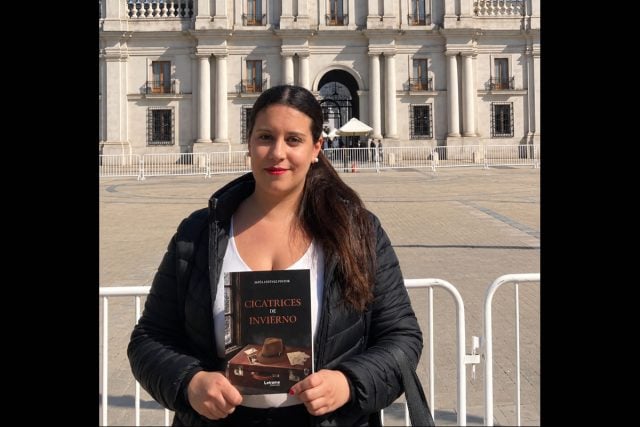
On the eve of her first official presentation in Santiago, Spanish author Sofia Estevez Pintor reflects on the key elements of Cicatrices de invierno, an ambitious family saga that spans five generations of the Veiga Castro family.
From the fields of Galicia, the defense of the Spanish Republic in Madrid, and the epic journey of the Winnipeg to the dark days of the Chilean dictatorship, the novel stands as an essential literary act of resistance against forgetting.
Following is a dialogue about exile, identity, and the ethical commitment to tell stories to prevent history from repeating itself.
–What inspired you to write Cicatrices de Invierno, and how did you develop its characters?
-The idea of writing a novel that connected the histories of Spain and Chile during the 20th century—against a political backdrop and in defense of memory and human rights—had been in my mind for years. However, due to time constraints, I was unable to shape it until my pregnancy in 2025.
Thanks to the various real testimonies I collected over this period, along with personal and family experiences reflected in the work, I was able to bring the characters and their journeys to life.
–What can readers expect to find in Cicatrices de invierno, and how are the stories of Spain and Chile intertwined in the novel?
–Cicatrices de invierno narrates the tale of the Veiga Castro family across five generations. The story begins in a rural village in Galicia (northern Spain) in 1935, focusing on the romance, dreams, and life projects of the main couple, just months before the coup that would spark the Spanish Civil War.
Following the defense of Madrid, the defeat at the Battle of the Ebro, and the ordeal of refugee camps in France, they manage to board the Winnipeg bound for Chile. They rebuild their lives in exile, but the Pinochet dictatorship strikes harder than ever, affecting them and their descendants.
It is a deeply emotional novel that is resonating with Spanish readers, and I hope it will also be well-received in Chile.
–What themes did you want to explore through the story of the Veiga Castro family, and what emotions do you hope to evoke in readers?
The novel speaks of love, family bonds, the pain of loss and exile, good friendships, memory, the search for justice, roots, and identity. These pages are filled with history, drama, romance, joy, hope, anger, resilience, nostalgia, and a touch of mystery.
–What does Chile mean to you, and how has your experience in the country influenced your interest in researching and writing about memory, human rights, and exile?
-My connection with Chile began in 2006, although it wasn’t until 2017 that I first set foot in Santiago. I fondly remember all my stays here. I have always been passionate about its culture, history, music, literature, series, and customs.
I have resided here since 2020 and am very grateful for the warmth and opportunities this country and its people have given me. Besides my work, I enjoy researching and writing about the mentioned topics.
My aim is to raise awareness about the pain and consequences of exile, torture, repression, and the deaths that have emerged from dictatorships in Spain and South America, so that they never happen again.
–Are you currently working on any new literary projects? What can you share about it?
-Yes, I am currently writing a new novel with different characters and settings, which I hope to publish in 2027. I don’t want to reveal too much at this stage. I will only say that it will be more personal and that, once again, I aim to tackle very sensitive topics related to dictatorial regimes from decades past to help ensure they are not forgotten.
Official Presentation
The novel Cicatrices de invierno is now available in Chile through the platforms Mercado Libre and Buscalibre, and at the bookstore Qué Leo Forestal (just steps from Baquedano metro station, Santiago). Abroad, including in Spain, the book is marketed through Amazon and selected bookstores.
Sofia Estevez Pintor’s first official presentation and book signing will take place on Friday, October 30 at 18:00 at the Qué Leo Forestal bookstore.
Obtén tu Pasaporte y apoya a El Ciudadano
Elimina la publicidad, accede a contenido exclusivo y sé parte de la comunidad.
Cancela en cualquier momento · Sin permanencia