Original article: ¿Para qué sirve un partido político? Foro del Sur Global debate sobre soberanía y modernización socialista
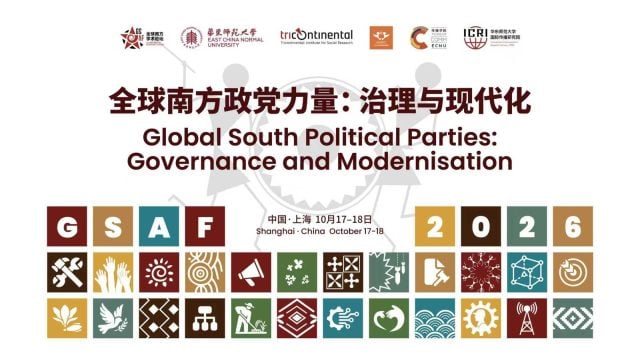
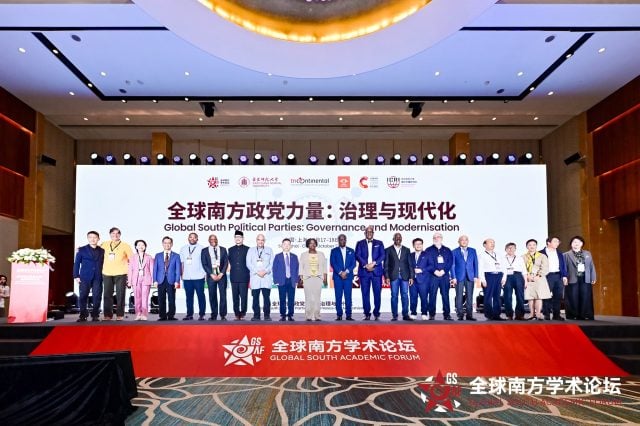
The inaugural day of the Global South Academic Forum 2026 explored the path to achieving true sovereignty through the strengthening and transformation of political parties.
Political leaders, academics, and movement organizers from Africa, Asia, and Latin America gathered in Shanghai on October 17 for the opening of the Global South Academic Forum 2026. Convened under the theme «Political Parties of the Global South: Governance and Modernization,» the forum reflected on the purpose of political parties, the limitations faced by progressive governments in inherited states, and what is required to turn formal independence into popular power.
Vice President of Ghana, Jane Naana Opoku-Agyemang, discussed the incompleteness of political independence. She stated that Global South countries entered an international system whose leading institutions were designed prior to their liberation. Therefore, independence must be followed by the more challenging task of building institutions, educating the populace, developing infrastructure, and creating productive economies.
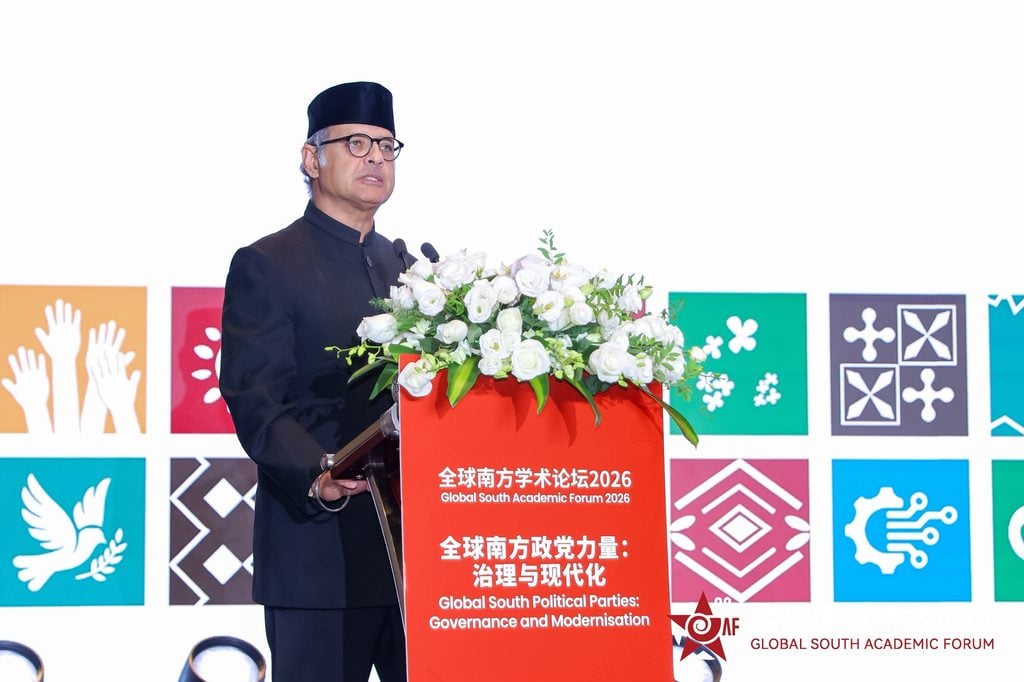
The experience of China invited further study of its long-term planning, industrialization, poverty reduction, «and the role of the Communist Party of China in shaping the country’s development trajectory,» she noted. Countries should learn from one another without assuming the need to become like each other. The South was called to demand better multilateralism rather than retreating from it, she emphasized, adding that the Global South needed a unified voice and an international order where its countries helped make decisions rather than merely carrying them out.
«Multipolarity Alone Is Not Socialism»
Solly Mapaila, General Secretary of the South African Communist Party, pinpointed the issue at the ownership of the world’s productive forces. He argued that new technologies had expanded humanity’s capacity to meet its needs, while economic and political power remained concentrated in a few hands. His position combined support for the erosion of Western dominance with a caution about its limitations.
«Multipolarity is a significant advance against unilateral domination, but multipolarity alone is not socialism,» Mapaila stated. «Multipolar capitalism can still be exploitative,» and modernization without the power of the working class could only result in the modernization of capitalism.
Countries of the Global South had not merely failed to imitate Western development, he maintained. Colonialism and imperialism had integrated them into the global economy as exporters of minerals, raw materials, and labor. Therefore, sovereign modernization required control over strategic resources, industrial capacity, and technology. China proved that «modernization does not have to mean westernization,» he asserted, and that a people could determine the content of their democracy rather than having it imposed by a foreign power.
Mapaila emphasized the need for progressive parties and labor movements to coordinate closely. «That’s why we need to move from a network of meetings to a network of action,» he stated.
Professor Xu Junzhong from Sun Yat-sen University made an explicit distinction between socialist democracy and bourgeois democracy. Political equality without economic equality misled the masses by leaving wealth ownership and control over social life intact, he argued. Full democracy was only possible under socialism, with public ownership as the fundamental basis of the economy. He described the Communist Party of China not as a parliamentary party that periodically competes for office, but as the forefront of a system of popular democracy.
For Xu, democracy went beyond elections and included public participation in state management, economic and cultural affairs, and social life. The aim of consultation was to turn diverse interests of the people into common action rather than reducing politics to competition among electoral blocks.
Vijay Prashad, Director of the Tricontinental: Institute of Social Research, addressed the issue through China’s campaign against extreme poverty. In Ganzhou, he reported, the proportion of people living below the poverty line dropped from 23% in 2012 to zero in 2020. Such achievements might seem incredible in countries where IMF-driven austerity had stripped states of their ability to meet basic needs, Prashad noted. He rejected the reduction of democracy to multiparty elections alongside unrestricted private capital power. What Western governments opposed in China, Vietnam, Laos, Cuba, and Burkina Faso, he argued, was that multinational private capital could not dictate the course of public policies.
Prashad also called for strengthening editorial, translation, and cultural networks across the South. Intellectuals from Africa, Asia, and Latin America too often knew more about debates in the United States or France than those in neighboring countries. «War and austerity seek to impoverish not only our bodies but also our souls,» he said. «Our agenda for peace and development, on the other hand, seeks to enrich us.»
The forum launched new country reports on Brazil and Ghana and a series of publications on science and technology called Bandung Circuits. Xiong Jie, Secretary General of the Global South Academic Forum, presented open-source artificial intelligence as an opportunity to broaden access to knowledge and reduce technological dependence. Neuri Rossetto, a member of the national coordination of Brazil’s Landless Workers’ Movement (MST), introduced a sharp point. Imperial powers and major tech companies were already using AI for war, surveillance, and wealth concentration. «Technology is not neutral,» he remarked. «It will serve those who control it.»
Govern Without Being Absorbed by the State
The first afternoon panel, «Why Governance Matters: State Capacity and Institutional Building in the Global South,» shifted from contrasting narratives on modernization to the problems progressive parties face when they come to power.
Prashad described a recurring dilemma drawn from the experience of India’s left. If a movement sent its best organizers to the government, its mass organizations could weaken. If they stayed within the movement, their work in government could suffer. The solution was to train many more cadres in political education and public administration.
Progressive officials must understand budgets, ministries, and implementation without adopting the command habits of the inherited state. Popular organizations must retain the ability to mobilize, critique, and oversee their own government. Prashad proposed an annual public administration school for progressive movements and insisted that the measure of any government must be whether ordinary people leave it more empowered to exercise power. «To govern means camaraderie, not command,» he asserted.
Rossetto took the issue further than better administration. The state was not a neutral instrument, he stated. Budgets arrived loaded with debt payments and concessions to capital; courts and regulatory bodies could obstruct reform; and the repressive apparatus retained its class character. A democratic popular government was not a popular state. «That would be the result of a rupture,» he said.
The task was not to abandon elections nor confuse them with the entirety of democracy. A government must address urgent needs while also seizing every opportunity to build popular forces outside the state, deepen political consciousness, and keep alive «the perspective of rupture.» Its success could not be judged solely by what it managed to deliver, Rossetto maintained, but also by what it organized.
Fred M’membe, President of the Socialist Party of Zambia, also rejected a neutral view of the state. It was an instrument of class dominance, he stated, and Zambia’s crisis was not a lack of skilled economists but a lack of sovereignty over an economy shaped by foreign mining companies, banks, and IMF conditionalities. «The strategy was written for us in Washington,» he declared.
M’membe recalled the nationalization of Zambia’s copper mines and the construction of the TAZARA railway with China but stated that the country had failed to sustain a national accumulation strategy. A party should be a Marxist-Leninist vanguard rooted among workers and peasants, not merely an electoral machine. Votes alone would manage an economy designed by others. The countries of the South did not need a better seat at a table set by imperial powers; they needed a different table.
Professor Qin Lu, Deputy Director of the Department of Culture, Literature, and History at the Party School of the Central Committee of the CPC and National Academy of Governance, examined how a party stays in touch with people whose social lives increasingly unfold on commercial digital platforms. She described a «mass line online»: party organizations at the village level in Anhui used live broadcasts to explain policies, answer questions about pensions and agricultural subsidies, resolve complaints, share local culture, and sell farmers’ products.
For Qin, a platform was also a political position. If the party and government did not occupy it, they would not know what people see daily or who is influencing them. Credibility could not be built on slogans, she emphasized, but by resolving concrete problems and maintaining direct contact with the public.
Professor Feng Shaolei of East China Normal University situated these issues within four decades of upheaval: Western privatization and deregulation, China’s reform process, the collapse of the Soviet Union, and the growing weight of the Global South. Political systems, he argued, emerged from particular histories and national conditions; they could not be understood through a single Western model. He noted how the same Kemalist revolution that was once presented as a positive model is now labeled «authoritarian» and questioned which of the two narratives was closer to reality and the interests of the people.
On the other hand, he observed that more countries in the South were opting for peace, neutrality, and a refusal to take sides as a means to resist the drift toward war.
The panel’s president, Zhou Li, former Vice Minister of the International Department of the CPC Central Committee, took up M’membe’s call for political parties to develop their own theoretical armament. This theory should be tested through concrete national projects rather than repeated as an empty slogan, he asserted.
The Architecture of War
The second panel of the afternoon, moderated by Tings Chak, Asia Coordinator for Tricontinental: Institute of Social Research, convened under the slogan of the campaign «Hands Off Asia.» Its two parts examined different layers of the same system: the physical architecture of bases, troops, and military access, and the broader political, financial, and ideological means by which sovereignty is restricted.
Part I of the program, «The Architecture of War: Bases, Military Access, and the U.S. Military System,» was described as examining how bases, troop deployments, joint exercises, weapon systems, and security agreements drag Asian territories into U.S. strategic planning.
Yonaha Keiko, co-chair of the No More Battle of Okinawa Association, began with the approximately 200,000 fatalities in the Battle of Okinawa, including 120,000 Okinawans. Okinawa represents 0.6% of Japan’s territory but hosts nearly 70% of the land used exclusively for U.S. military facilities in the country, she stated. Residents live with the noise of airplanes, toxic pollution, environmental destruction, and sexual violence, while new missile deployments and joint exercises between the U.S. and Japan prepare the island to become a battlefield once again.
«War is not a natural disaster,» Yonaha said. «Humans create it.» She pointed to the existence of a growing network in Okinawa and western Japan that opposes military bases, ammunition depots, and the remilitarization of the country.
Hwang Jeong-eun, General Secretary of South Korea’s International Strategy Center, began with a recent campaign urging Lee Jae-myung’s government to discard sending combat forces to the Strait of Hormuz. She then traced over seven decades of South Korea’s military dependence on the U.S., from the transfer in 1953 of control over its armed forces to the country’s incorporation into Washington’s Indo-Pacific strategy.
Since Washington had much to lose, Hwang maintained, South Koreans could demand that the U.S. army withdraw from the Korean peninsula and Asia. She proposed an international network against bases to serve as «the body of action» for coordinated struggle.
Australian geopolitical analyst and AUKUS activist Barry Healy described his country as a former minor partner of Britain that had become an advanced military outpost of the United States. AUKUS was investing hundreds of billions of dollars in nuclear submarines, he stated, while the Force Posture Agreement, separately, granted the U.S. extensive access to Australian military facilities.
Healy contrasted this with the history of union opposition, led by communists, to Japanese militarism in Australia, its solidarity with Indonesia’s independence, and mass resistance to the Vietnam War. «China is not our enemy. The United States is not our friend,» he asserted. Australia faced a dilemma: to remain «an advanced military outpost of the empire» or to become a non-aligned nation that works with its neighbors for peace and cooperation.
Setareh Sadeqi, an Assistant Professor at the Faculty of World Studies at Tehran University, framed her intervention around the Strait of Hormuz. The U.S. military presence in the Persian Gulf had long been justified with rhetoric of deterrence, freedom of navigation, and regional stability. The war of 2026 against Iran, she argued, exposed the contradiction at the heart of that system: the infrastructure built in the name of security had become, in turn, a source of insecurity.
Decolonizing security meant restoring the capacity of peoples and states in the region to act. The Persian Gulf, Sadeqi stated, did not need externally imposed security. «It needs security produced by the region.»
Chen Meixia, Distinguished Professor at Cheng Kung University’s Public Health Institute, reviewed what she termed the three separations of Taiwan from China through imperial invasions: the Dutch, the Japanese, and since 1950, the American. U.S. control had been both ideological and military, she argued, and the withdrawal of formal diplomatic recognition and U.S. troops in 1979 did not weaken that ideological control.
Beyond the Bases
The second part of the panel, «Beyond the Bases: Intervention, Sovereignty, and Resistance to U.S. Hyperimperialism,» sought to expand the discussion from military infrastructure to sanctions, financial pressure, political intervention, ideological influence, and regime change strategies.
Zang Ruxing, International Department Director of Taiwan’s Labor Party, asserted that in Taiwan, anti-imperialist and reunification movements were one and the same. The Democratic Progressive Party’s government, he said, treated supporters of peaceful reunification as state enemies while committing to raising military spending to 5% of GDP. According to his account, the confrontation with mainland China subordinated the people’s livelihood to U.S. strategy.
Bonnie Triyana, a member of the Indonesian Parliament, revisited the Bandung tradition. She recalled the popular movements, student networks, and writers’ conferences that arose from the 1955 Asia-Africa Conference, before the anti-communist massacres of 1965-66 destroyed much of the organized left in Indonesia. Formal political reform later restored elections, but left unresolved the power of money and capital over democracy. Triyana supported former president Megawati Soekarnoputri’s proposal to convene a second Asia-Africa Conference to assess what seven decades of formal decolonization had produced.
Takigawa Nobuo, co-chair of the Pan-Asian Campaign Against American-Japanese Domination and Aggression in Asia, mentioned that 80 years later, the Japanese government had still not apologized or paid compensation for its aggression and colonial rule in Asia. Takigawa warned that Takaichi’s government was using the language of a «contingency in Taiwan» to increase military spending, deepen exercises with the United States and NATO countries, and undermine Japan’s post-war constitutional restrictions.
Huang Renwei, Distinguished Professor and Principal Researcher at Fudan University’s Belt and Road Institute and Global Governance, described U.S. neocolonialism as «control without annexation.» He identified four pillars of that control: the dollar, the U.S. military, elite universities, and Hollywood. Formal sovereignty, his argument suggested, remained incomplete where another power could shape a country’s finances, security, intellectual life, and political imagination.
In closing the panel, Chak stated that the discussion showed that «peace, sovereignty, and development are inseparable.» Building productive forces must strengthen the capacity to confront the military, economic, and political structures that restrict sovereignty. The future of Asia, he asserted, should be decided by its peoples.
El Ciudadano
Obtén tu Pasaporte y apoya a El Ciudadano
Elimina la publicidad, accede a contenido exclusivo y sé parte de la comunidad.
Cancela en cualquier momento · Sin permanencia