Original article: Kast es quien autorizó la rebaja de penas a abusadores de menores y Rabat puso la firma
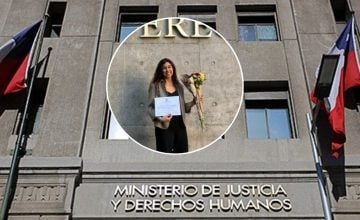
The 56 decrees that reduced sentences for convicted sex offenders against minors bear the phrase «by order of the President of the Republic». Justice Minister Fernando Rabat executed the signing. This procedure is based on an administrative interpretation of the Supreme Court’s jurisprudence regarding the non-retroactivity of Law 21.421.
El Ciudadano
Details of the Procedure
The controversy arose when it became known that, between March 11 (the day the government took office) and September 13, 2026, the Ministry of Justice issued 56 decrees for sentence reductions. Among these, 27 pertain to individuals sentenced for sexual abuse of minors and 29 for rape. These requests were evaluated by the Sentence Reduction Commission, verified by the Regional Ministerial Secretariat (Seremi), and examined by the Social Reintegration Division. Ultimately, they were approved «directly by the Ministry by order of the President of the Republic«, without a specific judicial mandate for each case.
Justice Minister Fernando Rabat confirmed the existence of the decrees and acknowledged the actual signing of them. However, the administrative act’s authority is clear: the formal power rests with President José Antonio Kast, while the minister acts as his delegate to affix the signature. In practice, this means that Kast authorized the measure, and Rabat signed the documents.
Official Argument: «Compliance with Rulings»
The government’s defense emphasized that this is not a discretionary political decision but rather a mandatory compliance with the jurisprudence of the Supreme Court. Minister Rabat explained that Law No. 21.421, in effect since February 9, 2022, explicitly excludes those convicted of sexual offenses against minors from the possibility of obtaining sentence reductions.
However, the official argument maintains that the highest court, through various amparo resources, established that this exclusion cannot be applied retroactively to crimes committed before the law took effect. Rabat stated that «what the Ministry did — even in the respective resolution, each of those rulings are cited — was to establish the doctrine that the Supreme Court itself established through those resources». Under this logic, the Executive would have merely acted to «fulfill the judicial ruling through an administrative act», and the President’s signature would merely be a «formality» to comply with a prior ruling.
However, what remains unsaid and is concealed is that the government used the resolution to avoid judicial oversight and grant Kast direct benefits to offenders and sexual abusers of minors.
Criticism: «The Law Does Not Mandate Them»
The opposition has strongly contested this interpretation. Former government spokesperson Camila Vallejo stated that «the law does not mandate them» to grant reductions and accused the Executive of changing the criteria compared to previous administrations. According to Vallejo, both under Boric’s government and Piñera’s, requests of this type were systematically rejected, requiring convicts to seek judicial recourse to obtain benefits.
Former Justice Minister Jaime Gajardo reinforced this perspective, indicating that «our criterion was to reject» and that the previous government fought in the courts to prevent reductions. Gajardo accused the current administration of facilitating the lives of criminals by granting reductions administratively without waiting for individual rulings.
The controversy has also exposed a legal fissure. Although Rabat invokes a «doctrine» from the Supreme Court, the highest court has ruled contrary to this stance as well. In March 2026, the Supreme Court rejected a similar amparo resource, establishing that the reduction is a benefit and not an acquired right, meaning the exclusion in the 2022 law should apply.
Political Consequences
The case has escalated to Congress. The Communist Party announced it would seek to interpellate Minister Rabat to explain the procedure, while legislators from other sectors are demanding to know the identities of the 56 beneficiaries and the basis of each decree. The Children’s Defense Office also rejected the measure, describing it as a «setback for effective protection» of minors.
In summary, the administrative procedure was completed with Rabat’s signature under the formula «by order of the President»; however, the legitimacy of this act and the interpretation of the jurisprudence supporting it remain the center of an intense political and legal debate.
El Ciudadano
Obtén tu Pasaporte y apoya a El Ciudadano
Elimina la publicidad, accede a contenido exclusivo y sé parte de la comunidad.
Cancela en cualquier momento · Sin permanencia
Artículos Relacionados

PC and Independent Bloc Demands Special Session Over Sentence Reductions for Sex Offenders Against Minors
Hace 15 horas