Original article: 33 agresores sexuales libres y sus víctimas sin aviso: revelan quiénes recibieron rebajas de penas de Kast
33 Sex Offenders Freed Without Notification to Victims: Investigation Reveals Sentence Reductions Under Kast Administration
During the administration of José Antonio Kast, the Ministry of Justice and Human Rights granted 56 sentence reductions for sexual crimes against children and adolescents, sparking significant controversy and widespread criticism. An investigation by Bío Bío Chile identified 33 of these offenders, who are currently at liberty without their victims having been notified.
The profiles emerging from these files are alarming: they are individuals with a high risk of reoffending, displaying traits of coldness, a lack of remorse for their crimes, and no empathy for their victims.
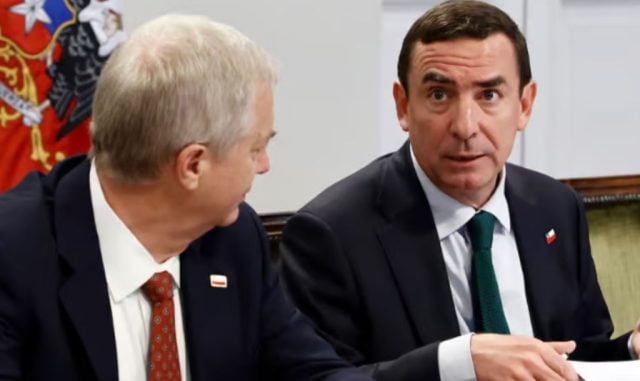
The media outlet obtained thousands of judicial records, Gendarmería reports, and decrees that enabled the identification of the 33 beneficiaries. It was noted that the Minister of Justice, Fernando Rabat, approved 22 documents related to sentence reductions, while Undersecretary Luis Silva signed 10, and Pablo Mira, Undersecretary of Human Rights, endorsed one decree.
An examination of these documents reveals information about the crimes committed, the sentences originally imposed on the sex offenders, and the extent of their sentence reductions: today, all are free, including individuals whose names are unknown to their victims.
The «Brother Quelo» and Other Cases of Child Aggressors
Luis Caamaño Mora, known as «Brother Quelo», is among those who received a reduction in sentence. According to records, he led a religious group in Talcahuano that gathered nearly one hundred people, where he was regarded as a messenger from God by his followers. One witness recounted being convinced that engaging in sexual relations with the leader was part of a supposed divine plan. He was convicted in two cases with a combined sentence of 22 years and one day for sexual assault, abuse, and repeated rape, and received a 30-month reduction via a decree signed by Rabat.
José Luis Hernández Paredes, first corporal of the Yungay Regiment, was sentenced to 16 years for rape, sexual abuse, and showing pornographic material to two girls aged six and seven when the abuses began. According to Bio Bío Chile, he assaulted them and gave gifts to ensure their silence; one victim endured abuse for five years. Initially slated to finish his sentence in July 2028, a decree signed by Rabat reduced it by 24 months, expediting his release to July 2026.
Patricio Alberto Arancibia Farfán leveraged the trust of the victim’s family, a 13-year-old girl, to repeatedly assault her, resulting in her becoming pregnant. For these acts, he was sentenced to five years in prison, but a document signed by Rabat granted him a nine-month reduction.
Juan Osvaldo Aceval Véliz was accused of assaulting four girls; one was just five years old when the violations began and continued until she turned twelve. A decree signed by Undersecretary Silva granted him a reduction of 27 months.
High-Risk Profiles and Recidivism Potential
According to Bio Bío Chile, assessments from Gendarmería reveal a common pattern: poor impulse control, manipulation, and justification of the assaults. Many categorize the offenses as «games», blame substance use, or attribute responsibility to the victims themselves.
For instance, Jeison Emerson Palacios Cabrera, convicted for assaults against two girls, was classified in a report from September 2025 as having a «high risk of recidivism»; his narrative swings between justifying his actions due to substance use and blaming the victims, with him even «boasting about the harm» he caused.
Pedro Peña Silva, sentenced to 5 years for sexual abuse, received an 11-month reduction signed by Undersecretary Silva. An assessment from April 2025 raised his profile to high risk, noting issues with anger management, a tendency to intimidate, sexist behaviors, and a complete lack of awareness of the harm done.
Gabriel Reyes Rebolledo, sentenced to 15 years for rape and sexual abuse, received 30 months off his sentence via a decree with the signature of Pablo Mira; he recorded a high risk classification and «lacked awareness of the harm caused».
Heriberto Alvarado Silva exhibits «denial of the crime», does not recognize having coerced the victim, and shows no empathy for the child’s suffering; according to the records, he is categorized as having a high antisocial risk.
Waldo Gómez Mondaca, who benefited from a 21-month reduction approved by Rabat, was labeled «a recurrent legal and criminogenic individual», demonstrating denial and minimization of the sexual violence committed.
The Legal Gap in Notification
Unlike parole, which requires victim notification, sentence reduction for good behavior operates as a purely administrative act, resolved between Gendarmería and the Ministry of Justice through a Supreme Decree.
No article mandates informing the victims or their families, leaving the victims «in the dark».
There are another 23 offenders freed whom the cited media could not identify. Once the decrees are issued, Gendarmería must immediately execute the releases; unjustified delays could entail administrative or even criminal liabilities.
Kast-Reaffirmed Officials Still in Office
In the wake of this scandal, the Government announced it would undertake a case-by-case review of the decrees and seek legal tools to reverse their implications, although it has yet to explain how this will be accomplished and whether it is legally feasible.
While Kast pledged support for victims, no concrete plan has been implemented. As the review progresses, Rabat, Silva, and Mira remain at the helm of the Ministry; the President has ruled out any changes and tasked the controversial Minister of Justice with clarifying the situation.
“I have decided they should continue in their roles with a very specific responsibility, to lead the solutions, clarify what happened, and ensure that a situation like this never occurs again”, he stated.
In parallel, deputies Luis Cuello and Juan Santana filed a criminal complaint against Minister Rabat and Undersecretary Silva for the alleged crime of administrative prevarication.
Obtén tu Pasaporte y apoya a El Ciudadano
Elimina la publicidad, accede a contenido exclusivo y sé parte de la comunidad.
Cancela en cualquier momento · Sin permanencia