Original article: Escritura creativa, poesía y educación: Poeta Alejandra del Río dirige nuevo curso en la U. de Chile
Aiming to stimulate creativity and enhance classroom engagement, the Diploma in Creative Writing Process at the University of Chile focuses on providing practical pedagogical tools through the use of poetry, emphasizing a guided writing process with the support of teaching staff.
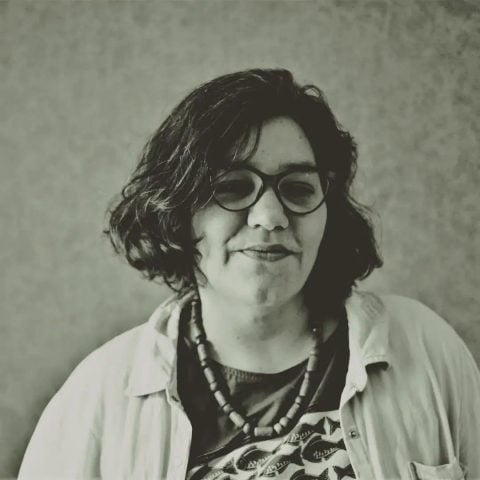
“When the focus of creative writing is on the process rather than the product, writers no longer feel compelled to compete but to collaborate and learn from each other,” says poet and educator Alejandra del Río Lohan.
With her background as an educator and writing therapist, del Río has experienced firsthand the transformative power of poetry in various educational settings, where it serves as a tool to ignite creativity, encourage collaboration, and strengthen collective work.
Recently recognized for her contributions to Innovation and Teacher Leadership through her course “Astronomy and Literature: A Creative Proposal,” co-taught with Erika Labbé from the Institute of Astrophysics at Diego Portales University, del Río has developed a pedagogical approach to poetry that is also reflected in her latest book, Blue Snake, Salt from the Chest. Fundamentals of Poetic Education (Morena Ediciones, 2024).
This hands-on experience in both formal and informal educational settings served as the foundation for a new Continuing Education program offered by the Graduate School of Philosophy and Humanities at the University of Chile, where del Río will co-coordinate the academic team.
With registrations open until the end of December, the Diploma in Creative Writing Process is designed to utilize poetry as a pedagogical tool capable of transforming educational spaces across various levels.
The program, set to begin in 2027, will include units focused on Poetic Education, Therapeutic Writing, and Writing Consultancy.
Additionally, students will engage in practice-oriented modules and develop an individual project, supported by the program’s faculty.
The teaching team will consist of Alejandra del Río Lohan, poet, poetry educator, and writing therapist; Carolina Osauz, poet, musician, and writing educator; Paulina Vergara, editor and educator specializing in epistolary genre; Julieta Marchant, poet, workshop facilitator, and writing consultant; Javier Bello, academic from the Department of Literature at the University of Chile, poet and writer; Soledad Falabella, an academic in the same department, specialist in Gabriela Mistral and academic writing; Soledad Chávez, linguist, academic, and director of the Department of Linguistics at the University of Chile; and Leonora Reyes, historian and academic from the Department of Educational Studies at the same university, specializing in education.
A Commitment to Creativity
While this diploma aims to refine theoretical and methodological competencies, it does not limit itself to these areas, instead offering comprehensive support for writing processes that also embrace their emotional dimension.
This is precisely one aspect emphasized by Soledad Chávez Fajardo, an academic coordinator and professor at the University of Chile’s Faculty of Philosophy and Humanities, who acknowledges that “Alejandra del Río’s proposal is unique at this moment in Chile.”
According to Soledad Chávez, it is crucial to promote such programs “because they focus on creativity and a holistic approach, where aspects extend beyond writing itself, and I believe that is what makes this program so valuable.”
The importance of continuing to offer training opportunities that provide writing tools and foster a deeper understanding of language and its various dimensions is also highlighted in the context of declining reading comprehension abilities among students.
Recent PISA 2025 results, prepared by the OECD, showed a decline in Chilean students’ performance in Reading and Mathematics.
According to experts from the University of Chile, the 12-point drop in Reading performance equates to half a year of lost learning, a situation that also concerns the academic and researcher in Hispanic American linguistic historiography, who sees this program as an opportunity to develop and enhance linguistic skills.
“Here lies a responsibility that transcends national and academic lines; it is an ethical responsibility, and within that realm, initiatives like this play a vital role, reflecting our relationship with language and demonstrating how writing can heal, educate, and empower us,” she asserts.
Poetic Education: A Proposal for Change
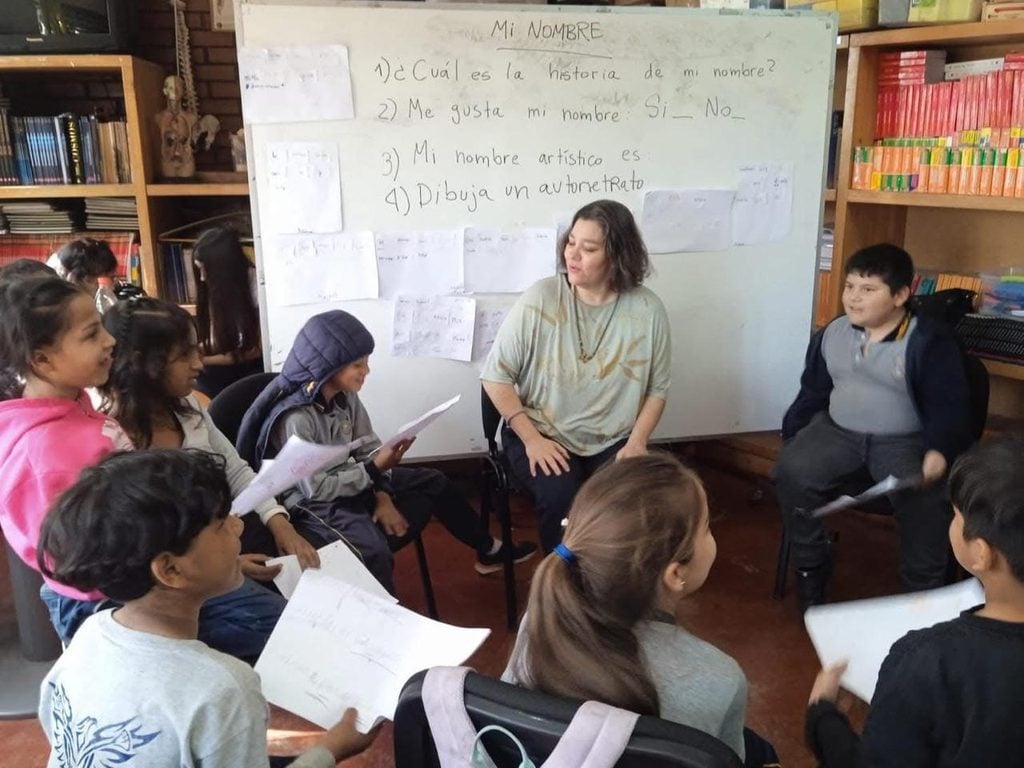
For poet Alejandra del Río, an essential aspect of training spaces in writing is the presence of a guide who, rather than assuming the role of “literary authority,” accompanies and facilitates individual processes.
In these spaces, writing is “used” not only as a form of artistic expression but also as a means for learning, healing, and communication.
Hence, she chose to include poets and writers on the teaching team with extensive experience in guiding writing processes.
One of them is Julieta Marchant, author of the poetry books The Birth of the Thread (2015), Claiming the Right to Say It All (2017), In the Place of the Hand the Urge of a River (2020), We Are Poems Written by Others (2023), and the essay Against the Cliché: Genius and Technique in Poetry (2022), along with her latest publication Flora: Diary of a Grief (2026).
Marchant has spent 8 years supporting poets in groups or individually in their writing processes.
Regarding this new academic space of which she will be a part, she comments: “It’s a beautiful job, but systematizing how to do it is something that, until now, I hadn’t had to do, and the diploma challenges me to leap into this to not only share my poetry and literature knowledge with others but to also engage in discussions about creative processes through teaching. I don’t know any other institution in Chile that is addressing these issues; it’s a wonderful innovation.”
Del Río adds that this form of the creative writing process “will enable graduates of the diploma to become professionals equipped with a ‘writing craft’ that will allow them to design, implement, and evaluate activities, exercises, workshops, and interventions where poetic/creative language serves their professional objectives.”
The program is particularly aimed at educators from various levels, both in public and private institutions, and offers preferential discounts for those who enroll by the end of October 2026.
Applications are open until December 31. Classes will commence in-person from January 11 to January 15, 2027, and will continue online from March to December.
Details regarding the registration requirements and the program can be found at the following link: Creative Writing Process with Distinction – Faculty of Philosophy and Humanities – University of Chile
Obtén tu Pasaporte y apoya a El Ciudadano
Elimina la publicidad, accede a contenido exclusivo y sé parte de la comunidad.
Cancela en cualquier momento · Sin permanencia