Original article: Organizaciones advierten riesgos para la protección de comunidades frente a impactos de la actividad empresarial por reforma al INDH
Organizations Warn of Risks to Community Protection Amid Business Impact from INHD Reform
On October 19, the government led by José A. Kast introduced a bill aimed at reforming the National Institute of Human Rights (INDH).
The initiative proposes changes in governance, powers, and territorial organization of the institute, with the goal of «modernizing its operations» and «strengthening its institutional framework.»
Nevertheless, the proposal has raised alarms among civil society organizations due to its potential implications for human rights protection.
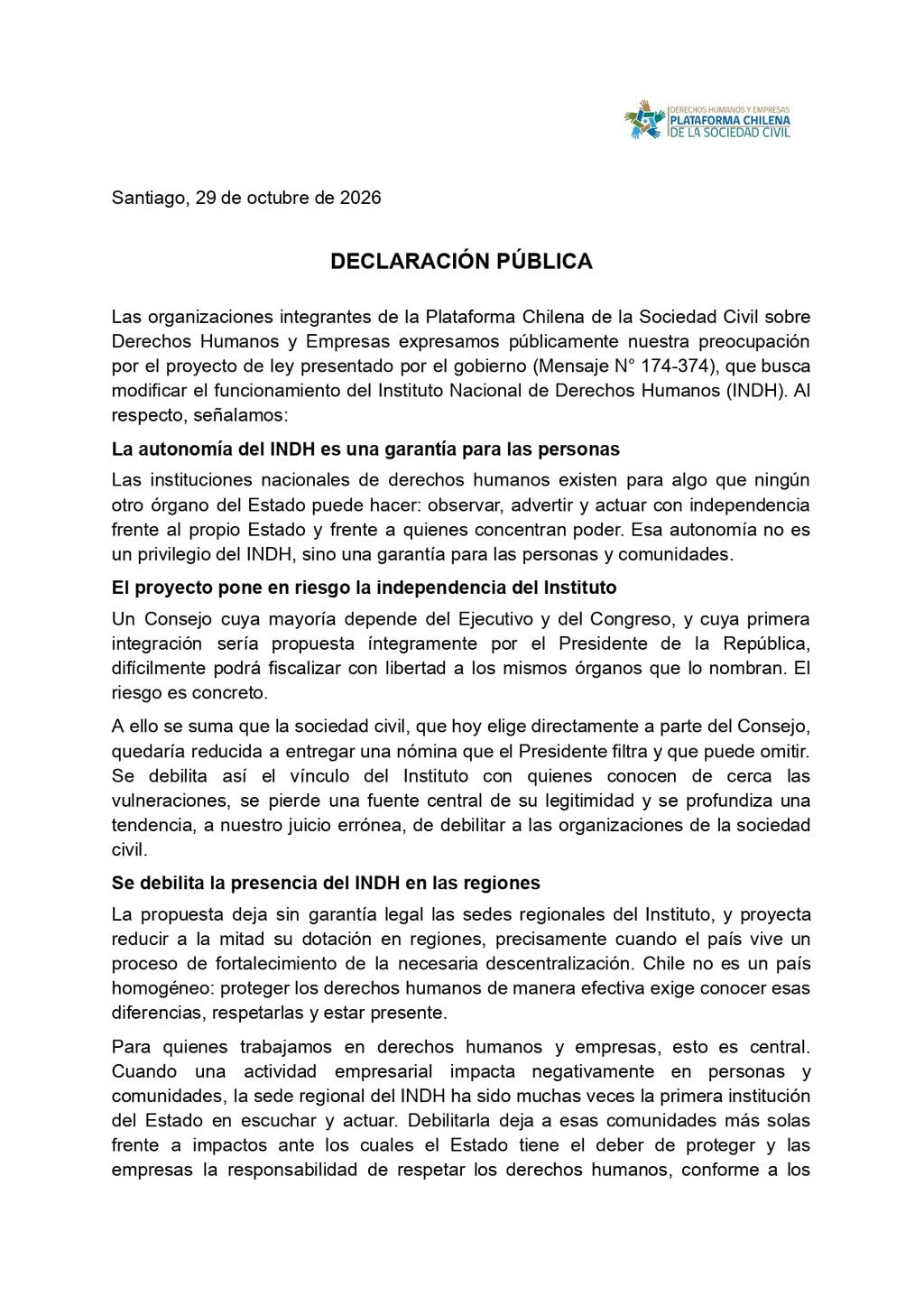
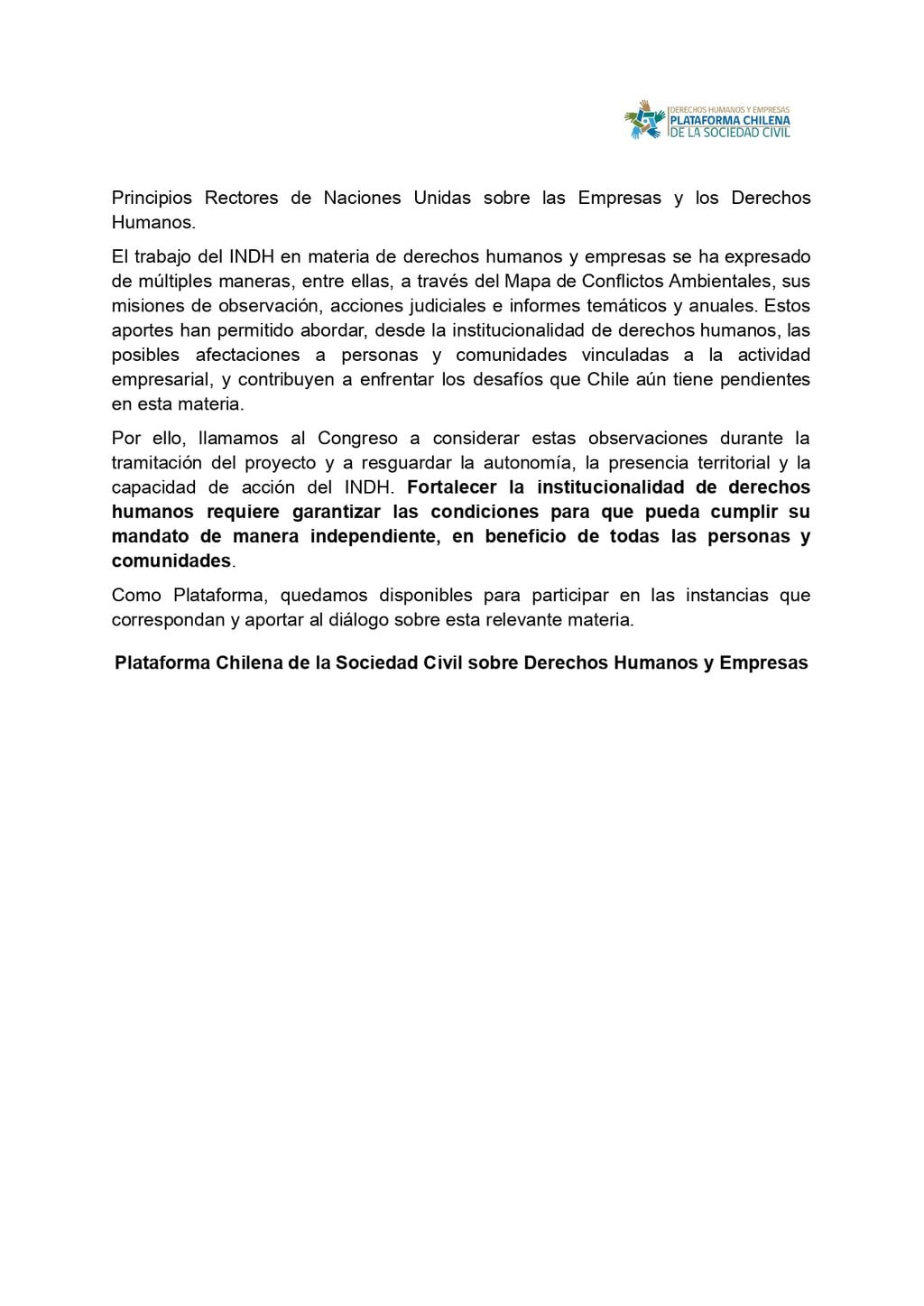
The Chilean Civil Society Platform on Human Rights and Business, which includes over 25 organizations and academic centers, expressed its concern in a public statement regarding the proposed changes to the composition of the INDH Council and their potential effects on the autonomy of the organization and civil society’s engagement.
One significant modification aims to reduce the Council from 11 to 5 members and alter the selection process. Two members would be chosen from candidates proposed by civil society organizations, nominated by the President, and appointed by the Senate; two others would be designated by the Chamber of Deputies, with the fifth selected by law schools or faculties.
This proposal alters the participation mechanism for civil society organizations in selecting their representatives: «Changing the direct participation of civil society in selecting councilors could weaken the Institute’s connection with the organizations and communities that are intimately familiar with human rights violations,» commented Roberto Morales, the executive coordinator of the Platform.
Another significant aspect is the change in the judicial powers of the institute.
The initiative revokes the INDH’s authority to file criminal charges, replacing it with an institutional reporting power, yet it retains the ability to submit protective and amparo resources.
Additionally, the proposal modifies the conditions for the INDH’s territorial presence. While it maintains its base in Santiago, it does not impose an obligation for regional offices and grants the Council the authority to determine how to maintain a presence nationwide.
This, coupled with the financial report accompanying the initiative considering a potential 50% reduction in regional staffing to evaluate its budget impact, raises concerns about the Institute’s capacity to sustain its work in local areas.
«In light of the potential impacts of business activities on the human rights of individuals and communities, the work of the INDH as an independent public body has been crucial for highlighting this issue. Weakening its regional presence could hinder responses to these situations, which require the involvement of various stakeholders and a commitment to the dignity and quality of life of individuals,» added Roberto Morales.
Human Rights and Business
The Platform reminded that the UN Guiding Principles on Business and Human Rights establish that «the State has the duty to protect human rights while businesses bear the responsibility to respect them.»
In this framework, the Platform emphasizes that having independent public institutions capable of acting across different territories is essential for identifying and addressing potential violations, especially when they affect communities facing power asymmetries.
«An independent public institution, with regional presence and the capacity to promote, protect, and educate on human rights, is fundamental to moving toward a more democratic society and ensuring that individuals and communities can assert their rights,» concluded the executive coordinator of the Platform, Roberto Morales.
We will keep you informed.
Obtén tu Pasaporte y apoya a El Ciudadano
Elimina la publicidad, accede a contenido exclusivo y sé parte de la comunidad.
Cancela en cualquier momento · Sin permanencia