Original article: Bailes chinos de la Región de Valparaíso inspiran obra de danza contemporánea
Chinese Dances from Valparaíso Region Inspire Contemporary Dance Work, «Mudanza»
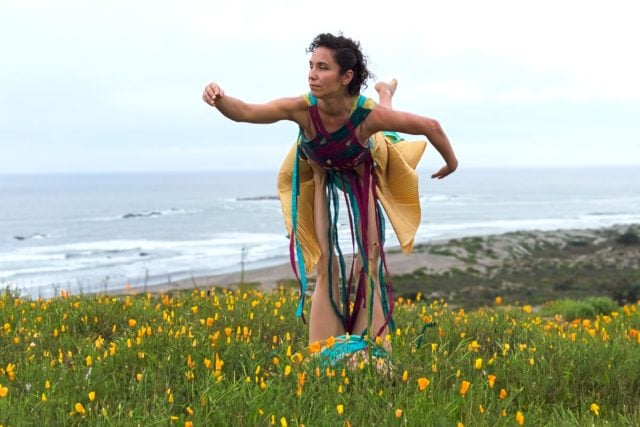
Inspired by the Chinese dances of the Valparaíso Region, recognized as Intangible Cultural Heritage of Humanity by UNESCO since 2014, the choreographic piece «Mudanza» creates a scene that reflects an ecosystem where set design, lighting, and costumes serve as extensions of the physical memory of the territory.
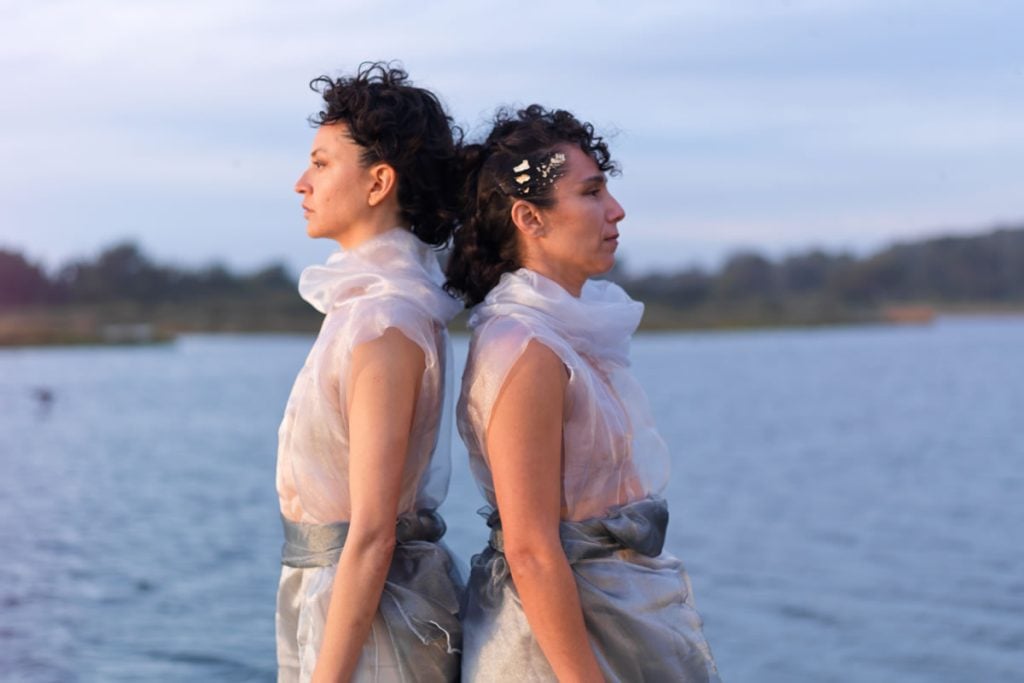
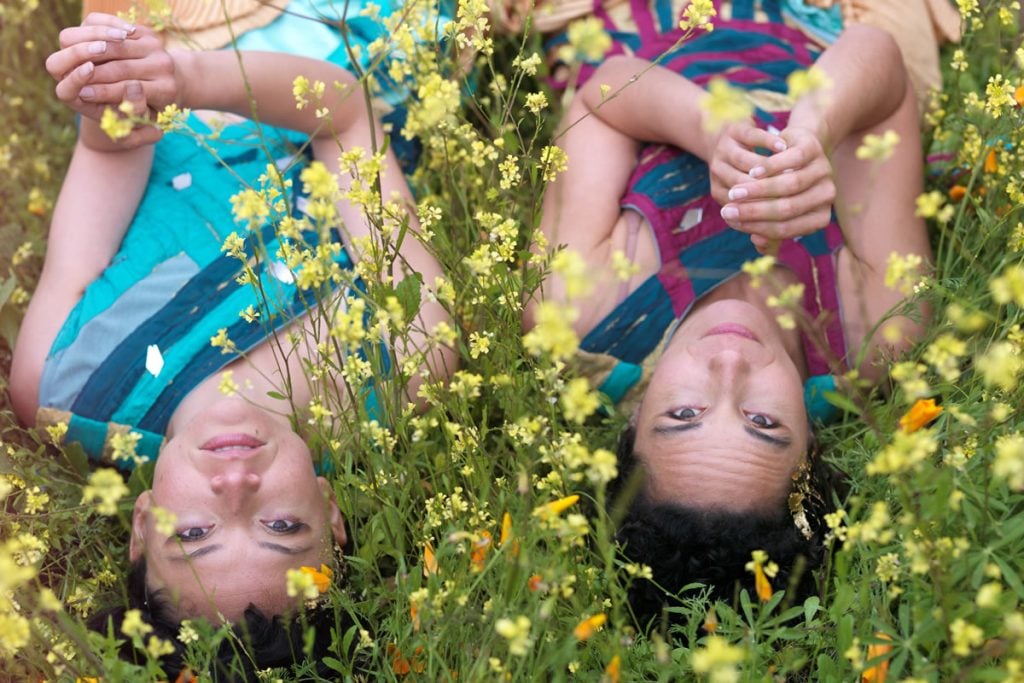
This performance, conceived by Javiera Walker and choreographed and directed by Francisca Silva, is centered around a female duet featuring Paola Cortés and Javiera Walker, embodying the transformations, twists, rhythmic changes, and the «mudanzas» traditionally marked by the drum in this ritual dance.
«Mudanza», a project awarded the Performing Arts Fund / Creation and/or production of Scenic Mounts / Dance (2026 Call), initiated a series of presentations at the Teatro Rodolfo Bravo Alarcón in Quillota and will now make its way to the Teatro del Parque Cultural de Valparaíso with a performance scheduled for Sunday, November 22 at 6:00 PM, limited to 100 attendees.
Ticket prices are set at $5,000 for the general public and $3,500 for students and seniors.
Following this, another performance is planned for Saturday, November 28 at 8:00 PM in the Sala El Descuadre in Olmué (Cajón Grande 2930, Paradero 40), with tickets priced at $5,000, and continuing on Saturday, December 5 at 5:00 PM at the Municipal Theater of Casablanca (Avenida Portales 02), which will be free of charge.
Regarding the genesis of the work, Javiera Walker shares, «the idea stems from a desire to connect contemporary dance with the bodily and ritual memory rooted in the territory where we live and move, based on a personal experience.»
«Since childhood, I accompanied photographer and audiovisual artist Luis Costa and Inés Walker, who researched and recorded Chinese dances; I always found them mysterious and completely distinct from any other expression of folklore in our territory. Then, I began to question my own connection to the divine and why this intrigued me so much if I had seemed to lose my link to the spiritual world long ago,» explained the creator.
She adds, «The understanding that music and dance were precisely that connection from the ancestral, the ritual, and the human only came recently, but I realized I had always been observing it because the Chinese also sing to the earth, the water, and nature. I then wondered how I could evoke that devotional and ancestral experience through a contemporary scenic language, without folklorizing or literally copying the rite, but abstracting its corporeal and affective energy. Thus began the birth of ‘Mudanza’.»
The team behind «Mudanza» includes Alejandro Jofré (musical composition), Marlene Rodríguez (production), Paula Olmedo (scenographic design), Sebastián Contreras (scenographic realization), Carol Contreras (costume design), Víctor Zúñiga (lighting design), and Manuel López (photographic and audiovisual documentation).
The Memory of the Body
To gain a broader perspective on Chinese dances, the team visited various regions and types of festivities in the Valparaíso Region, starting with the May Cross celebrations in Los Maquis and Cai Cai, followed by the San Pedro (Loncura), San Pablo (Ventanas), and Virgin celebrations in Pachacamita (La Calera).
«It has been a beautiful process of research—lively and transformative. Those visits provided us with tangible inputs of images, sounds, and interpretations that empowered the work,» says Javiera Walker.
«We were greeted with great generosity by groups like the Hermanos Prado and the Baile Chino de Cai Cai, and at the last festivities, our investigation delved more deeply into our bodies. I believe the work gained more meaning and authenticity for the team, and a physical weight that can only come from direct experience of the territory,» the artist comments.
She continues, «The chinear connected me with the earth, with the hill, and with the community that dances alongside me. This research became part of my own life: today, I have my own flute made because chinear has turned into a ritual and spiritual practice that I want to maintain over time.»
The «Mudanza»
The «mudanzas» in Chinese dances refer to the choreographic or stepping changes during their rituals.
The performer explains how these dances translate into a contemporary dance proposal: «We approach ‘mudanza’ in two senses: as the change of steps in the dance itself and as an internal mutation; a transition of state that moves us from the pulse of urban life to a ritual body connected with the earth, water, and the sacred.»
«Through the work, we seek to highlight the value of ritual for the memory of our bodies and for society as a whole. Humans need ritual; it’s part of who we are. However, today we have been replacing that ancestral rituality with others that are daily and automated,» notes Javiera Walker.
She recounts, «On stage, we utilize the sensation of weight and real fatigue to our advantage, embodying the deep knee bends and a contemplative and respectful gaze toward sacred points we dance to, such as the altar and Mount Aconcagua. In this journey, the body transforms into water, rock, and stone—like the very ancestral flute—but we are also ‘chinas’ and flute players, where music undoubtedly walks alongside us.»
She also emphasizes that «as a duet of women on stage, we embody the dynamics of the alfería and the cofradía through dialogue, mutual support, echo, and shared vibration. We bring the body into this rhythmic and respiratory accumulation, allowing the ‘mudanza’ to become a living experience of bodily transformation in front of the audience.»
Furthermore, she highlights that this production seeks to raise awareness of the cultural value of Chinese dances, «especially due to the significance of this ritual for the memory and identity of our central coastal territory.»
«Through this research, we have discovered how Chinese dances proudly represent their place of origin and how the festival serves as a reunion of communities, weaving a vibrant cultural network in the region. We also want to highlight that today, Chinese dance groups actively include adult men, women, and girls. This demonstrates that culture is not petrified. It is the ‘Mudanza’ that transcends the production: that ancient and mineral rock that breaks to eventually transform into that woman who dances and plays the flute to the rhythm of the drum,» concludes the creator.
Photo credits: Manuel López
Obtén tu Pasaporte y apoya a El Ciudadano
Elimina la publicidad, accede a contenido exclusivo y sé parte de la comunidad.
Cancela en cualquier momento · Sin permanencia