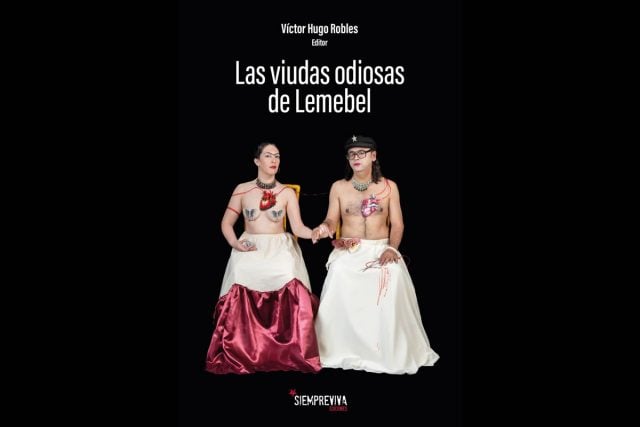
Original article: Las viudas de Lemebel regresan más odiosas que nunca
By Siempreviva Ediciones
«It was December 2014, just before the year-end festivities. I was enjoying ice cream in Santiago’s Plaza de Armas when I received a brief but decisive message informing me that Lemebel was critically ill at the Arturo López Pérez Foundation. Without a second thought, I headed there. Despite our ups and downs, I was anxious yet hopeful as I made my way to the clinic, reflecting on the beautiful, tense, and intense friendship I had with Pedro.»
«There was no bureaucratic hassle to enter, so I went directly to the second floor where a friendly nurse indicated that ‘Don Pedro’s’ room was. I expected to find him resting, but to my surprise, he was outside his room, surrounded by friends, filling the place with his vital energy. I remember seeing him in a wheelchair, gazing out a window at the street, perhaps contemplating the future or the essence of life and death.»
«I approached quietly and called out from behind, ‘Hello, girl.’ Pedro turned around in surprise and shouted ‘Guards!’ in the distinctive robotic voice left by a throat operation. I was startled, imagining being kicked out by security in front of his other fashionable friends in hospital attire. But before that embarrassing outcome could unfold, Pedro, with his playful spirit, reassured me, ‘Relax, girl, it’s just a joke.'»
Thus begins the lively yet ironic first chronicle of «The Hateful Widows of Lemebel,» a collective work gathering memories from writers, poets, actors, photographers, and activists—over 60 of Pedro Lemebel’s friends—paying heartfelt tribute to the life and work of our beloved and unforgettable ‘mariquita linda’ almost 12 years after his tragic farewell, now released in an enhanced edition.
According to the author, journalist and activist Víctor Hugo Robles, known as «The Gay Che,» this work is not just another biography, nor an academic or literary monument, much less an ode to personal friendship; it is a generous and collective exercise in remembering one of Chile’s finest urban chroniclers and the most significant activist in the LGBTIQ+ community.
The volume features voices from the sexual dissidence movement, primarily contributed by members actively involved in the fight for LGBTQ+ rights in Chile.
Notable contributors and photographers include: Claudio Narea, Héctor Hernández Montecinos, Juan Pablo Pozo, Victoria Aldunate, Cristián Cuevas Zambrano, Sofía Devenir, Claudio Barrientos, Marco Ruiz, Rucitama, Gustavo Bernal, Ernesto Muñoz, Johnny Aguirre, Patricio Martínez, Iván Said, Bessy Gallardo, Fernando Blanco, Eugeni Rodríguez from the Gay Liberation Front of Catalonia, David Aruquipa from Bolivia, John Better from Colombia, Gonzalo León, Pedro Bahamondes, Manuel Hernández, Ximena Riffo, Álvaro Hoppe, Juan Pedro Catepillán, Mariela Rivera, Pamela Collado Varela, Pablo Sanhueza, Pablo Trujillo, Sergio López Retamal, and Paz Errázuriz.
Why the Hateful Widows?
This phrase is not attributed to the book’s editor but to actor Alfredo Castro, who accused Lemebel’s friends of attempting to voice and envision everything Pedro would say or do, disparagingly labeling them as «hateful widows.»
Víctor Hugo Robles embraced these criticisms positively, acknowledging his widowhood and inviting other lovers and ex-lovers of Lemebel, leading to the creation of «The Hateful Widows of Lemebel» in January 2025, now arriving in its second enhanced edition, with the page count increasing from 200 to 260 pages filled with texts and photographs, overflowing with memories and stories.
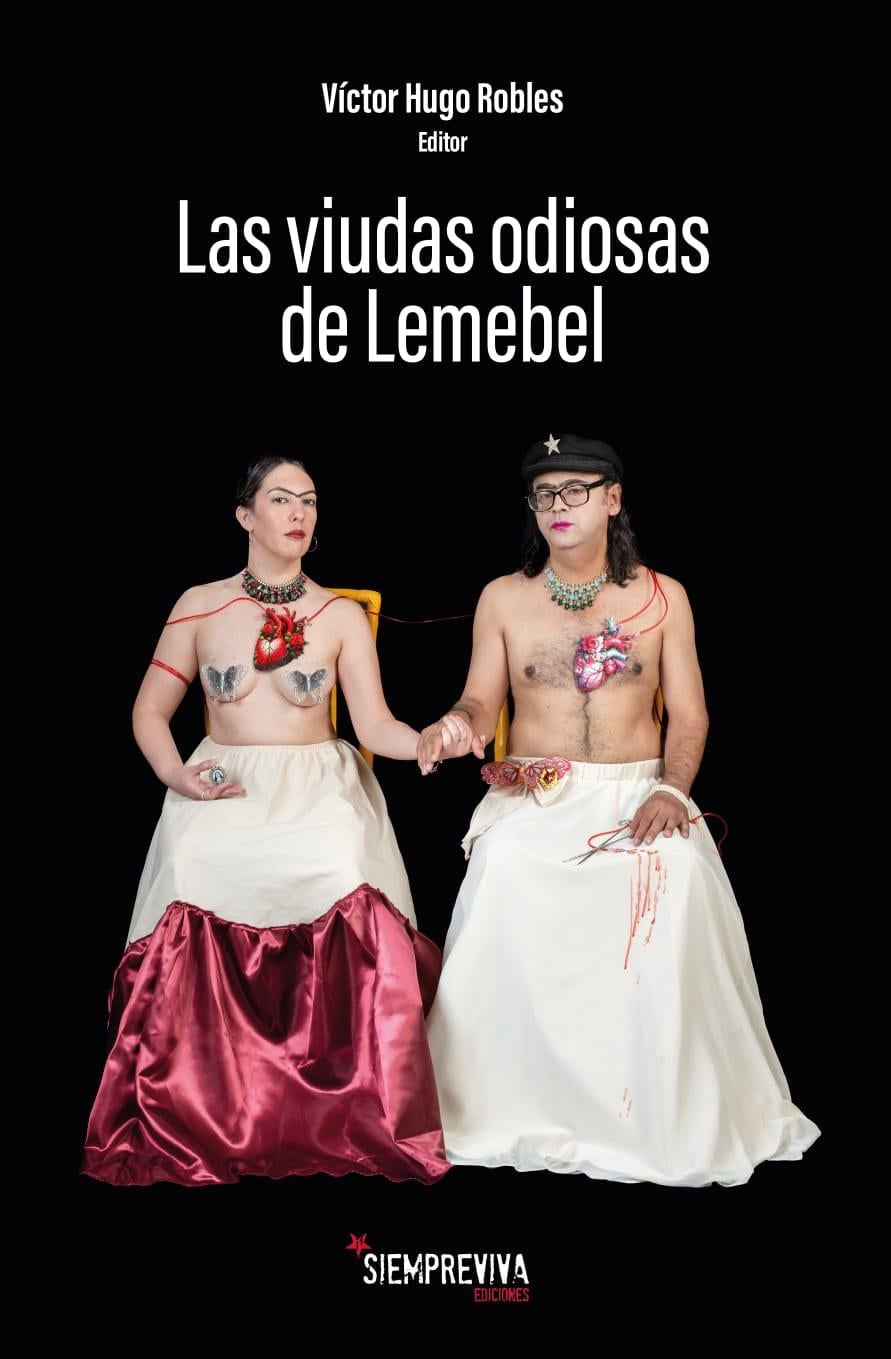
The Second Hateful Edition
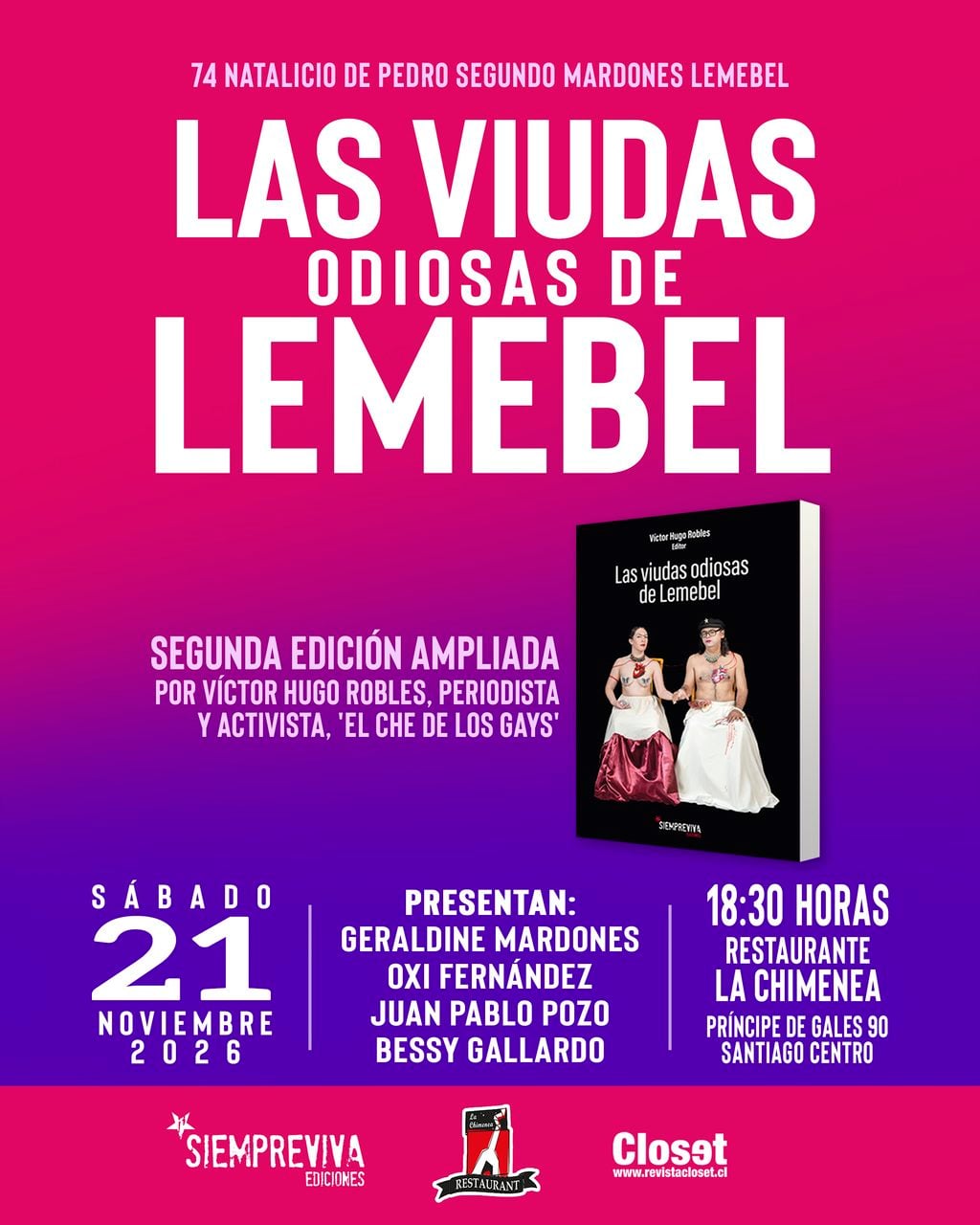
On Thursday, January 23, 2025, we will commemorate the 10th anniversary of the sad, irreplaceable departure of our beloved Pedro Lemebel with the presentation of «The Hateful Widows of Lemebel» at the Museum of Memory and Human Rights.
Surrounded by love and camaraderie, we will pay a heartfelt tribute to a friend and comrade in struggle whose life profoundly impacted many. Lemebel’s influence in our lives has been so significant that since that date—and even long before—we have not stopped remembering him, fighting against the appropriation of his writings, and reviving the rebellious and irreverent spirit of his work.
It has been nearly two years since that memorable presentation at the Museum of Memory, an unforgettable political and cultural event featuring contributions from Pedro Marinello, Victoria Aldunate, Cristian Cuevas, Pedro Bahamondes, and Geraldine Mardones—some of the many authors, friends, and loves of Pedro who contribute to «The Hateful Widows of Lemebel.»
Since then, we have presented and showcased the book throughout the country, even crossing borders, continually honoring Pedro while striving to reconnect with him through a multitude of diverse voices.
Pedro Lemebel has not died, as evidenced by the numerous productions recalling and referencing his name: plays, films, forums, seminars, books, and postcards, with «The Hateful Widows of Lemebel» re-emerging in an edited and expanded version serving as a tribute.
This second edition, lovingly conceived as a 74th birthday gift for Pedro Lemebel, includes new texts and chapters.
Among the new contributions is a beautiful piece by Chilean academic Soledad Bianchi and another previously unknown text by recently deceased Mexican anthropologist Rossana Reguillo, dedicated to that crazy and unforgettable night when Rossana met Lemebel at U. Arcis. Additional writings from friends in Peru, Bolivia, and Cuba, such as Benito Mere Rivera from Lima, Edgar Soliz Guzmán from La Paz, and Francisco Rodríguez Cruz from Havana, have also been added.
Moreover, we have included two new chapters in this edition: one focusing on the contentious legal matters surrounding Pedro’s inheritance community, highlighting press notes and interviews with Geraldine Mardones, known as Lemebel’s ‘good niece.’
The other new chapter concludes «The Hateful Widows of Lemebel» with critical texts, presentations, and reviews of the political-literary work, featuring contributions from Ezio Mosciatti, cultural editor of Radio BioBio, University of Los Lagos academic Jenny Paredes, Lima-based writer and activist Manolo Forno, and Argentine journalist and writer María Moreno.
Obtén tu Pasaporte y apoya a El Ciudadano
Elimina la publicidad, accede a contenido exclusivo y sé parte de la comunidad.
Cancela en cualquier momento · Sin permanencia