Original article: Obra inspirada en Camila Polizzi instala apagón cultural en Concepción: artista acusa censura tras cierre anticipado de la muestra por municipio conservador
In Concepción, what began as a «drama-free» exhibition has ended in a cultural blackout: with the curtains drawn, the exhibit has been closed, sparking heated controversy. “Sismografía del Cuerpo”, hosted at the Cultural Point of the municipal government, was shut down prematurely, leading an artist to accuse censorship in Concepción and assert that the municipality acted without dialogue or prior notice.
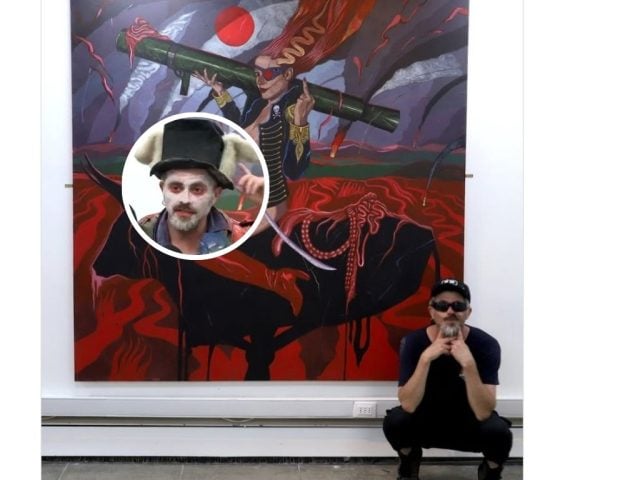
The exhibit featured works from 10 artists, and one of the key pieces was “Máquina de guerra”, inspired by Camila Polizzi. This artwork, by artist Luis Almendra Villagrán, illustrates Polizzi riding a mechanical bull, armed with a bazooka and a sword. Additionally, the exhibition included a dollhouse described as sacrilegious and sexual: “Jesus Christ meets Hello Kitty: God is an employee at a counter”, alongside other works critiquing the church.
Censorship in Concepción: Closure and Inquiry into Cultural Affairs
According to reports from the municipal government, the decision was made to close the exhibition and initiate an administrative inquiry within the Cultural Directorate to investigate how the exhibit was authorized. Tensions escalated when the character “Huachistáculo” —created by Almendra himself— arrived at the venue to inquire about the situation, and municipal administrator Boris Negrete asked him to leave.
That’s when the clash occurred. The exhibitor denounced an act of censorship, criticizing how the closure was handled, as reported by sabes.cl: “We were caught off guard because, at a minimum, they should have called us beforehand, proposed a dialogue, anything. This shows a lack of communication, arrogance, and attempts to deny us, plain and simple. It indicates they are demonizing our work as if we were specters or a group of zombies looking to harm society. Quite the opposite, we are wonderful people.”
“They told us: no, you cannot”
The artist also emphasized that the exhibit did not arrive «through the window»; rather, it underwent a prior selection and approval process. He recounted to the aforementioned media outlet that after days of setup and the inauguration, the sudden closure hit them unexpectedly:
“They’re so ignorant among themselves; I believe they are somewhat lethargic. That’s actually why this happened. We spent five days setting up the exhibit. We inaugurated it, and nothing happened, it was a wonderful celebration except we had no cocktail… I think the mayor saw the news in the press, panicked, and shut it down. The thing is, there was a selection process beforehand; we applied with our proposal and submitted a portfolio… No issues, we were selected, and months passed until we finally exhibited. We thought everything was fine since no issues were raised during the inauguration, but we were met with this surprise — they told us, no, you are not meant to be in this art space, which I frankly find absurd.”
Author’s Take on “Máquina de Guerra”
In a statement shared on his Instagram account regarding the meaning of the artwork, he notes:
““MÁQUINA DE GUERRA” is a painting that addresses contemporary power through irony, excess, and the profanation of official symbols. The piece presents an allegorical portrait of @camilapolizzioficial Camila Polizzi, a media figure emerging from the intersection of scandal, desire, legality, and spectacle, portrayed as an anti-heroine subverting Latin American historical and military iconography.”
In the same post, the artist adds a clarification about the origins of the work:
“Note: I created this painting on my own; it is not a commission and was not paid for. I paint for enjoyment, for fun; understand! I paint for the pleasure of painting and exploring life, got it!.”
Meanwhile, the political context adds another layer to the debate: Concepción’s mayor, Héctor Muñoz Uribe, is elected in 2024, a member of the Christian Social Party, recognized as a pastoral leader linked to the “Eagles of Jesus” group, whose administration is characterized by a conservative Christian stance. In this scenario, the accusations of censorship in Concepción raise an uncomfortable question: what real space do critical artistic expressions have —or lack— in cultural venues managed by the municipality.
Relacionados

Court in Concepción Renders Verdict of "Simple Homicide" in Brutal Murder of Renata Rozas: Protests Planned
Hace 3 meses
Jeannette Jara's Campaign Team Plans Massive Closing Rallies in Concepción, Valparaíso, and Santiago
Hace 3 meses
Journalists and Correspondents Raise Concerns Over TeleSUR and RT Signal Removal in Bolivia, Citing 'Unacceptable Censorship'
Hace 3 semanas
Massive Mobilization in Concepción Demands Reconstruction of Territories: "No More Forest Operations, No to Rare Earth Mining"
Hace 2 semanas