Original article: “¡Fuera Noboa!”: organizaciones sociales activan ofensiva para revocar al presidente de Ecuador
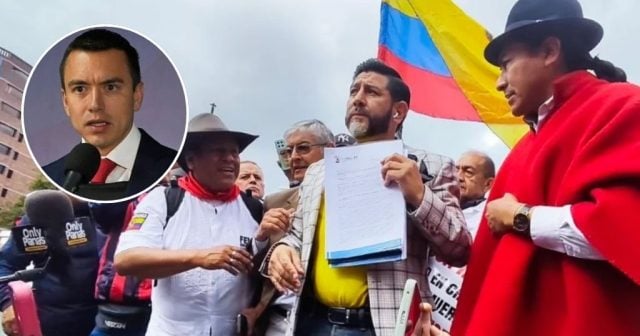
A coalition of social organizations from Ecuador marched to the headquarters of the National Electoral Council (CNE) in Quito on Tuesday, demanding the necessary documents to initiate the recall process against President Daniel Noboa and Vice President María José Pinto, amid a growing wave of social discontent.
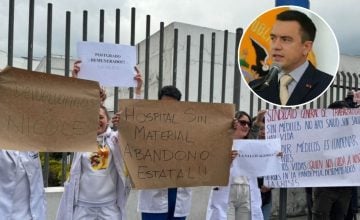
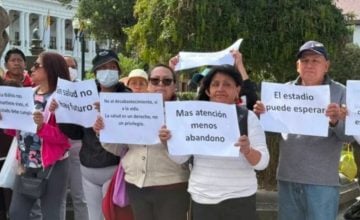
Popular movements such as the Confederation of Peoples of the Kichwa Nationality (Ecuarunari) and the Citizen Platform for Mandate Revocation «Revoca Ec» justify this legal offensive based on six crisis areas the country is facing: the rise in crime rates and homicides, mass layoffs of workers, the collapse of the electrical system with recurring blackouts, the precariousness of public health, the increased cost of living, and labor precarity.
According to the protesters, the Noboa administration has engaged in a systematic failure to deliver on its governance plan and further deepened democratic backsliding while the populace suffers the consequences.
Outside the electoral body, a gathered crowd chanted «Out with Noboa! Out!» while drivers passing by honked their horns in support. This mobilization occurs against the backdrop of a fuel deficit and the removal of fuel subsidies, measures that have hit Ecuadorian families hard. The organizations warn that they will remain vigilant in the streets to ensure the CNE provides the required forms.
Leonidas Iza, president of Ecuarunari, denounced the deterioration of living conditions that citizens have experienced during Noboa’s tenure. Iza criticized the right-wing government for the decision to increase the VAT to 15% and eliminate fuel subsidies, measures that, according to the leader, were justified under the promise of combating insecurity, a goal that has not been met.
The indigenous leader described the current administration as the «Noboa dictatorship», which aims to hand over control of public resources to the private sector, as reported by Radio Pichincha.
Meanwhile, lawyer Washington Andrade, spokesperson for the Citizen Platform for Mandate Revocation, stated that the request represents a legal strategy to prevent administrative obstacles from impeding the process, demanding that CNE authorities not ignore this «citizen outcry» and deliver the required forms.
The legal requirement to enable the referendum is to gather signatures from 15% of the electoral roll, which translates to 2 million valid signatures. According to surveys cited by the activists, more than 70% of the populace disapproves of the government’s management and 61% would be willing to sign the forms. The CNE will need to verify the signatures before calling for a mandatory vote at the polls.
The electoral body has a maximum period of seven days to respond regarding the validity of the request.
Noboa’s Failure to Address the Security Crisis
Violence statistics back the citizen outcry. Ecuador recorded 2,778 murders in the first four months of 2026, averaging 23 homicides daily, making this year the second most violent in the country’s history. While this reflects a decrease of 370 crimes compared to the same period in 2025 (which saw 3,148 murders), the magnitude remains alarming. The Childhood, Adolescence and Youth Observatory revealed that 148 minors aged 12 to 17 were killed in the first quarter of 2026, equating to one homicide every 14 hours. Experts insist that militarization alone is insufficient and comprehensive policies are needed to combat the escalation of drug trafficking.
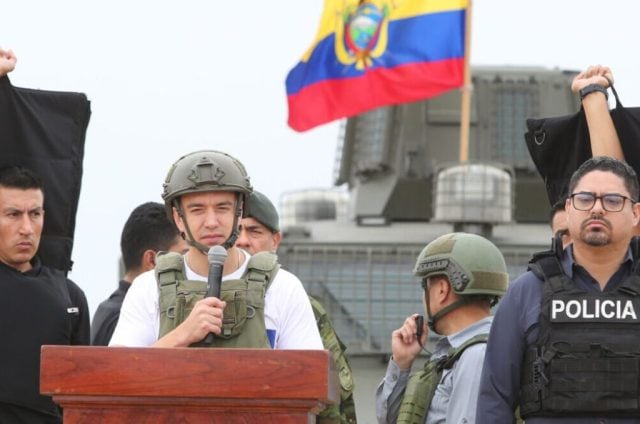
In response to the crisis, Noboa implemented a nighttime curfew from May 3 to May 18 in nine provinces and four municipalities. During this period, 5,023 people were arrested, most for violating mobility restrictions; 717 were linked to criminal organizations, and four targets were taken down. The president announced a claimed 39% decrease in homicides during May, but annual figures reveal that the security crisis remains serious, as the country closed 2025 with over 9,000 murders, the highest rate in its recent history.
The social organizations—repressed with tear gas during the peaceful demonstration by Quito Police—marked the beginning of a new phase of civil resistance and warned that they will not stop until the CNE provides the forms that allow citizens to decide at the polls whether Noboa should continue to lead the Executive.
They indicated that if democratic mechanisms are blocked, they will opt for direct mobilization in the streets.
Obtén tu Pasaporte y apoya a El Ciudadano
Elimina la publicidad, accede a contenido exclusivo y sé parte de la comunidad.
Cancela en cualquier momento · Sin permanencia