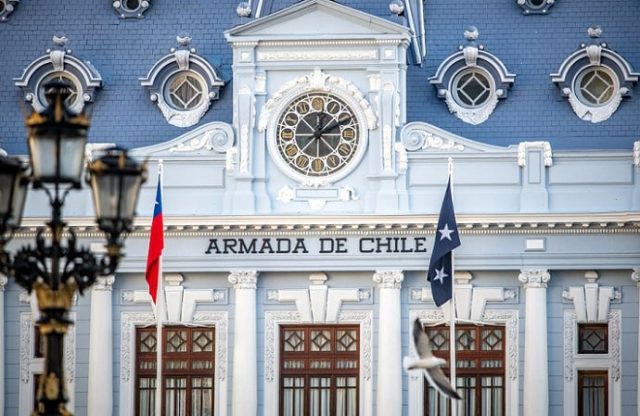
Original article: Corte Suprema ordena remitir al Ministerio Público causa de consumo de drogas que involucra a funcionario de la Armada
The Supreme Court has accepted a cassation appeal and annulled the ruling issued by the Navy’s Martial Court, directing the submission of evidence regarding an open case against a member of this military institution for drug consumption to the Public Prosecutor’s Office.
In a unanimous decision (case role 30.460-2024), the Second Chamber of the highest court identified a «legal error» in processing the case within the military jurisdiction, asserting that its jurisdiction «belongs to civil justice.»
«Firstly, it must be noted that, in a constitutional and democratic state governed by law, military jurisdiction is of an exceptional character,» the ruling states.
Therefore, the ruling continues, «military criminal jurisdiction has a limited scope and is geared towards protecting special legal interests related to the specific functions of military forces. Consequently, its norms must always be interpreted restrictively, a legal premise that has been consistently reiterated by this Court in recent years.»
«The same assertion has been upheld – even previously – by the Inter-American Court of Human Rights, clarifying that only active military personnel should be judged in military court for crimes or offenses that inherently threaten legal interests specific to military order,» pointed out the highest court.
Considering this, the ruling adds, the behavior under investigation involves «the consumption of substances subject to control under Law No. 20,000, by a member of the Chilean Navy, without any evidence being established, even as a presumption, that this took place in any military facility or during a service-related act.»
«Drug use by military personnel, under the circumstances or locations described in Section 3 of Article 5 of the Military Justice Code, while incurring an increased penalty compared to common consumption, falls under the jurisdiction of military courts through the procedures outlined in the aforementioned code. However, this is not the case for consumption occurring outside these contexts or locations, as it pertains to a crime not regulated by the cited code,» reasoned the Supreme Court.
As a result, for the highest court, what is appropriate, «given that there is no explicit norm assigning absolute jurisdiction to military court,» is that the facts «should have been investigated in accordance with the provisions detailed in the Criminal Procedure Code, which constitutes a safeguard for the guarantee of due process.»
Review the full ruling HERE
Obtén tu Pasaporte y apoya a El Ciudadano
Elimina la publicidad, accede a contenido exclusivo y sé parte de la comunidad.
Cancela en cualquier momento · Sin permanencia