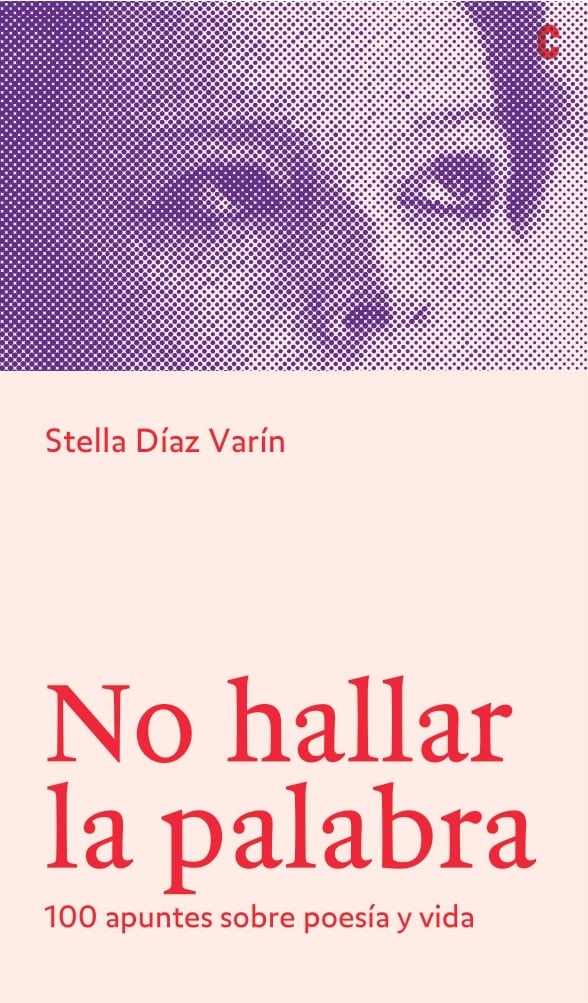
Original article: La palabra insurrecta: No hallar la palabra. Apuntes sobre poesía y vida de Stella Díaz Varín
By Felipe Reyes F.
For Stella Díaz Varín, words could ignite a fire that consumes everything. Writing was not merely a task; it served as an act of internal combustion that could both illuminate and devastate, depending on the company, the memories surfacing, or the specter inhabiting her at that moment.
Thus, in every sentence, in each fragment of these declarations now compiled in this book, the awareness of a poet destined for the elements blazes forth. Her voice sought no permission nor granted leniency and, instead of conforming to the literary landscape of her time—which was, as we know, male-dominated—she confronted it as if challenging a stern judge.
For her, speaking was a form of resistance; silence equated to death. This is how she rose against any labels and the silence and omission that had long sought to envelop her.
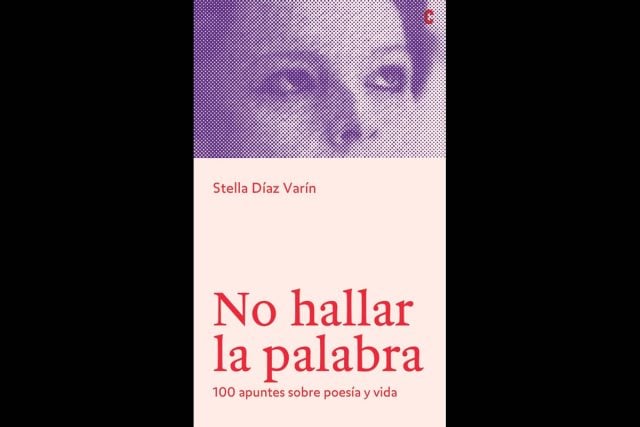
In No Finding the Word: 100 Insights on Poetry and Life (recently published by Carbón Libros), that fire takes on the substance of a testimony that seeks neither to explain nor to redeem but to affirm the intensity of a life lived as if in a trench.
Díaz Varín—one of the most vibrant and overflowing figures in twentieth-century Chilean poetry—spoke about her craft with the same passion with which she lived: against the current, unafraid of darkness, determined never to relinquish the strength of her language to the allure of formats tamed by editorial caution.
«If I have broken conventions it has been without much fright, because it’s something that’s within me. For me, the odd ones have always been the others. Disorder and irreverence are the luxuries I’ve allowed myself,» the poet declared in a 2003 interview.
Díaz Varín’s writing is a realm where body and word become political by necessity, where each verse embodies a gesture of disobedience against a world that sought, time and again, to reduce women’s voices to mere decorative murmurs.
She proposed to be «the fly in the ear of many, the fly in the nose. A very annoying person who cannot tolerate being bothered,» the poet explained in a 1995 interview. «When we talk of irreverence, it’s often perceived as being gratuitously irreverent, incongruous. But that’s not quite it. It’s a life attitude, but not pre-fabricated. It’s spontaneous. There are things that raise the hairs on your body, and you respond in the way that feels most just.»
Her emergence in the Chilean literary scene occurred during a time of fragmentation and displacements: the so-called Generation of ’50, of which she was part, coexisted with the last remnants of avant-gardes, her aesthetic and political break from the previous generation—the ’38 cohort—and a cultural atmosphere marked by urban effervescence, ideological debates, and questioning of traditions.
While contemporaries like Enrique Lihn, Jorge Teillier, Delia Domínguez, and Efraín Barquero delved into cultivating a personal voice, Stella opted for a different approach: a direct and unmediated confrontation with what inflicted pain or overflowed.
In some ways, she embodied the fierce and marginal expression of a generation that was never homogeneous but shared the drive to dismantle the commonplaces of Chilean poetry.
However, her figure did not easily fit into official narratives. The intensity, brutal frankness, wandering life, volcanic temperament, and uncompromising stance that granted her unique strength as a poet also worked against her within a literary atmosphere governed by male hierarchies and the very mechanisms of exclusion her writing denounced.
Stella circulated through cafés, bars, workshops, university hallways, and endless nights in Santiago, leaving a trail of stories that over time transformed into myth, overshadowing—or distracting some from—the potency of her work.
Yet the context in which her voice emerged extended beyond the literary sphere. In the transitional years between the fifties and sixties, rapid modernization coexisted with deep social inequalities, while political tensions foretold the fractures to come.
In this tumultuous landscape, her poetry rose as a record of a woman’s subjectivity during a time that still lacked the words to name her. Her fire was not merely aesthetic; it was a means of crossing through history from the body, from precariousness, from resilience.
Perhaps that is why her recognition has largely been posthumous. Over the years, her figure has begun to resurface, stripped of the anecdotes that often reduced her to merely a name in literary chronicles. New generations of readers have found in her audacity, her wounded lucidity, and her insurgent drive a form of truth that the criticism of her time failed to acknowledge or refused to see.
Her work has been reissued, her name has regained the weight it has always possessed, and her life—intense and contradictory—is beginning to be read not as an overflowing myth but as an essential part of the Chilean poetic tradition.
Between lucidity and wounds, between fury and tenderness, No Finding the Word gathers the memory of a voice that does not fade, returning to renew its relevance and remind us that poetry, when it flows as blood, does not admit to servitude.
For Stella Díaz Varín, poetry was neither a vocation nor a trade; it was a way of being alive («a commitment to life,» she would say), a territory where she could ignite whatever was necessary for the world to, even if just for a moment, burn alongside her.
Felipe Reyes F.
Obtén tu Pasaporte y apoya a El Ciudadano
Elimina la publicidad, accede a contenido exclusivo y sé parte de la comunidad.
Cancela en cualquier momento · Sin permanencia
Artículos Relacionados
Victim's Lawyer Welcomes Critical Progress in Adriana Rivas' Extradition to Face Justice
Hace 3 meses

Mauricio Daza Criticizes Minister Steinert's Leadership and Legal Competence in Security Management
Hace 2 meses