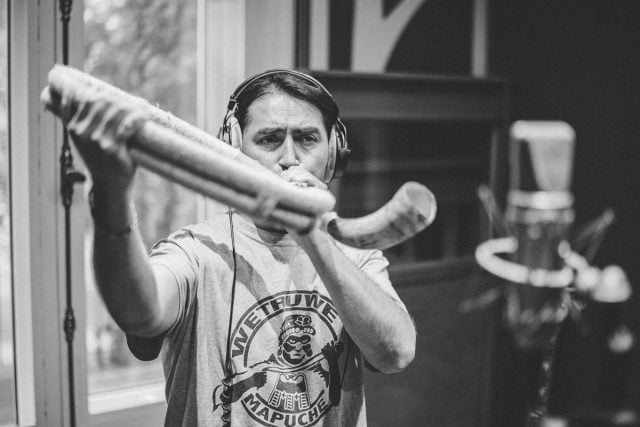
Original article: Waikil presenta «Kiñewküleiñ», un disco con la memoria sonora que habita el territorio mapuche
Waikil Launches «Kiñewküleiñ»: A Sound Memory of Mapuche Culture
More than just an album release, this event serves as an invitation to delve into Mapuche wisdom. On Tuesday, June 16, at 6 PM at the Auditorium of the Faculty of Architecture and Urbanism at the University of Chile, musician, researcher, and Mapuche cultural promoter Jaime Cuyanao, better known as Waikil, will host a prelude to the Wiñol Tripantü with a live presentation of his latest discographic work: Kiñewküleiñ, dedicated entirely to the ayekan, a fundamental sound expression within the ceremonial and daily practices of Mapuche culture.
The gathering will commence with an open nütram (discussion), providing a space for exchange and reflection on Mapuche music -ayekan– and the cultural revitalization processes that inspired this work. Attendees will include traditional Mapuche authority Machi Silvia Calfuman, pifülkatufe Fernando Cayuqueo, and music professor and producer Filutraru Paillafilu.
Additionally, interpreters and practitioners from various municipalities in the Metropolitan Region and Wallmapu will share this vibrant musical practice, kept alive through the transmission of knowledge between generations, the ongoing relevance of ceremonial spaces, and the efforts of those who continue to craft traditional Mapuche instruments.
Kiñewküleiñ, which translates to «we are one» in Mapuzungun, emerges from the author’s three-year investigation into the ayekan and its diverse manifestations.
In Mapuche tradition, the ayekan transcends mere musical expression; it embodies a collective spiritual experience, a sonic force accompanying rituals such as Nguillatun, Machitun, Palin, Eluwün, and Wiñol Tripantu, where the aukiñ (sound) of instruments and players forms a singular sonic body aimed at strengthening the spirit, the community, and the feyentun (belief).
«When ayekan is played, the aukiñ of the Mapuche instruments brings us to focus on a single presence and force; this is part of what Kiñewküleiñ signifies,» explains Waikil. «When the Mapuche instruments resonate at a ceremony, everyone becomes part of a unified sound body. The ayekan creates that unity,» the researcher adds.
PETU MOGELEIÑ TAIÑ AUKIÑ (Our Sounds Live On)
The album, composed of 12 pieces, showcases a variety of instrumental and ceremonial expressions found in Mapuche musical tradition, featuring themes like Küpamün (Kull Kull), Traltriw (Pifülkatun), Puel Purun (Kultrung), Matetun (Trompe), and Wütan (Trutruka). These individual musical structures engage in dialogue with collectively created compositions, such as Wiñol Tripantü, Koneltun, Newentuleymün, and Nguillatun.
Thus, the sonic journey invites listeners to traverse through instruments, ceremonies, memories, and territories, unveiling the richness and contemporary relevance of traditional Mapuche music.
Each guest artist featured in this work is recognized for their deep understanding of the Mapuche instrument they play, transforming the musical piece into an exceptional moment—what older Mapuche would call, «to bring joy to the piwke (heart),» by listening together to diverse sounds and knowledge typically shared in ceremonies, community gatherings, and cultural transmission spaces.
From this perspective, the work presents itself as «the sound memory that inhabits the Mapuche territory,» acknowledging the contemporary Mapuche presence that traverses the rural landscape and the outskirts of different municipalities in Santiago, marking their myriad forms of expression.

Jaime Cuyanao has spent over two decades melding musical creation, audiovisual documentation, research on Mapuche music, and cultural memory reinforcement in both rural and urban contexts.
His work also serves as a reclamation of traditional Mapuche instruments – ayekawe – and the artisans who continue crafting them. Many of the instruments featured in the recording were made by Mapuche artisans who preserve ancestral knowledge despite territorial transformations and the increasing challenges in accessing plant fiber raw materials.
This research has also been a consistent thread in Waikil’s work. Over the past years, he has developed audiovisual records, interviews, and documentaries linked to Mapuche cultural memory, integrating music, archival material, and research in an artistic practice that aims to strengthen and disseminate this knowledge from a contemporary perspective.
The album cover adds another layer of meaning. This photograph was created using the wet collodion technique, a method used in the 19th century for numerous ethnographic records of indigenous peoples worldwide. Taken seven years ago by a couple of Franco-Chilean photographers (Ritual Inhabitual), the photo was subsequently exhibited in Paris, France, at the Musée de I’Homme.
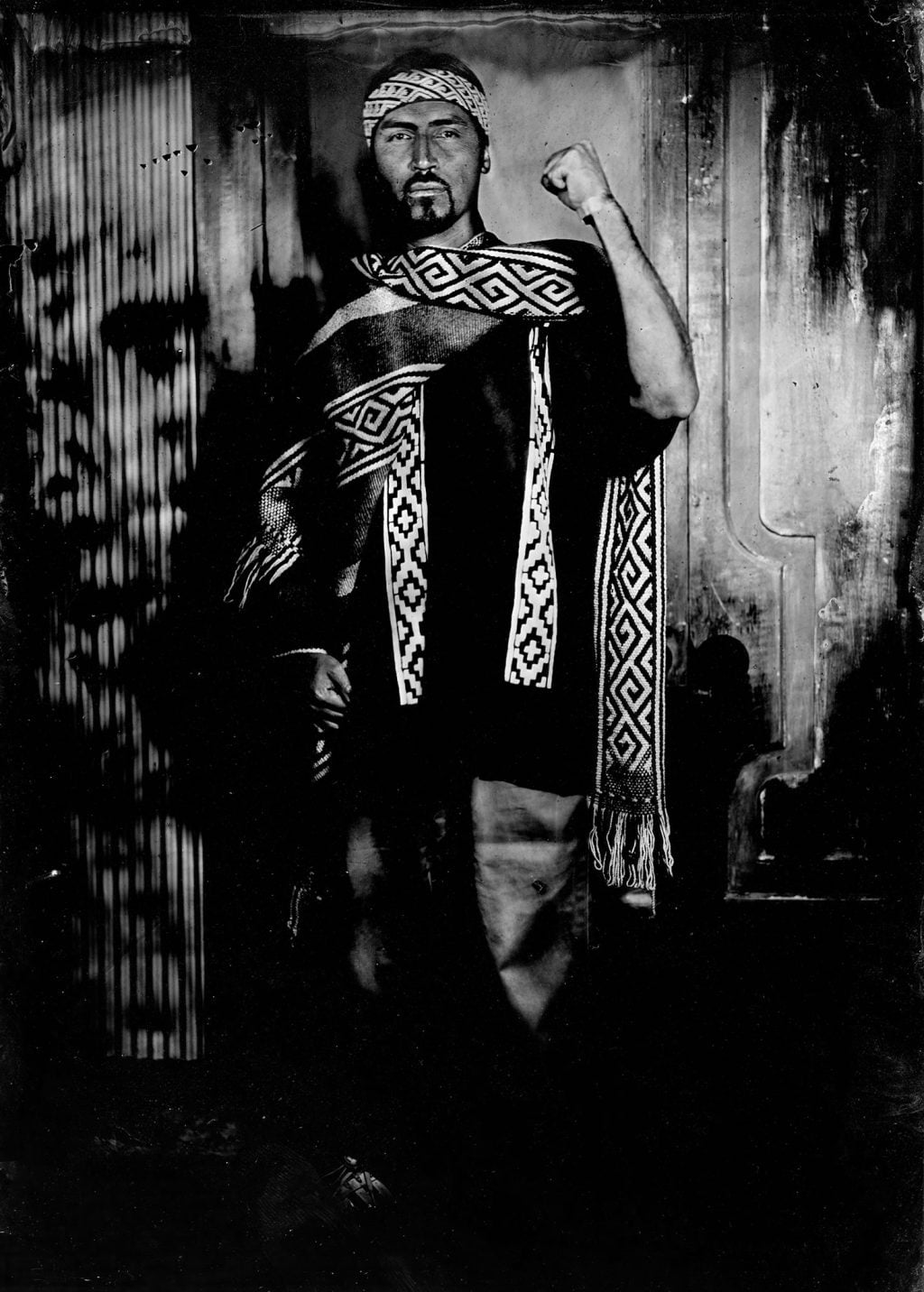
By selecting this image for the cover of Kiñewküleiñ, Waikil encourages reflection on the historical ways indigenous peoples have been observed and represented from a European viewpoint, reinterpreting these perceptions from the present.
The photograph transforms from an object of observation into an affirmation of existence, memory, and cultural continuity, linked to the sounds that still resonate in both ancestral territories and urban spaces.
Album Credits
The album was recorded and mastered by Adolfo Rodríguez Kaulen and Aure Quintanal at Santuario Sónico studio; it also includes recordings by Christian Mella at the Cultural Center of Padre Las Casas.
The album brings together various sounds and instruments from the Mapuche world, predominantly performed by Jaime Cuyanao / Waikil, alongside an extensive network of collaborators including: traditional authority Machi Silvia Calfuman on the kultrung; Mulfen Melillan on the tayül; Filutraru Paillafilu, Axel Paillafilu, and Pablo Porma on the trutruka; Cristofer Collio (Ketrafe), Fernando Cayuqueo, Guillermo Malil, Ricardo Malil, Pedro Cayuñir, Bastián Paillafil, and Gerardo Mella on the pifülka, along with various performances on kull kull, pawpawün, trompe, kazkawilla, and other instruments throughout the work.
The cover design was created by Guadalupe Estudio.
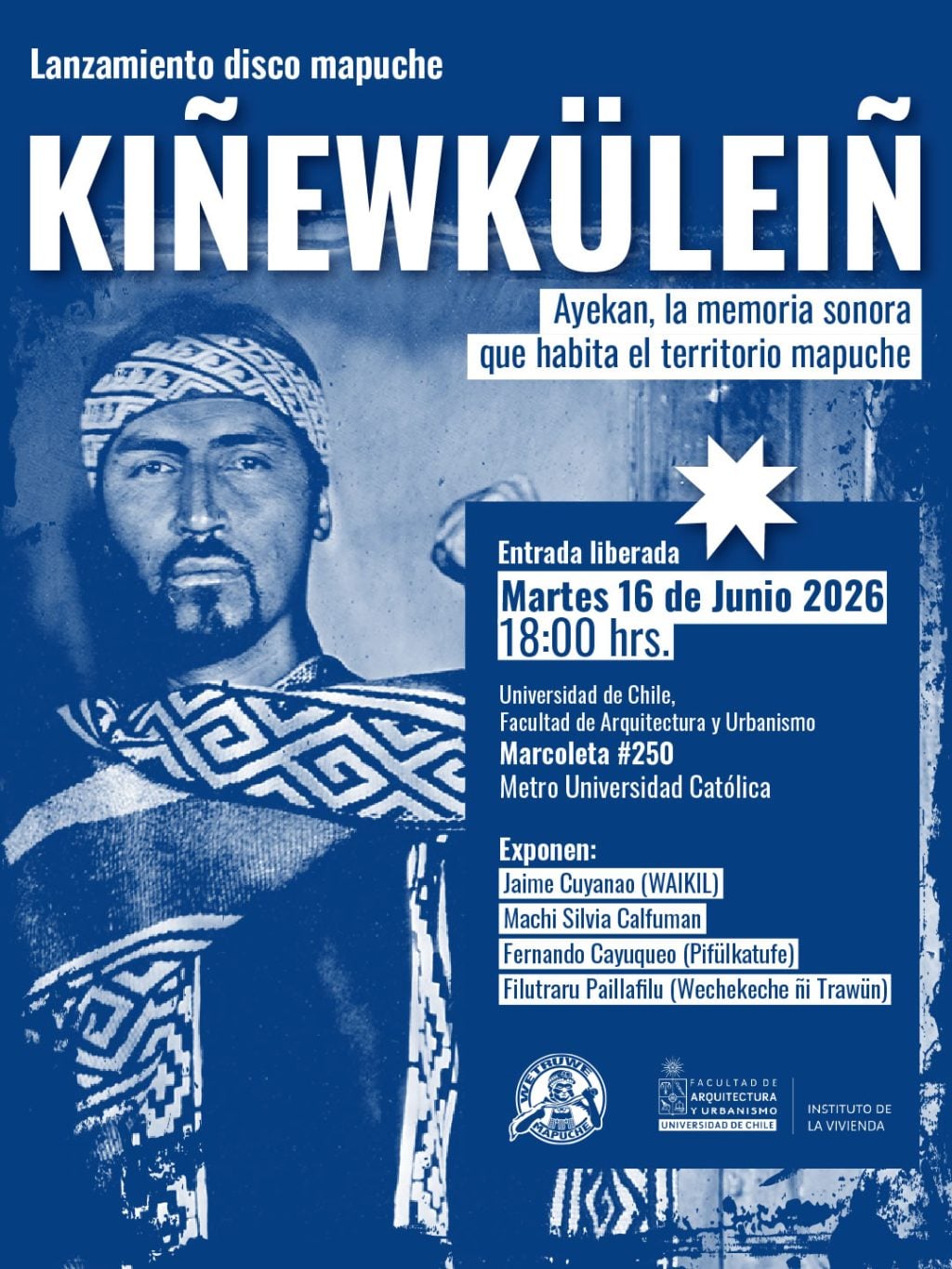
Event Details
Waikil Presents «Kiñewküleiñ»
Tuesday, June 16 – 6:00 PM
Auditorium FAU, University of Chile
Marcoleta 250, Santiago.
(Metro Universidad Católica)
*Nütram and live presentation of the album
FREE ENTRY
Obtén tu Pasaporte y apoya a El Ciudadano
Elimina la publicidad, accede a contenido exclusivo y sé parte de la comunidad.
Cancela en cualquier momento · Sin permanencia