Original article: Vivanco apuesta el todo o nada en la Suprema: apela para revertir el antejuicio
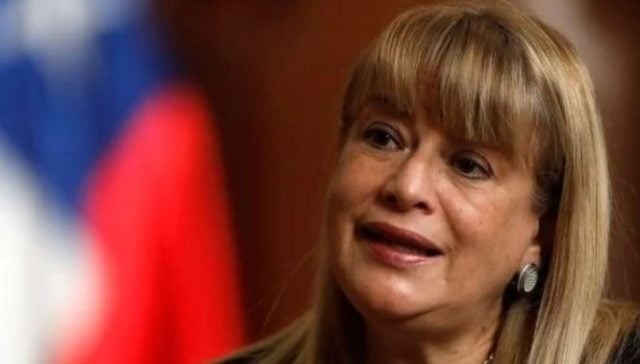
The defense team for former Minister Ángela Vivanco has announced plans to appeal to the country’s highest court in a bid to reverse the Santiago Court of Appeals’ decision that accepted the prosecution’s complaint against her.
This appeal represents a high-stakes gamble to prevent the progression of a preliminary inquiry into alleged corruption linked to cases processed in the Supreme Court, including the notorious «Belarusian plot.»
It is worth noting that the First Chamber of the capital’s appellate court unanimously adopted a resolution on Wednesday, confirming that the legal prerequisites for advancing the prosecution’s request had been met.
The court based its decision on what it described as «serious, precise, and consistent indications» that Vivanco may have accepted financial benefits from lawyers associated with the Chilean-Belarusian company CBM. The alleged aim of these payments was to benefit CBM in its legal disputes with the National Copper Corporation of Chile (Codelco) during the years 2023 and 2024.
«From the analysis of such evidence, it is plausible to infer that the accused, in her capacity as a public official, received money for herself and her partner to favor CBM’s interests in the proceedings where she was involved as a member of the Highest Court, violating the principle of administrative integrity and her disqualification duties as a reflection of her statutory obligations. These sums were received with knowledge of their illicit origin, which she utilized for profit while concealing and disguising their illegal source through various coordinated maneuvers with other implicated parties in the four chapters of the accusation under review,» reads the ruling.
Criticism of the Process and Appeal Announcement
Following the ruling, defense attorney Carlos Mora voiced strong criticism of the judicial system, highlighting an unusual delay in notifications.
“Unfortunately, and as has been a constant in this investigation, we learned of the Santiago Court of Appeals’ resolution through the press and a statement from the Judiciary itself, even before we were officially notified,” the lawyer stated in comments reported by Bio Bío Chile.
Mora expressed dissatisfaction with the content of the ruling, arguing that it failed to address the central arguments presented in defense of Vivanco.
“The ruling did not address the defense’s questions regarding our client’s involvement in the facts. Specifically, regarding which court actually ordered the judicial resolutions questioned by Codelco, as well as the lack of evidence establishing our client’s participation,” he asserted.
In light of this situation, the attorney announced their legal strategy to impede the progress of the preliminary inquiry. “We will exercise the rights granted by the law to attempt to overturn this resolution, so that our esteemed Supreme Court can finally rule on the matter,” he explained.
The Foundations of the Appellate Court
The 17-page ruling from the Court of Appeals, which will now be reviewed by the Supreme Court, states that the evidence presented by the Northern Prosecutor’s Office and the National Economic Prosecutor’s Office justifies the initiation of a preliminary inquiry. According to the document, the former magistrate is alleged to have breached the principle of administrative integrity and her disqualification duties by participating in cases where she might have a personal interest.
Furthermore, the court asserted that there are indications of «possible maneuvers to conceal the illegal origin of the funds purportedly received.» These circumstances led the judges to conclude that the Senate, in its role as a political jury, should investigate and resolve the potential criminal liability of the former Supreme Court member.
The Path Ahead for Vivanco
With the announcement of the appeal, the case now enters a decisive and highly complex institutional stage. The Supreme Court will need to convene as a court of singular jurisdiction to review the appropriateness of the preliminary inquiry against one of its former members.
If it upholds the ruling, the process would take a crucial step forward, as the indictment or “chapters” would be sent to the Chamber of Deputies for admissibility and potentially to the Senate for a political trial. Should the Supreme Court overturn it, the path for the preliminary inquiry would close, although the public ministry’s investigation could continue through other criminal avenues.
The defense’s strategy is, in simple terms, a gamble on everything. Either the Supreme Court halts the process at this preliminary stage, or Vivanco will face a political trial before the Senate on corruption charges in one of the most significant cases in Chile’s recent judicial history.
Relacionados


Belarusian Scheme: Court Keeps Ex-Judge Vivanco's Husband and Lawyers Vargas and Lagos in Custody
Hace 2 meses
From RN Candidate to Corruption Scandals: The Controversial Profile of Former Supreme Court Justice Angela Vivanco
Hace 3 meses
Prosecutors Claim $57 Million from Belarusian Firm Was Misappropriated by Ex-Supreme Court Minister's Husband
Hace 3 meses
Supreme Court Accepts Charges Against Former Minister Angela Vivanco for Corruption and Money Laundering
Hace 2 semanas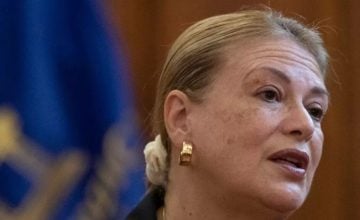
Angela Vivanco Arrested by Carabineros: Facing Charges of Bribery and Money Laundering
Hace 1 semana