Original article: Imacec de agosto golpea proyecciones de crecimiento para 2026: expertos advierten que una contracción anual ya no es descartable
August Imacec Disrupts Chile’s Growth Forecasts for 2026: Experts Warn Annual Contraction Possible
The 1.0% decline of the Monthly Index of Economic Activity (Imacec) for August has significantly affected predictions for the growth of the Chilean economy in 2026, leading experts to warn that an annual contraction can no longer be dismissed.
The Central Bank reported preliminary data indicating that the seasonally adjusted series fell by 0.7% compared to the previous month and 2.1% year-on-year. Under the government of José Antonio Kast, the economy has experienced two consecutive months of year-on-year declines following the 1.5% drop in July, which marked the worst record in over three years. From January to August, there have been six months of economic contraction.
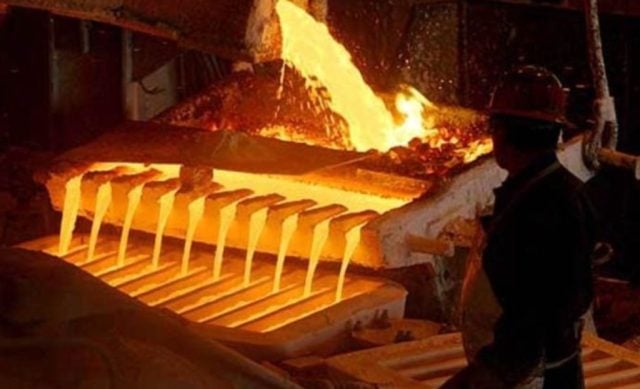
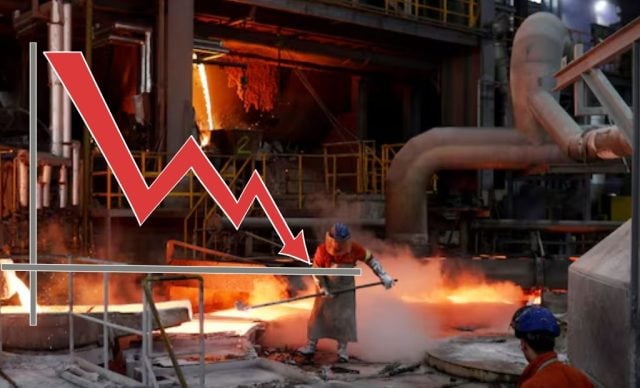
This downturn occurred in both the original series and the seasonally adjusted series, primarily due to mining, which saw its activity decline by 17.4% over the year, particularly impacted by copper extraction. «This drop was influenced by lower ore grades, maintenance issues, and adverse weather conditions,» explained the regulatory agency. The production of goods declined by 4.9% annually, and in seasonally adjusted terms, it fell 2.9% from the previous month.
An annual closing with a negative GDP would be unusual. In the past three decades, this has only happened in 1999 (-0.3%, Asian crisis), 2009 (-1.1%, global financial crisis), and 2020 (-6.1%, pandemic). For now, the Central Bank’s central scenario remains optimistic: it forecasts growth for 2026 between 0.25% and 0.75%, a range that was revised down from 1.0%-1.75% in September.
However, according to Hermann González, macroeconomic coordinator at Clapes, after the August Imacec results, an annual contraction cannot be ruled out.
«One can’t dismiss the possibility of ending the year with negative figures, which would undoubtedly be very bad, but it is not our base scenario today,» he stated in an interview with CNN Chile.
He noted that he anticipates further downward corrections for 2026 with figures close to the bottom of the range projected by the Central Bank.
González warned that the weakness cannot be attributed solely to copper. According to his analysis, this year has seen a combination of supply issues, a reduced dynamism in private and public demand, a weakened labor market, and an investment landscape lacking significant momentum: «The weakness is undoubtedly greater than anticipated,» he told the referenced media.
In line with this, Felipe Cáceres, market analyst at Capitaria, pointed to mining as the main factor behind the 1.0% decline in August, which summarizes the activities of various economic sectors and serves as an approximation of GDP changes.
He emphasized that other sectors performed differently: retail grew by 2.2%, services increased by 0.8%, and the non-mining Imacec rose by 1.4%. For him, these figures indicate activity outside of mining but are insufficient to offset the severe downturn in the mining sector.
According to his forecasts for the year-end, “the base scenario remains close to zero growth,” although he noted that the margin of error has significantly decreased.
“For Chile to end 2026 in positive territory, the remaining months would need to reverse the current accumulated, which depends almost entirely on mining recovering and the absence of new external shocks. The Ministry of Finance itself attributes the results to specific and transitory factors, which is partially correct. What was less expected was the intensity and concentration of all these issues occurring in the same month,” he indicated to CNN Chile.
Felipe Oyarzún, market analyst at XTB, presented a similar view. He recalled that the three episodes of negative annual growth in recent decades were associated with considerable shocks: 1999 with the Asian crisis, 2009 with the global financial crisis, and 2020 with the Covid-19 pandemic. Furthermore, data from the Central Bank confirms that those were the only three years with GDP contraction since 1997.
Although Oyarzún acknowledged that 2026 has deteriorated from previous expectations, he does not foresee an annual decline at this moment.
He recognized that “the risk of ending close to zero has increased,” but stated that for Chile to close the year with negative figures, the deterioration witnessed over the last few months would need to become more pronounced.
“Grow by 0.5% or have a negative result of 0.5%, is not growing”
According to Rodrigo Montero, dean of the Faculty of Administration and Business at the Autonomous University, growth for 2026 could be positioned between 0% and 0.5%, cautioning that the weakness includes elements beyond the transitory.
“The cyclical elements will pass, but the structural weakness will persist beyond these factors that are momentarily pushing the economy downward.”
In the analyst’s opinion, a growth of 1.4% in non-mining activity remains low and he warned about the indirect effects that weaker mining performance can have on other sectors and employment. According to the figures from the Central Bank, in August, mining dragged down industrial production with a decline of 11.7% due to lower copper activity.
Carolina Grunwald, assistant manager of Studies and Commercial Support at Prudential AGF, highlighted investment, the labor market, and weak consumer spending as factors hindering recovery. The analyst forecasts a 0.5% growth for 2026 and noted that a slightly positive or negative variation still reflects stagnation. “Growing 0.5% or having a negative result of 0.5% is very similar to me; it is not growth,” she stated to the referenced media.
Thus, according to expert opinions, the evolution of mining, the recovery of non-mining sectors, and the demand in the last quarter will determine whether Chile ends up in positive territory or adds 2026 to the three years of negative growth witnessed in the past three decades.
Obtén tu Pasaporte y apoya a El Ciudadano
Elimina la publicidad, accede a contenido exclusivo y sé parte de la comunidad.
Cancela en cualquier momento · Sin permanencia