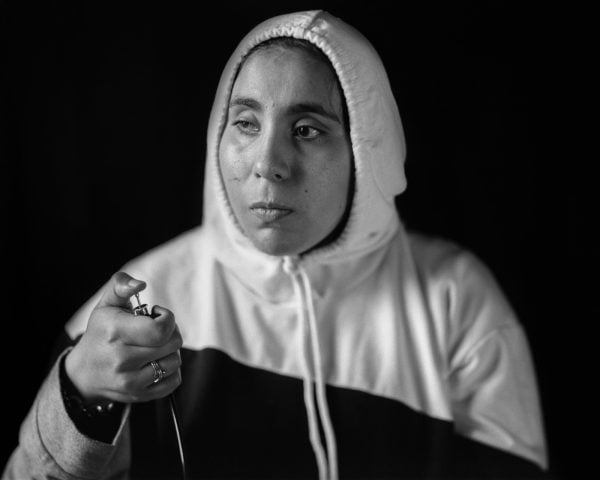
Original article: Autorretrato Ciego: Invitan a exhibición multisensorial e inclusiva en Matucana 100
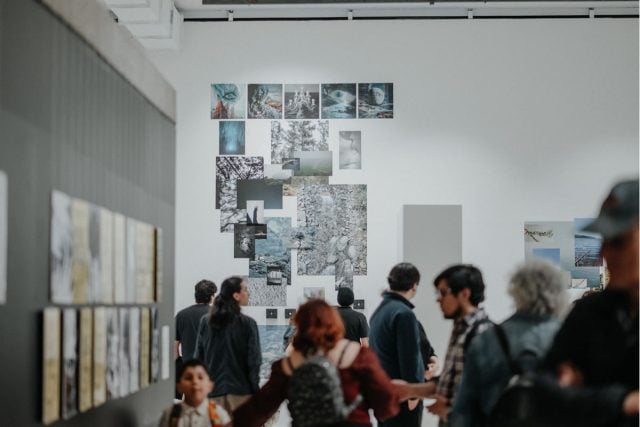
A unique experience awaits attendees of the «Blind Self-Portrait» exhibition by physician and photographer Raúl Charlín. This exhibition features portraits of individuals with visual impairments—ranging from complete blindness to low vision with light perception—where they themselves activated the shutter of a large-format camera.
«In a way, we are co-authors of the image. I set up the light and framing, we discuss the pose, but it’s they who press the shutter,» Charlín explains.
The process is completed with development in analog labs (in collaboration with Fernanda Larraín), digital prints featuring Braille text, and 3D masks produced from infrared scans (by Taller Dynamo), allowing viewers to «hear, touch, and see» the artworks.
The exhibition, curated by Nathalie Goffard and funded by the National Fund for Culture and Visual Arts (2024), also includes haptic mediation (simulating physical sensations through vibrations and forces) conducted by the Central Library for the Blind, where the audience is encouraged to minimize visual input to enhance other senses during the experience.
«Visitors will be able to see, hear, and touch the faces depicted. This way, individuals with visual impairments will have access to the works, while sighted patrons can explore a wide range of perceptions through other senses. It will be a very profound and moving experience,» the artist emphasizes.
Reflection on Power Asymmetry
In collaboration with Fundación Luz, the Central Library for the Blind, Fundalurp, the Metropolitan Technological University (UTEM), and the University of Talca, the project invites a reflection on the power asymmetry involved in portraiture and offers an inclusive exhibition that broadens the way photography is ‘seen.’
As part of the research, the artist conducted a Braille Workshop to deepen the content and ensure the technical implementation of tactile language in the space.
«We wanted to give blind and visually impaired individuals the opportunity to feel the face of the person depicted, something they cannot see. This resulted from extensive research where, ultimately, we scanned the faces using infrared sensors and then created masks with a 3D printer. This enables the exhibition to provide the ability to hear, touch, and see,» Charlín concludes.
DETAILS
December 19 – January 18
Wednesday to Friday, from 12 PM to 9 PM
Saturdays, from 4 PM to 9 PM
Sundays, from 4 PM to 8 PM
Concrete Room – M100 Cultural Center
Matucana 100, Santiago
FREE
The Citizen
Relacionados
Colombian and Palestinian Embassies in Chile Launch Photo Exhibition "Palestine Resists"
Hace 3 meses
"Estrenos en RED" Invites Filmmakers to Showcase Movies in Independent Theaters Across Chile
Hace 3 meses
Embroidered Book with Burlap Tells the Story of the Current Memory Site Estadio Víctor Jara
Hace 2 meses