Original article: Camila Vallejo desarma el relato de la “aprobación”: el decreto era el paso 1 de 13 y el cable chino sigue sin luz verde
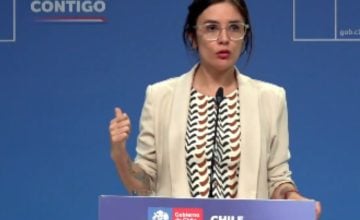
Government spokesperson Camila Vallejo asserted that when the administration states that the Chile-China Express submarine fiber optic cable project is under evaluation, it is «completely and totally» accurate.
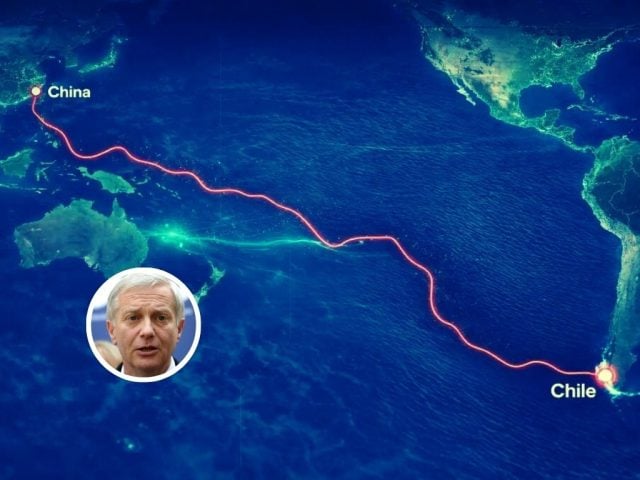
Vallejo addressed the controversy surrounding the Chile-China Express, a submarine fiber optic cable aimed at establishing a direct connection between Valparaíso and Hong Kong, emphasizing that the decree signed and later annulled by Minister Juan Carlos Muñoz was merely the first link in a chain of thirteen administrative steps.
In an interview with Radio Sonar, the government secretary defended national sovereignty in making decisions according to Chilean institutional frameworks and criticized the sanctions imposed by the administration of former U.S. President Donald Trump on high-ranking Chilean officials as «unilateral, arbitrary, and unjustified».
On November 26, 2025, a consortium made up of major Chinese tech giants—China Telecommunications Corporation, China Mobile Communications Group, and China United Network Communications Group—submitted a formal request to the Undersecretariat of Telecommunications (Subtel) for a concession to build the submarine cable, with an investment estimated at around $500 million.
The initiative, currently under evaluation, sparked outrage in Washington. Last Friday, U.S. Secretary of State Marco Rubio claimed it could «undermine regional security» and announced the revocation of visas for the Minister of Transport and Telecommunications, Juan Carlos Muñoz, Undersecretary Claudio Araya, and their chief of staff, Guillermo Petersen.
The Republican administration indicated that the officials had «knowledge of, directed, authorized, funded, and provided substantial support for activities that compromised critical telecommunications infrastructure and undermined regional security in our hemisphere.»
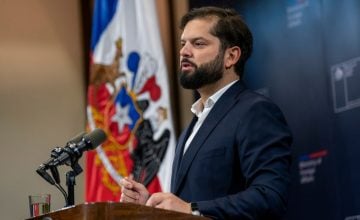
Amid the diplomatic storm triggered by this action, President Gabriel Boric‘s government has made it clear that the submarine cable project continues to be evaluated «in accordance with institutional processes.»
The President stated that he instructed sector authorities to gather information «to make a well-founded decision,» but noted that this decision «will exceed our mandate’s timeframe» and will need to be «continued or discarded by the next authorities.»
The President emphasized that his administration decides «in the best interest of Chile and its people,» advocating for technological neutrality and multilateralism as cornerstones of foreign policy.
Vallejo: The Decree Was the First Step in a 13-Step Process
To clarify the actual status of the Chile-China Express submarine cable project, Government Secretary Camila Vallejo dismantled what she deemed a misinterpretation of the facts point by point on Wednesday.
In discussions with Radio Sonar, she detailed the core of the controversy: the signing and subsequent annulment of a decree linked to the initiative. Vallejo explained that rather than being a final approval—as suggested by political actors and media—this administrative act merely marks the beginning of a lengthy evaluation process.
She emphasized that «the signed and then annulled decree constitutes the ‘first step in the evaluation system for a project like this, the first of 13.'»
Vallejo elaborated on this idea, highlighting that the evaluation process has only just begun and that the public should understand the complexity of the mechanism.
«We are, today, even in the first stage of the 13 steps,» she explained in detail, stressing that the project has not received final approval or disapproval.
In this regard, Vallejo addressed accusations questioning the Executive’s transparency regarding the initiative’s status, arguing that when the government states that the project is under evaluation, it is «completely and totally truthful.»
Minister Vallejo: «We Are Sovereign to Make Our Decisions»
One of the hottest topics addressed by the minister was whether the decision to retract the decree’s signature was influenced by pressure or warnings from the U.S. embassy. In response to this inquiry, Vallejo reaffirmed the state’s autonomy to manage its internal processes.
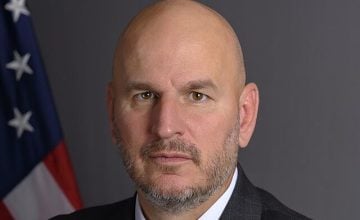
«We, in Chile, unlike what the U.S. ambassador (Brandon Judd) states, have an institutional framework, we have legislation, and we are sovereign to make our decisions, gathering the information our institutional framework provides,» she affirmed.
This reply came in response to statements from the U.S. diplomatic representative in Santiago, who, following the line of Trump’s ultra-right administration, urged the Chilean government to adopt «investment evaluation mechanisms.»
Although Udd claimed that Washington respects «Chile’s right to engage in commercial exchanges that bring prosperity and opportunities to its people,» he suggested that threats to critical infrastructure that risk or inhibit sovereignty—especially in telecommunications—»affect us all.»
In this context, Minister Vallejo placed the White House’s stance within a broader framework, suggesting that there are geopolitical interests at play that go beyond the specific submarine cable initiative.
«We have known for a long time that the United States does not like this project,» the spokesperson stated, adding that there is a background tied to the Monroe Doctrine and influence in the hemisphere.
The minister insisted that the project «is currently under evaluation, as part of a lengthy procedure,» reiterating that the Chilean state acts according to its institutional framework and not under external pressures.
The U.S. Sanction is «Unilateral, Arbitrary, and Unjustified»
Regarding the sanctions imposed by Washington on Minister Juan Carlos Muñoz and two other high-ranking officials whose visas were revoked, the government secretary indicated that it is a measure that is «unilateral, arbitrary, and unjustified.»
«The United States imposes what we consider a totally unilateral, arbitrary, and unjustified sanction because it accuses and alleges against our authority, a state minister of Chile, of affecting or putting regional security at risk,» she asserted, as reported by El Mostrador.
«No State Minister Has Endangered National Security»
The seriousness of the U.S. allegations contrasts, according to Vallejo, with the nature of the actions performed by Minister Muñoz, leading her to defend his performance and deny any actions that might have compromised regional security.
«The minister has never, nor has our government, nor any state minister put national security at risk,» she asserted.
«Basically, what the United States has done is sanction a state minister for evaluating a project. This project is under evaluation.»
Vallejo went further in defending the Transport and Telecommunications minister, arguing that under no extreme scenario could Muñoz’s actions present the risk alleged by the United States.
«Not even the minister could have eventually endangered national security by having signed and processed the decree,» she maintained.
Vallejo reiterated that the state secretary acted «with additional prudence» and stated that La Moneda has managed the situation «with extreme caution and responsibility.»
The minister also addressed the diplomatic front, revealing that Chile has asserted its position through established formal channels and sent a letter to Washington via the Foreign Ministry, expressing the government’s displeasure over the terms used by Ambassador Brandon Judd in his recent statements.
«The adjectives applied by the ambassador are obviously, I believe, out of the diplomatic language that we would expect as a country,» she concluded.
Relacionados
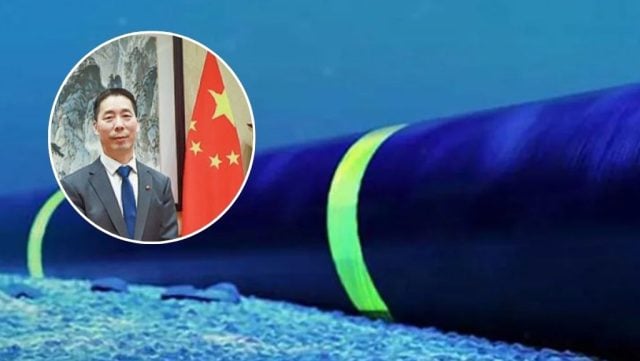
Chinese Ambassador Dismisses Concerns Over Submarine Cable, Affirms No Threat to Regional Security
Hace 7 horas