Original article: Clara Bünger: «Si no tuviéramos el poder de cambiar las cosas, no nos combatirían»
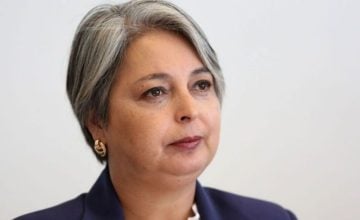
Clara Bünger serves as a representative for Saxony in the Bundestag, where she holds the position of vice president and spokesperson for domestic politics within the Die Linke parliamentary group. A trained lawyer, she has spent years advocating for the rights of refugees and migrants, emerging as one of the most prominent voices in the party against the far-right. In a recent conversation with the Rosa Luxemburg Foundation in Berlin, she reflected on the electoral fallouts that left Germany divided: Die Linke became the leading party in the capital for the first time in its history, garnering 25.7%. Meanwhile, the far-right AfD (Alternative für Deutschland) gained 43.8% in Saxony-Anhalt and triumphed in Mecklenburg-Vorpommern. Bünger discusses how the left earned support in Berlin by addressing the cost of living, why the party is gaining traction among youth, how they are reacting to allegations of antisemitism post-election, and why the fight against far-right ideologies must be international.
By Víctor Miguel Castillo
September 2026 Left a Divided Map: The AfD Wins in the East while Die Linke Wins Berlin for the First Time in History. What Lessons Can the Party Learn from the Victory in Berlin to Apply in Regions Historically Linked with Their Ideals, Now Dominated by the Far-Right?
In Berlin, we address the actual issues facing people: housing, rent, and affordability. We talk about rents, salaries, and the overall cost of living, providing concrete solutions. We do not merely propose the socialization of major real estate companies; we also present a comprehensive plan to implement it.
This is supported by grassroots work. For many years, Die Linke members in Berlin have engaged deeply with voters by going door-to-door. We have consistently focused on the issues affecting people. This is what we need to do in regions where the AfD is strong, but we still have to build the social structures and conditions there. In large cities, we have those structures. Of course, we cannot just replicate our approach, but we need to establish similar infrastructures in rural areas as well. Many people live there and confront the same affordability challenges. Housing may be more accessible outside cities, but issues like the cost of living and energy prices remain prevalent. Thus, we must find ways to extend our urban successes beyond to these rural locations.
It Was Said That Die Linke Won Berlin by Achieving Something Usually Associated with the AfD: Polarization. If So, What Is the Difference Between the Polarization Proposed by the Left and That of the Far-Right?
The claim that the left polarizes society often comes from so-called centrist political entities, as we challenge a statu quo that is failing the majority. In our Berlin campaign, we discovered many shared concerns: the desire for affordable housing, safety, and a good life for everyone. These are common interests, not divisive demands. The AfD’s response to these problems focuses on deporting millions of people. Our response is to address structural injustices and enhance people’s lives.
From my perspective, the current political division is a result of thirty years of failed neoliberal policies. People are fed up and frustrated, and many, like me, feel that we need more resolute demands. What the public wants is for living in Berlin to be affordable again. That’s not as radical as the Christian Democrats claim. Having a rent one can afford, a secure life, and living in peace and dignity, none of that is radical. It’s normal. We concentrate on the basic issues that affect most of the population.
The far-right divides people by scapegoating minorities. They turn migrants into scapegoats, blaming them for all social problems. They transform social issues into confrontations between insiders versus outsiders, Germans versus foreigners, instead of rich against poor. We must recapture that focus: pointing out who holds power and wealth. Our politics center around solidarity with those who work hard and pay too much in taxes. A worker can face taxes on their income of up to 43%, while someone inheriting a fortune pays around 23%. That is not justice.
In Berlin, Over 40% of Voters Aged 16 to 24 Chose Die Linke. In Many Countries, Young People Seem to Lean Towards the Far-Right or the Left. How Do You Explain Die Linke’s Popularity Among Young People in Berlin and Beyond?
The issues we discuss are especially urgent for young people. We talk about security, peace, freedom, social security, and their future. We make clear and strong demands. We do not dilute our statements until they fail to address the problem. We insist on the necessity of affordable housing and a life people can afford, creating opportunities for growth in peace and freedom. We engage directly with young folks, many of whom express fears about the potential for war in Europe. Our goal is to ensure they feel safe.
The right seeks the weakest social group to attack liberal democracy. Today, it is refugees. […] They start with refugees and migrants; next, they will come for retirees, the unemployed, and the sick.
The Victory Was Built on the Cost of Living and Making the City More Affordable. Some Say the Left Lost the Working Class by Focusing on Identity Issues. How Does Die Linke Combine Material Struggles with Advocacy for Minorities, LGBTQ Rights, and Gender Equality Without the Right Pitting Them Against Each Other?
We are only strong when our struggles are united. If everyone fights only for themselves, we are weaker than we could be together. The idea behind this is the narrative of race and class, aiming for more freedom, something well addressed in Ian Haney López’s book, Merge Left. It shows that left-wing politics succeed when they unite struggles and understand that they are interconnected.
On the opposite side, there exists a process of authoritarian experiences, where right-wing actors target the most vulnerable social group to attack liberal democracy. Today, that target is refugees, whom they frame as criminals responsible for all societal issues and advocate for their rights to be stripped away. This rhetoric garners substantial support in Germany and potentially in many societies. However, this is a gateway to attacking the basic human rights of everyone. They begin with refugees and migrants; later, they will target retirees, the unemployed, and the sick.
Our response should be a united block against the right. What binds us is the fight for a good life, decent working conditions, labor rights, and unionization for all without exclusion. When we integrate the narrative of freedom, LGBTIQ+ individuals also find representation. We see the working class as a whole, not merely as the white male factory worker some in the left still envision. Zohran Mamdani exemplified that in New York, and it works. The working class as a collective is affected by the capitalist system, and ultimately everyone suffers from inequality if we do not fight together. That is why we must always refuse to engage in scapegoating. Social justice means defending everyone’s right to live with dignity, regardless of where they come from, their religion, gender, or sexual orientation. A crucial lesson the left has learned is the necessity of unity.
Die Linke’s Central Campaign Proposal in Berlin Was to Socialize About 220,000 Apartments from Major Real Estate Companies, Eight Firms with Over 3,000 Apartments Each. It is Backed by the 2021 Referendum, Where Nearly 60% Voted in Favor, and the Party Made This a Condition for Governance. The Business Community Warns It Will Drive Away Investment. How Will This Be Implemented, Who Will Pay Compensation, and How Does Die Linke Respond to This Argument?
The 2021 referendum was a clear democratic mandate, and all parties should recognize that this is what Berlineers want. If you ask a Berliner what their biggest issue is, the answer is rent.
One of the critiques against the plan claims it is economically unfeasible. However, we have concrete proposals where the cost does not come from Berlin’s budget. A public law entity would take charge of the buildings and finance them with long-term debt. Since the state becomes the owner of the buildings, it can secure loans against them, and compensations to companies like Vonovia could be gradually covered through rental income, interest, and repayments. The total cost estimates range from €8 billion to €18 billion, but the money does not need to be paid all at once. We have legal studies demonstrating that it is possible and legal.
We also refute the claim that it will scare away investment. Look at Berlin: there has been significant investment and construction, yet ordinary people cannot afford the rent in investor-owned buildings. We do not need more expensive apartments. Berlin needs investment in housing that everyone can afford, and housing should not be a business model. There are EU programs that support affordable housing, and Berlin could utilize these. If we promote more social investment, investors will come. I spoke with an investor who builds affordable housing. He doesn’t make billions, but lives worthily. It remains a business, and it is possible.
Die Linke Previously Governed Berlin as a Minor Partner in a Coalition with the Greens and Social Democrats and Paid Electoral Costs. Now They Would Lead the Government. What Must They Do Differently to Ensure Governance Does Not Disengage the Base That Brought Them Victory in the Capital?
The success of Zohran Mamdani shows that we should not replicate the mistakes of the previous government or be content with slightly better management. We must look for new paths and hold firm from day one regarding what Berlineers want: a viable life and housing. They did not vote for the statu quo. They want change.
This means strongly advocating for our core demands around affordability and rent, as well as social security. People need to see a difference. Therefore, we must stay very close to the voters who granted us this mandate, without fearing the conflicts it may bring. Our candidate, Elif Eralp, faced many threats. At one point, even the chancellor remarked that no one should sit down to negotiate or form a coalition with her. That shows they are scared, and it also indicates that we have a genuine opportunity to win. If we lacked the power to change things, they would not be fighting against us.
In Parliament, we utilize a wide range of requests for reports and initiatives to pressure the government, as Germany supplies arms to Israel. We are the only party doing this, the only party showing solidarity with the Palestinian people.
You Mention the Fear Die Linke Provokes. Just After the Party Won, It Faced an Offensive to Declare It «Unfit to Govern.» One of the Accusations Was Antisemitism, Often Used in Germany Against Those Expressing Solidarity with Palestine or Criticizing the Genocide in Gaza. How Does Die Linke Maintain Its Solidarity with the Palestinian People under This Pressure, and How Does It Avoid the Anti-Antisemitism Fight Being Used to Silence the Left?
We witnessed a massive campaign against Die Linke before the election and it persisted after we secured 25.7%, because we are committed to real change for the city. Those benefiting from the statu quo seem to fear that change, and within that context, antisemitism was weaponized.
At the same time, antisemitism is a real problem in our society. We are in Germany, where Nazis deported and murdered millions of Jews in a state-organized manner. However, it is certainly not solely a left-wing issue. Research indicates that antisemitism permeates all areas of society and across the entire political spectrum. The AfD, in particular, represents a significant threat to Jewish people. The CDU (Christian Democrats), which has been most vocally critical of us, has its own troubled past: during the previous Berlin government, there was a scandal over how funds intended to combat antisemitism were distributed.
Furthermore, the term antisemitism has been misused in many instances. It is essential to differentiate between antisemitism and legitimate criticism of the Israeli government and the genocide in Gaza. Due to Germany’s history, debates here differ from those in other European countries. We must confront antisemitism because it is on the rise, and we also see how it is weaponized against social movements. We will always fight for the human rights of all people, for international law, and for the right to freedom of expression and assembly. This includes the right to talk about Palestine in Germany.
In Parliament, we use a wide range of requests for reports and initiatives to hold the government accountable, as Germany supplies arms to Israel. We ask written and oral questions regarding how many weapons are supplied and of what types, and we bring motions to the plenary. Last year, we submitted a motion concerning Gaza to enforce international law, halt arms exports, and ensure humanitarian assistance reaches the population. Just weeks ago, we presented another to rigorously uphold international law and terminate economic and scientific support for the unlawful occupation policies of Israel in the West Bank. We are the only party doing this, the only party expressing solidarity with the Palestinian people, which helps explain our success.
Increasingly, Voices from Civil Society and Political Organizations Are Calling to Ban the AfD. On September 30, You Yourself Asked the Bundesrat to Initiate the Process. But How Can You Prohibit a Party That Obtained Close to 40% of the Votes in Two States Without It Presenting Itself as a Victim? What Must the Left Do, in Addition to Legal Avenues, to Politically Defeat It?
The reason German constitution allows for the prohibition of a party is the lesson we learned from the NSDAP, Hitler’s National Socialist German Workers’ Party, responsible for mass murders and World War II. Parties aiming to pursue such paths should not be able to plan or carry out mass deportations and killings. And that is precisely where the AfD is heading: calling for «remigration,» for the deportation of millions. They openly state it, and I believe they are serious about it. That’s why I support pursuing legal action.
However, when I think about all that we need to do against the AfD, against the right, against the neoliberals and radical capitalists—which is what the AfD represents—I would argue that a ban might represent perhaps 10% of the effort. The other 90% lies in political struggle: in communities, grassroots organizations, schools, universities, and everywhere. We should not rely on one path but rather explore many avenues to combat right-wing, fascist, neoliberal, and radical capitalist parties. The AfD is one of them, and it poses a direct threat to the individuals it seeks to deport.
In May, You Were in São Paulo, Invited by the Rosa Luxemburg Foundation, at the Meeting «A Saída é pela Esquerda» (The Exit is Left). There, You Closely Experienced Progressive Governments That Were in Power at the Time in Colombia and Brazil. Today, the Scene is Quite Different: The Far-Right Now Governs Colombia with Abelardo de la Espriella, and in Brazil, the Chances of Bolsonaro’s Return are High. How Should Solidarity and a Common Strategy Be Established Between the Left in Europe and Latin America Against a Resurgent Far-Right in Our Region?
What I took away from São Paulo, my international contacts, and travels is that the challenges we face are remarkably similar across countries. A right-wing ecosystem is gaining strength, alongside an ecosystem of oligarchs from major tech companies who cooperate with each other, transferring power from states to corporations. The far-right is organized internationally. To combat it, we too must act on an international scale. We need stronger networks among leftist parties, labor unions, and social movements in Europe and Latin America.
The far-right knows how to support one another, and we should do the same. We must listen to each other with solidarity and learn from each other’s perspectives and experiences. While in Brazil, I met the Landless Workers’ Movement (MST). Witnessing so many people organized was a powerful experience. Organization is the decisive factor for our success as a global movement: first at the local and national levels, then internationally. We can learn from the MST, and perhaps they can learn from Berlin and our door-to-door campaign.
International solidarity also means standing together against racism, colonial and neocolonial relationships, authoritarianism, and growing inequality. And, returning to the outset, we must always offer people a real alternative not based on fear or exclusion. This is the narrative of race and class for more freedom, one that includes everyone. We must always focus on social security, democracy, and a good life for all.
*Víctor Miguel Castillo is the General Editor of the Spanish Global Platform at the Rosa Luxemburg Foundation and a member of the CLACSO Working Group “Popular Economies: Theoretical and Practical Mapping in Latin America”.
Obtén tu Pasaporte y apoya a El Ciudadano
Elimina la publicidad, accede a contenido exclusivo y sé parte de la comunidad.
Cancela en cualquier momento · Sin permanencia