Original article: “Castigo colectivo”: Díaz-Canel acusa a EE.UU. de convertir el bloqueo contra Cuba en una “expresión de genocidio”
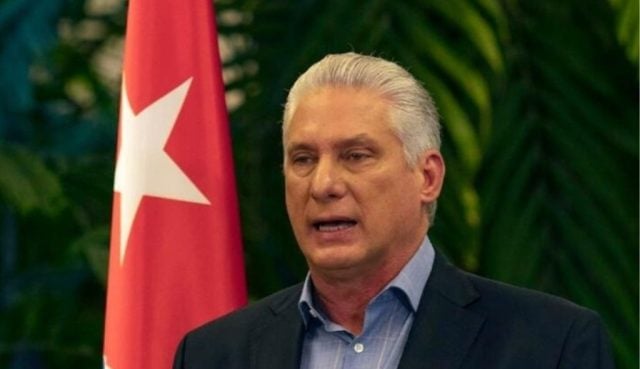
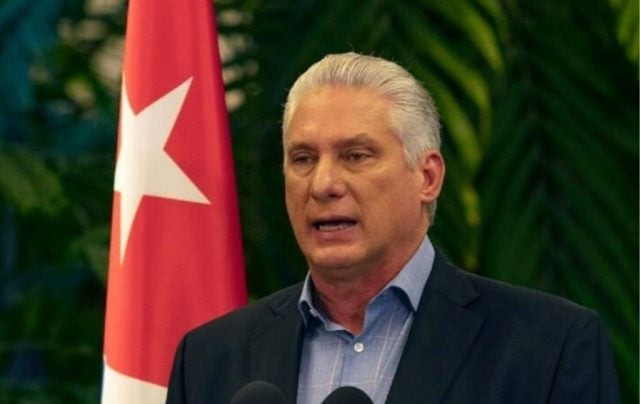
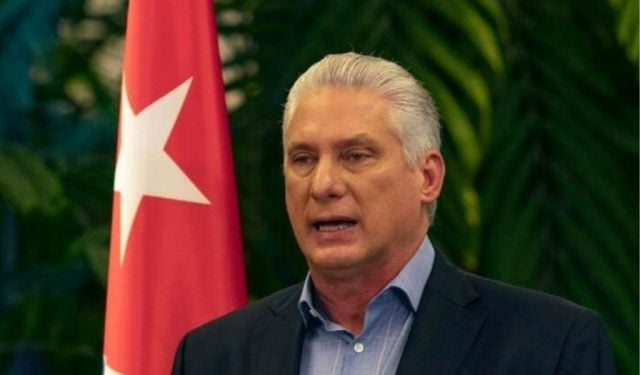
Cuban President Miguel Díaz-Canel has accused the United States (U.S.) of transforming the economic blockade imposed on the island into «a collective punishment against the population» and an expression of «genocide and crime».
In an interview with RT, the Cuban leader criticized the U.S. government’s hostility under President Donald Trump, claiming it has intensified beyond an embargo that has persisted for over sixty years, now adding new pressure mechanisms that directly impact the most vulnerable sectors of Cuban society.
Díaz-Canel stated that during Trump’s first term, there was an unprecedented intensification of coercive measures, and upon his return to the White House, the Republican magnate has compounded these restrictions by implementing what he termed as «an energy blockade.»
The president described this strategy as «a maximum strangulation policy, a maximum pressure» aimed at breaking the will of the Cuban state and creating conditions of ungovernability on the island.
Díaz-Canel went further to warn that U.S. authorities will face accountability on the international stage for «the crime and genocide orchestrated against Cuba.»
«They are applying collective punishment against the Cuban population. It is an expression of genocide and crime. And I believe that at some point, those who have crafted this policy against Cuba will have to answer internationally,» he asserted.
In this regard, he emphasized that the current blockade is not merely a political dispute between governments but rather an expression of genocide that threatens the civilian population, violating fundamental principles of international law and human rights.
«Urgent Action is Needed»
In diagnosing the crisis, Díaz-Canel described the situation as «unprecedented» and of «serious complexity», noting that it has escalated to levels beyond any other historical moment. In light of this scenario, he urged acting «with a sense of urgency but also with great composure» to avoid improvisations that could lead to further difficulties.
He acknowledged that this is a dialectical process that will inevitably face contradictions and potential errors, emphasizing the fundamental need to have «the capacity to overcome and rectify.»
The leader stressed the importance of popular debate in building solutions, stating that «you cannot make a revolution without popular participation and control.»
He emphasized that the transformations being proposed are not solely economic but socio-economic and clarified that under no circumstances have they jeopardized the social justice concepts that characterize the Cuban revolutionary project.
«No Fuel Ship Has Arrived in Six Months»
To illustrate the severity of the crisis, the Cuban president provided details on the impact of the energy blockade imposed by the Trump administration. He reported that no fuel ship has entered the island for six months, with the exception of a Russian vessel that arrived as humanitarian aid.
Additionally, he explained that Washington’s pressures on foreign companies have resulted in the withdrawal of a significant number of international investors operating in Cuba, leading to «a lot of deterioration» in the country’s economic, productive, and service processes.
The Cuban leader was emphatic in linking these difficulties directly to the blockade, stating that it constitutes «a collective punishment» affecting the daily lives of all Cubans.
Cuba Calls for Dialogue with the U.S.
Despite the harshness of his accusations, Díaz-Canel insisted on Cuba’s willingness to engage in dialogue with the United States as a means to resolve bilateral differences, reminding that the Cuban revolution has always advocated for a negotiated resolution of conflicts.
He reaffirmed his belief that, beyond inevitable ideological differences, it is possible to find areas of cooperation beneficial for both peoples, advocating for the creation of spaces to help «ensure peace and stability for both nations and also for the Latin American region.»
In a conversation with RT, the leader described dialogue as «a process that must be undertaken with great seriousness,» with sensitivity and responsibility, to foster mutual trust and, above all, to distance from confrontation.
Obtén tu Pasaporte y apoya a El Ciudadano
Elimina la publicidad, accede a contenido exclusivo y sé parte de la comunidad.
Cancela en cualquier momento · Sin permanencia