Original article: Memorias bioculturales, arte y resistencia colectiva en el maritorio: Experiencias de la Cooperativa Caleta Los Piures Punta de Lobos
By Ignacia Borgeaud Núñez and Magdalena Ceballos Mendieta, Fundación Mujeres de Mar and La Grieta
Who has the right to tell the stories of territories? From what perspectives are the narratives that enter museums constructed? What possibilities arise when communities actively participate in the curation of an exhibition?
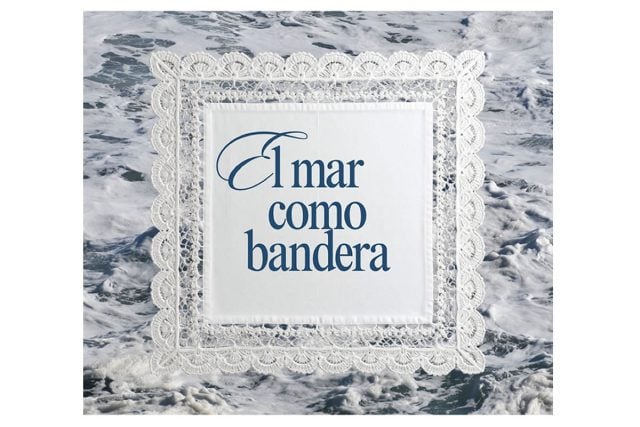
These questions underpin The Sea as a Flag, a proposal combining visual arts, territorial research, and community museography developed by the Center for Studies and Research La Grieta in collaboration with the Caleta Los Piures Cooperative in Pichilemu.
The exhibition, funded by the Regional Fondart for 2026, Line of Dissemination from the Ministry of Cultures, Arts, and Heritage, will be held from November 13 to December 28, 2026 at the Regional Museum of Rancagua, encouraging critical reflection on the connections between collective memory, biodiversity, labor, community organization, and the defense of marine common goods.
Its uniqueness lies in the methodology used for its creation: coastal communities are not merely represented subjects but are producers of knowledge, creators of content, and co-curatorial agents of their own memories.
Opening Museums to Territories
Historically, museums have played a crucial role in shaping the narratives through which societies interpret their past, acknowledge their heritage, and establish relationships with their territories.
However, these spaces are not neutral. Decisions about which objects are displayed, which memories are preserved, who constructs the curatorial narratives, and which knowledge gains cultural legitimacy are deeply influenced by historical power relationships.
In this context, opening museum spaces to communities entails much more than merely providing access to exhibits.
It involves reevaluating traditional methods of knowledge production, questioning the hierarchies that have historically separated specialized knowledge from community knowledge, and creating conditions for territories to actively engage in constructing their own representations.
It’s about allowing communities’ knowledge, experiences, memories, and worldviews to transform the museum as an institution, not just bringing them into the museum.
This perspective is particularly relevant in Chile, where many rural, peasant, and coastal community memories have historically occupied limited spaces within institutionalized heritage discourses.
Opening cultural spaces to these experiences enhances the narratives surrounding our history, acknowledges the diverse knowledge present in territories, and promotes more democratic ways of producing and circulating heritage.
The Sea as a Flag emerges from this understanding, aiming to create a narrative about marine-coastal territories based on the experiences of those who have historically inhabited, worked, organized, and defended them.
An Alliance Between Social Sciences, Ecosystems, and Visual Arts
The Fundación Mujeres de Mar and the Center for Studies and Research La Grieta have developed work lines that converge in territorial research, collective memory, cultural heritage, and recognizing communities as knowledge producers.
From their respective backgrounds, both organizations advocate for the construction of interdisciplinary methodologies that foster alliances between the natural sciences, social sciences, humanities, and arts.
This convergence stems from the belief that socio-environmental issues cannot be understood in isolation from historical processes, gender relationships, living conditions, and forms of social organization that shape territories.
Understanding marine ecosystems also entails recognizing the communities that inhabit them, the knowledge they have developed, and the labor, care, and belonging relationships they have historically built with their environment.
Guided by a feminist ethic and a critical perspective on heritage, this alliance seeks to develop rigorous research and creation processes that challenge inequalities in knowledge production, acknowledging the importance of oral history, local ecological knowledge, and community experiences.
In this context, visual arts serve as a language that articulates sensitive, material, historical, and political dimensions of the territory, broadening the possibilities to communicate the knowledge emerging from research processes.
The Sea as a Flag concretely expresses this articulation, where research is intertwined with artistic creation and where the community is not viewed merely as a subject of study but as an interlocutor and active participant in shaping the exhibition’s meanings.
Cooperative Los Piures: From Represented Community to Curatorial Community
A fundamental aspect of The Sea as a Flag is the role played by the Cooperative Los Piures of Pichilemu, an organization linked to artisanal fishing, shore gathering, and the community management of marine resources.
The exhibition was developed through a process of research, creation, and curation led by Magdalena Ceballos Mendieta and Ignacia Borgeaud Núñez, in continuous dialogue and collaboration with the cooperative, whose members also contributed to the curatorial construction of the show.
Their memories, knowledge, tools, organizing experiences, and reflections on the territory are central elements of the exhibition’s discourse.
Unlike other initiatives where communities primarily participate as sources of information or as subjects of photographic and audiovisual documentation, in this case, the Cooperative Los Piures contributed to the development of the content, the construction of narratives, and the definition of the meanings through which their marine territory is represented.
This level of involvement acknowledges a fundamental dimension of community museography: the right of communities to engage with museums and how their stories, knowledge, and experiences are interpreted and communicated.
Shared community curation challenges the traditional distance between those who produce territorial knowledge and those who hold institutional legitimacy to interpret and exhibit it.
Recognizing fishers, seaweed gatherers, and shoreline gatherers as interdisciplinary curatorial agents also involves acknowledging their ability to decide which aspects of their history they deem relevant, what knowledge they wish to convey, how they want to be represented, and what issues they deem necessary to communicate to broader audiences.
In this light, the participation of the Cooperative Los Piures is not merely a complementary component of the exhibition but a structural dimension of its methodology.
The community is not just something that is displayed; it is also the entity that constructs, creates, interprets, selects, and participates in the exhibition.
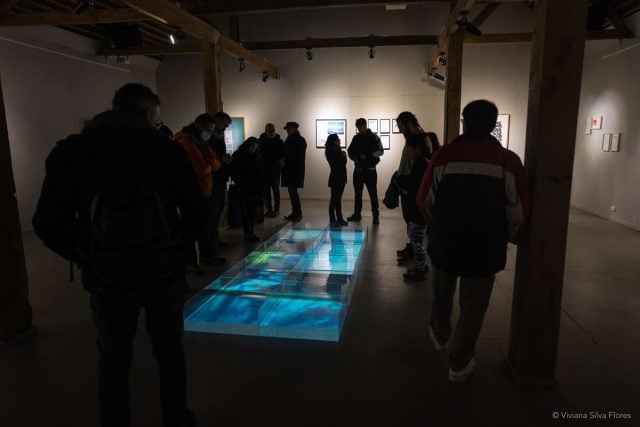
Spread across three rooms of the Casa del Pilar de Esquina at the Regional Museum of Rancagua, The Sea as a Flag proposes an artistic and heritage approach to marine territory as a geography of relationships, memories, and disputes, where nature and human labor are part of the same material history.
The exhibition intertwines research and creation through visual arts, establishing a dialogue between the experiences of the Cooperative Los Piures and a critical reflection on how to inhabit, produce, organize, and defend the territory.
The installations, photographs, tools, nets, and marine materials create a journey where the ocean’s temporalities intertwine with the memories of those who have built their existence alongside it.
The objects entering the museum are not only presented based on their material or aesthetic characteristics. Each tool, each net, and every coastal resource item carries a history of relationships between bodies, ecosystems, techniques, and social organization.
A fishing net, for example, provides insight into the technical knowledge that has sustained a productive activity; seaweeds reference ecological cycles, gathering practices, and the labor memories of women; photographs reveal the human experiences that give meaning to these materials.
This artistic proposal thus shifts the focus from object contemplation to the social, ecological, historical, and political relations that imbue it with meaning.
Community Museography: A Practice of Collective Knowledge Construction
Community museography serves as a tool to rethink the relationships between formal cultural institutions, territories, and the people who produce and sustain heritage.
From this perspective, museography becomes an exercise in collective sense-making and negotiation, where individual and community memories engage with artistic languages, scientific knowledge, and museum practices.
This approach finds significant precedents in Latin American social museology, notably in the Santiago de Chile Round Table of 1972, which highlighted the need for museums committed to the social, cultural, and territorial realities of their communities.
More than five decades later, it remains essential to question how museum institutions can create effective conditions for community participation, avoiding the reduction of participation to a symbolic presence within their programs and exhibitions.
The experience of The Sea as a Flag aims to contribute to this discussion through concrete practices of territorial collaboration, where research and artistic creation develop in dialogue with the people who hold the knowledge and memories that give rise to the exhibition.
This exercise also involves questioning extractivist knowledge practices, where community experiences are collected, interpreted, and disseminated without effective participation from their protagonists in the outcomes of such processes.
Community curation allows for greater reciprocity in relationships, recognizing collective authorship, the legitimacy of territorial knowledge, and the community’s ability to intervene in constructing its representations.
A cochayuyo (a type of seaweed), for instance, is not merely a marine species or a marketable resource. Its recognition, extraction, drying, transformation, and use encompass ecological knowledge, labor techniques, culinary memories, and historical survival experiences.
Similarly, tools used in artisanal fishing and shoreline gathering are not just material objects. They embody histories of learning, technological transformations, labor relations, and knowledge related to the characteristics of marine ecosystems.
From this perspective, biocultural heritage is not a static inheritance but a realm of living memories, shaped by environmental transformations, economic relationships, social inequalities, and disputes over access to common goods.
The exhibition aims to acknowledge these relationships, understanding that biodiversity also possesses a social history and that human experiences are part of the historical transformations of ecosystems.
Cooperativism, Collective Resistance, and Defense of Marine Common Goods
The marine territory is not only a space of cultural belonging; it is also a territory marked by labor relationships, socio-environmental conflicts, and disputes over appropriation, management, and exploitation of nature.
In this context, the experience of Cooperative Los Piures prompts reflection on the possibilities of building collective forms of organization and territorial management.
The exhibition places these experiences in dialogue with a critical reflection on the existing tensions between community organization and the commodification of nature.
When ecosystems are understood solely through their economic value, there is a risk of rendering invisible the social relations, knowledge, and ways of life that have been built around them historically.
In light of these tensions, cooperation emerges as a practice of autonomy and collective resistance, capable of sustaining alternative forms of relationship between work, territory, and life.
The cooperative experience acknowledges that the sustainability of territories does not depend solely on technical conservation instruments but also on the social, economic, and organizational conditions that allow communities to participate in their management.
This is not about idealizing community relationships but recognizing their capabilities, contradictions, and knowledge as fundamental elements for contemplating the future of marine ecosystems.
Women from the Sea as Producers of Heritage and Knowledge
From the feminist perspective guiding the work of the Fundación Mujeres de Mar and the research lines of the Center for Studies and Research La Grieta, the exhibition emphasizes the experiences of women involved in artisanal fishing and shoreline gathering.
Historically, representations of the fishing world have favored the masculine image of the fisherman and extractive activities, sidelining numerous roles carried out by women.
Women seaweed gatherers, shoreline collectors, encarnadoras (fish processors), cooks, and workers in related activities have played a fundamental role in the economic, social, and cultural sustainability of coastal communities.
Their knowledge of natural cycles, collection techniques, transformation of marine resources, culinary practices, and community organization constitutes expressions of a biocultural heritage transmitted historically through oral tradition, experience, and collective learning.
Incorporating these memories into museum spaces allows us to question the historical absences that have characterized representations of artisanal fishing.
Nevertheless, the proposal goes beyond merely including women within a pre-constructed narrative. It seeks to acknowledge their capability to intervene in defining that narrative, positioning them as workers, knowledge producers, and protagonists in heritage construction.
From this perspective, recognizing women’s knowledge cannot be disassociated from the material conditions under which their trades develop, nor from the inequalities that have historically constrained their participation in territorial governance spaces.
Community museography provides an opportunity to recognize these experiences in all their complexities, avoiding the reduction of women’s roles to folkloric or idealized representations.
A Launch that Transforms the Museum into a Space of Encounter and Knowledge Transmission
The launch of The Sea as a Flag at the Regional Museum of Rancagua proposes a day of engagement among coastal communities, research and artistic creation teams, cultural institutions, and audiences.
The program includes the exhibition presentation, participation from members of the Cooperative Los Piures, guided mediation through the museum spaces, culinary heritage activities, and an open workshop for making cochayuyo bags led by María Cecilia Vargas, a cooperative member.
These activities expand the museum experience beyond merely observing an exhibition, incorporating opportunities for learning, exchange, and direct transmission of knowledge.
For instance, culinary heritage activities allow us to delve into the historical relationships between food, biodiversity, work, and territory, recognizing the knowledge communities have developed around the utilization and transformation of marine resources.
Meanwhile, the cochayuyo bag workshop serves as an instance of transmitting technical knowledge related to the practices of shoreline gatherers and seaweed collectors, allowing recognition of the complexity of the knowledge involved in the preparation and commercialization of this resource.
The presence of those who embody this knowledge transforms the museum into a space for circulating community knowledge, where individuals can engage with territorial memories through direct experience.
The community shares not only what they remember but also what they know how to do, what they continue to practice, and what they consider essential to transmit.
This encounter facilitates the understanding of intangible cultural heritage as a living entity, recognizing that its safeguarding requires conditions that allow for the exercise, transmission, and social valuation of knowledge.
From the Coastal Edge to the Regional Museum of Rancagua
The presentation of The Sea as a Flag at the Regional Museum of Rancagua acquires particular importance for the O’Higgins Region.
In this regard, it is crucial to recognize the importance of cultural institutions opening their spaces to initiatives constructed from the territories, allowing historically underrepresented communities to participate in developing exhibition proposals.
The opening of the Regional Museum of Rancagua to this experience represents an opportunity to strengthen relationships between museum institutions and coastal communities, creating spaces for dialogue between diverse territorial realities that are part of the same region.
The challenge is to move toward cultural institutions capable of establishing sustained relationships with communities, where territorial participation is not limited to isolated activities but can be incorporated into their research methodologies, curatorial practices, mediation, and heritage management.
The future itinerancy of the exhibition to Santiago aims to broaden this discussion, bringing coastal memories closer to new audiences and strengthening the recognition of fishing communities as cultural agents and knowledge producers.
The Museum as a Space of Memory, Creation, and Collective Resistance
More than establishing a definitive narrative, The Sea as a Flag envisions the museum as an open space for creation, encounter, and collective memory building.
A place from which to interrogate what remains, what transforms, and what communities continue to defend against the encroachment of common appropriation logics.
Lifting the sea as a flag means recognizing it as a collective territory, historically constructed through relationships of work, knowledge, affection, organization, and belonging.
It also means questioning representations that reduce marine ecosystems to their economic, tourist, or productive value, overlooking the memories and social relationships that have shaped coastal territories.
The curatorial participation of the Cooperative Los Piures illustrates the possibilities offered by a museography constructed from the territories: a community entering the museum not just to be observed but to intervene in discourse construction, share its knowledge, and collectively decide how it wishes to represent its own history.
Democratizing museum spaces involves recognizing this right to self-representation, strengthening the decision-making capabilities of communities, and understanding heritage as a collective construction that remains alive in territories.
Opening museums to communities doesn’t just mean opening their doors; it also signifies opening their discourses, methodologies, ways of constructing knowledge, and possibilities for creation.
It means recognizing that communities do not need to be interpreted constantly by others to gain cultural legitimacy—they possess their own ways of understanding territory, constructing memory, and producing knowledge.
Finally, it means understanding that the future of our ecosystems and heritage cannot be built apart from the communities that have historically inhabited, worked, cared for, and defended them.
Ignacia Borgeaud Núñez and Magdalena Ceballos Mendieta, Fundación Mujeres de Mar and La Grieta
Obtén tu Pasaporte y apoya a El Ciudadano
Elimina la publicidad, accede a contenido exclusivo y sé parte de la comunidad.
Cancela en cualquier momento · Sin permanencia