Original article: La jugada maestra de Dorothy Pérez, ante presiones: Toma razón del acuerdo SQM-Codelco con condicionantes, e inicia auditoría
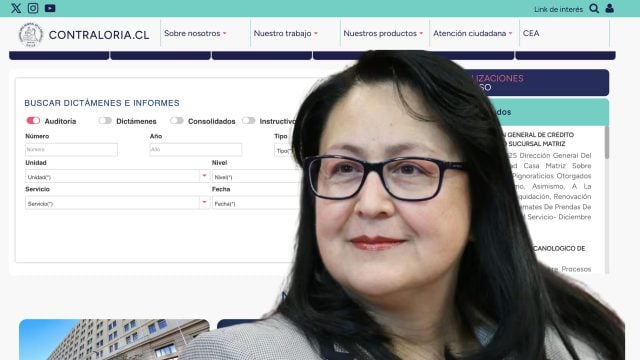
Despite reported pressures from the government on «Sheriff» Dorothy Pérez, General Comptroller of the Republic of Chile, to acknowledge the lithium agreement between SQM and Codelco, the Comptroller responded as expected from a figure of her stature: with conditions for acknowledgment and the initiation of an audit.
According to reports by El Ciudadano, the pressures are said to have originated from within the environment, directly from the new Minister of Finance, Nicolás Grau.
The supreme function of the General Comptroller of the Republic of Chile is to oversee the use of public resources and ensure the legality of acts by the State Administration. Therefore, it is her duty to review the agreement made directly between the State – through Tarar SpA – and the company linked to Julio Ponce Lerou, SQM, which aims to extend its hold on lithium until 2060.
The chief fiscal authority of the State has indicated that while it cannot evaluate the legality of several aspects of the agreement already resolved by the courts, it announced an audit of the contract with Morgan Stanley and established key safeguards for state participation in lithium exploitation until 2060.
The CGR outlined the scope of its intervention in the controversial public-private partnership agreement between Codelco and SQM for lithium exploitation in the Salar de Atacama until 2060. Through two official letters signed by General Comptroller Dorothy Pérez (attached at the end of the article), the agency established that, while it is prevented from commenting on the substance of many allegations due to prior judicial resolutions, it will initiate specific audits and has imposed strict conditions for the acknowledgment of key contracts.
By Bruno Sommer
In simple terms, the General Comptroller of the Republic is the highest supervisory entity in Chile, responsible for overseeing the use of municipal and state funds. Among these are resources of various magnitudes, some immensely valuable, such as the lithium treasury. The State has already suffered significant harm throughout history – issues that transcend this specific agreement – due to lax oversight over the years, court processes manipulated by Ponce Lerou’s networks, and tax objection strategies by the company, among other factors.
The administration of Julio Ponce Lerou – former son-in-law of Pinochet – and its successive boards have caused a quantifiable patrimonial damage (Bitran) but immense for the State, undermining the guarantee it must provide for foreign investment in the country.
If the Comptroller invites economic experts and expands the scope of her audit, clear damage could be confirmed: Chile lost, at a time of historic lithium prices, a multimillion-dollar deal that had multiple interested parties beyond China.
Abstaining on Judicial Resolutions
In Official Letter E217265 dated December 18, 2025, addressed to a group of deputies and other complainants, the CGR details that it must «refrain from issuing a pronouncement» on objections to the agreement that have already been reviewed or are currently being reviewed by the courts.
The rationale is clear: the courts have already ruled on those points. The Comptroller cites rulings from the Courts of Appeals of Santiago and Antofagasta, confirmed by the Supreme Court, which ruled in favor of the legality of critical aspects. Among them:
Legal Qualification of Codelco: The courts confirmed that Decree Law No. 1,350 authorizes Codelco to explore and exploit non-ferrous minerals, such as lithium, and to create subsidiaries for that purpose without needing a new law requiring a qualified quorum.
Engagement of CORFO with Codelco: The memorandum of understanding between CORFO and Codelco was validated as an «official mandate» to negotiate with SQM, in compliance with the State policy of the National Lithium Strategy (ENL).
Direct Negotiation Mechanism: The decision to negotiate directly with SQM without public tender was supported, given that the company already had active contracts in the salt flat and operates there.
Indigenous Consultation: The rulings determined that the consultation process carried out by CORFO adhered to regulations and was sufficiently extensive, dismissing critiques.
“This General Comptroller, in compliance with Article 6 of Law No. 10,336, is expressly prevented from issuing a pronouncement on that aspect,” states the letter regarding issues already resolved judicially.
Ongoing Audits: Morgan Stanley and More
Despite abstaining on the substance, the Comptroller is not «washing her hands.» She announced concrete actions for oversight.
The first is the Audit of the advisory contract between Codelco and Morgan Stanley, which initiates a specific audit of the establishment and compliance of this contract, signed months before the announcement of the ENL. This review falls within the CGR’s powers to oversee State companies and those where it holds majority interest.
The second involves taking into account parliamentary observations, as the CGR indicated that the multiple observations and the critical report from the Special Investigative Committee of the Chamber of Deputies “will be considered in the audit that this General Comptroller will initiate.” While she does not comment on their conclusions, she integrates them into her supervisory work.
The third is the Acknowledgment with «strict scopes and instructions.»
The second document, Official Letter E217874 dated December 19, 2025, pertains to the «acknowledgment» of the CORFO resolution approving the new contracts with Minera Tarar SpA (Codelco’s subsidiary) for the period 2031-2060. This procedure is not a mere green light but comes loaded with binding conditions, among which are:
Prior control over Minera Tarar SpA: The CGR demands that Codelco regularize with her the legality control process for creating its subsidiary Minera Tarar SpA. The effects of the contract approvals remain contingent upon this being fulfilled before the operation’s closure.
The fortification of majority state participation: This corrects a clause that allowed Codelco to reduce its stake with CORFO’s approval. Now, the CGR instructs that any decision in that regard must be made through a formal administrative act from CORFO, which must also be subject to prior acknowledgment in the Comptroller’s Office. This aims to ensure that the State maintains the majority control required by the ENL.
The Comptroller also issues a warning regarding contributions to municipalities and regional governments, reminding of the jurisprudence that prohibits municipalities and regional governments from receiving contributions from private entities that have interests in projects they must evaluate environmentally, due to conflict of interest. She instructed the involved public organizations to «strictly adhere» to this regulation.
Adding to the conditions for acknowledgment is the condition regarding investigation in the U.S.: The agreement is subject to the conclusion of the SEC (U.S. Securities and Exchange Commission) investigation into SQM. The CGR requires Codelco to demonstrate to her the renouncement or modification of this condition, or that state interests are contractually safeguarded in light of a potential fine.
Finally, a peremptory deadline has been set. The CGR demands that CORFO and Codelco provide documented evidence of the «full compliance» with all these conditions before December 31, 2025.
Active Oversight
The General Comptroller operates within a narrow margin defined by law and judicial rulings. Her decision not to comment on the substance of the agreement responds to a legal mandate that prevents her from contradicting or reopening issues already resolved by the courts, as detailed by the Comptroller.
The Comptroller has stated she will audit Tarar Spa, created by a former employee of Ponce Lerou, named San Martín, who currently works at Codelco.
It is not an easy task to thoroughly oversee such a complex agreement, especially when the president of Codelco’s board, Máximo Pacheco, has refused to cooperate with information in the framework of the Congressional Investigative Commission. A Máximo Pacheco who should explain to the Comptroller, for instance, the purchase with state funds ($230 million) of Salar Blanco from his personal friend Marín Borda, through a shell company.
It is also crucial to clarify subsequent sales and confirm whether it is true that it was irrelevant for SQM to cede its assets in Maricunga, as the agreement – which secures it a key role in global lithium until 2060 – appeared to cost almost nothing, according to discussions at a board meeting.
Far from adopting a passive role, the «Sheriff» has delineated a concrete and impactful field of action. By announcing specific audits (such as the one on the contract with Morgan Stanley) and, above all, conditioning the «recognition» to legal safeguards aimed at securing state control and integrity, the CGR exercises key subsequent and preventive oversight.
Her work will now focus on verifying compliance with these instructions and auditing the specific operations that have raised the greatest questions, leaving the vigilant role of implementing the largest lithium agreement of the past decades in the hands of Comptroller Dorothy Pérez and her team, during a government that is nearing its end and is hurrying to close a «questionable business» for Chile that has been sought to be approved under the radar, much like what occurred with the TP11 scheme, pressing the «Sheriff» of our country.
By Bruno Sommer
El Ciudadano
Relacionados
Academics and Activists Urge Chile's Contraloría to Reject Codelco-SQM Lithium Deal for National Interest
Hace 2 meses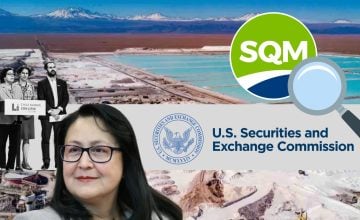

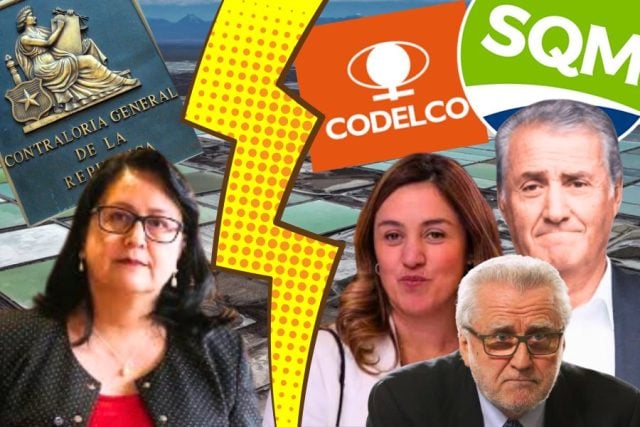
Chilean Audit Office Delays Codelco-SQM Lithium Contracts, Leaving Control Up to 2060 Uncertain
Hace 2 meses
China Sets Strict Conditions for SQM-Codelco Lithium Deal to Prevent Market Concentration Risks
Hace 3 meses