Original article: Vaciar sin romper: Extrema derecha a la chilena
By Ángela Miranda, Lawyer
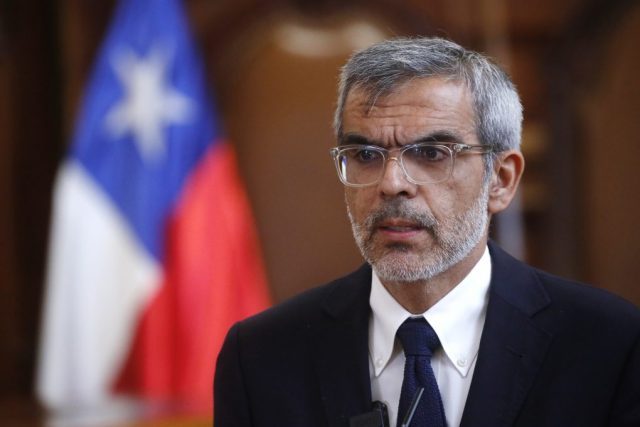
Recent remarks by former minister Luis Cordero have been viewed as a call for moderation by his political faction. He suggested that José Antonio Kast’s government «relates more to Chacarillas than to Hungary,» indicating that the key to understanding it lies within local contexts and that this is not an import of foreign political models.
Cordero added that he did not perceive signs of assaults on institutions. He is correct; this government has not contested elections like Trump, has not insulted Congress like Milei, nor has it manipulated courts like Orbán. However, Cordero’s observation should raise even more alarms rather than quell anxiety.
It is important to recall the significance of Chacarillas. On July 9, 1977, during a youth torchlight event of the dictatorship, Pinochet delivered a speech penned by Jaime Guzmán, which outlined the goal of the dictatorial project: an «authoritarian, protected, inclusive, technocratic democracy with genuine social participation.»
Protected from what? From the majority. Technocratic how? By removing economic decision-making from political deliberation and handing it over to experts and safeguarded regulations.
Chacarillas represents the moment when the hollowing out of democracy transitioned from mere practice to a proclaimed doctrine. Two years later, Guzmán articulated a doctrine where Chile stood as an experiment, indicating that the Constitution needed to ensure that «should adversaries come to power, they would be constrained to maintain actions not too different from those one would aspire to.»
Read that 1979 phrase again, and then review the current government’s project of tax invariability that it presented to Congress, which includes contracts between the Ministry of Finance and large investors to freeze their tax burden for up to twenty years.
The problem is not how many governments are left powerless. The problem is that the redistribution issue is removed from the democratic decision-making sphere, meaning democracy is not just deprived of another element but of its fundamental trend.
Democracy will continue to function, governments will remain elected, and the forms will appear elegant and intact (rest assured!) while the realm of real decision-making continues to be emptied of substance. The same recipe, different methods.
So far, this is a local narrative. What we must remember is that this doctrine is not a national experiment nor limited to national effects. Hayek, who once declared in El Mercurio in 1981 that a liberal dictatorship seemed preferable to a democracy devoid of liberalism, led a school whose project, as historian Quinn Slobodian has shown, was never about «less government» but about encapsulating the economy by constructing institutions that placed property rights and essential distributive decisions beyond the reach of the majority.
His latest book documents the radicalization of this agenda through a world of special economic zones, charter cities, or jurisdictional paradises where capital reigns without citizenship.
Here emerges Peter Thiel, financier of floating cities beyond any jurisdiction, in collaboration with Patri Friedman, grandson of Milton Friedman. Three generations of the same intellectual family, beginning with the economist who recommended shock therapy to Pinochet to the financier of private cities like Próspera, a charter city established in Honduras with investments from Thiel’s ecosystem, which received legal immunity for fifty years.
When the Honduran Congress repealed the regime that protected it, Próspera sued the state for nearly eleven billion dollars. Fifty years in Honduras, twenty years in Chile. The same legal technology to create a distributive exception zone where democracy does not penetrate, and we continue to drain it of meaning.
This is why, when Thiel visited Chile and met not only with the President but also with José Piñera, the context was not trivial, nor was the meeting merely a courtesy. It represents the privatization of the social sphere shielded from democracy, an example of past and present where Thiel takes up the mantle. The global technoright, headquartered in Trump’s United States and with a branch in Milei’s Argentina, is not a new recipe; it is the same path rehashed.
Thus, the controversy that has arisen between Cordero’s perspective and that of figures like Camila Vallejo and much of the left, who view this government as the far-right echo of Trump and Milei, seems fictitious. We are asked to choose between local and global explanations as if they were competing narratives, when the goal of the far-right (whether the old dictatorial form or the new technological variant) has consistently been the same across time and geography.
Chile experienced the model, exported it to the world, which radicalized it, and now it returns, amplified by technological capital and data control. With varying degrees of performance. To introduce a tension here is to attempt to observe the same circle from two opposing points on its trace.
It may be rightly pointed out that these traditions are heterogeneous. Guzmán’s Catholic corporatism differs from Thiel’s techno-state, just as the monetarism of the Chicago Boys did. However, heterogeneity has never been an obstacle, because they vary in doctrine, values, family, and nation, but share an economic core with the diagnosis that democracy, left to its own devices, tends toward redistribution. Therefore, the equally concerning recipe is to either destroy or hollow it out.
It seems Cordero is mistaken here. By defining the far-right as forces that rival institutions and whose «central purpose is to prevent democracy from functioning,» he only describes the noisy method, that of Orbán and Trump: to attack, capture, and break the machine. But another, quieter method exists: preserving institutions while hollowing them out, featuring elections, turnover, and courts that appear to operate without making any significant decisions.
What distinguishes a democratic right, therefore, is not a respect for forms, but its relationship with future majorities: it competes with the understanding that its decisions can be revisited when it loses. Those who strive for alternation to become irrelevant, and who seek a situation where it doesn’t matter who wins, have crossed the same line, whether with noise or silence.
Expecting a frontal attack before raising alarms reflects a misunderstanding of the depth behind Guzmán’s words. They do not need to attack what they can shape or empty at will.
Ángela Miranda, Lawyer
Obtén tu Pasaporte y apoya a El Ciudadano
Elimina la publicidad, accede a contenido exclusivo y sé parte de la comunidad.
Cancela en cualquier momento · Sin permanencia