Original article: Libro bordado con arpilleras narra la historia del actual Sitio de Memoria Estadio Víctor Jara
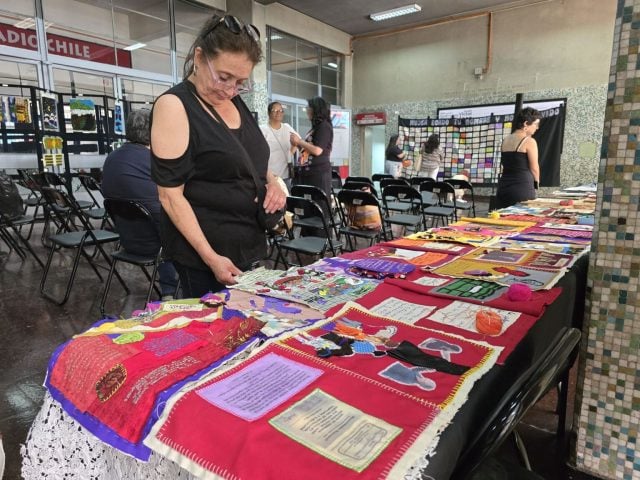
After five months of classes, the Estadio Víctor Jara Memory Site hosted the closing of the third cycle of textile workshops featuring burlap and Mapuche weaving, driven by the VJ Foundation, with the exhibition «Creative Hands,» showcasing the work accomplished by participants in both courses.
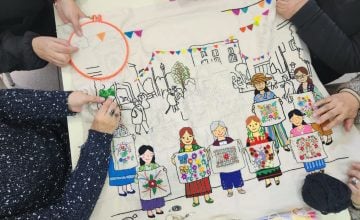
An embroidered book made with burlap narrating the history of the former Estadio Chile—now the Estadio Víctor Jara Memory Site—was exhibited alongside a piece employing the chañuntuko technique of Mapuche weaving representing the Mapocho River. Additionally, a stitched canvas paying tribute to women, adolescents, and girls who were executed or disappeared during and after the dictatorship was also part of this final exhibition.
The project was funded by the National Fund for Cultural Development and the Arts to explore the textile crafts of Mapuche weaving and burlap, allowing women from various backgrounds and ages to share knowledge, stories, and memories through their creations.
Throughout this process, textile art emerged as a vital tool for expression, healing, and building collective spaces that provide comfort in response to experiences of violence and exclusion.
“The results we are sharing reflect the sensitivity and collective strength woven stitch by stitch. At a crucial moment for Chile, where women’s rights may regress, safeguarding these spaces becomes essential. From this Memory Site, we reaffirm the importance of upholding practices that promote dignity, creativity, and human rights to continue weaving our future together,” stated Rocío Guajardo, cultural area leader at the Víctor Jara Memory Site.
Meanwhile, Mapuche weaving student Natalia Justiniano Pereira expressed her gratitude for being part of the course: “I feel immense pride in having participated, in completing my work, and in being in this place (memory site) creating and sharing love, creativity, and patience. I am thankful for this memory space.”
“I have met incredibly valuable women through this experience. I intend to continue with what I learned here. It’s a treasure to have learned a textile technique like Mapuche witxal (loom) and the connections that working with wool, patterns, and colors brings. In bringing them here to Santiago, we wanted to represent the Mapocho River, as we belong to this territory,” Natalia Justiniano added.
Read the full chronicle, with photos and more testimonies, on the Foundation Víctor Jara website HERE.
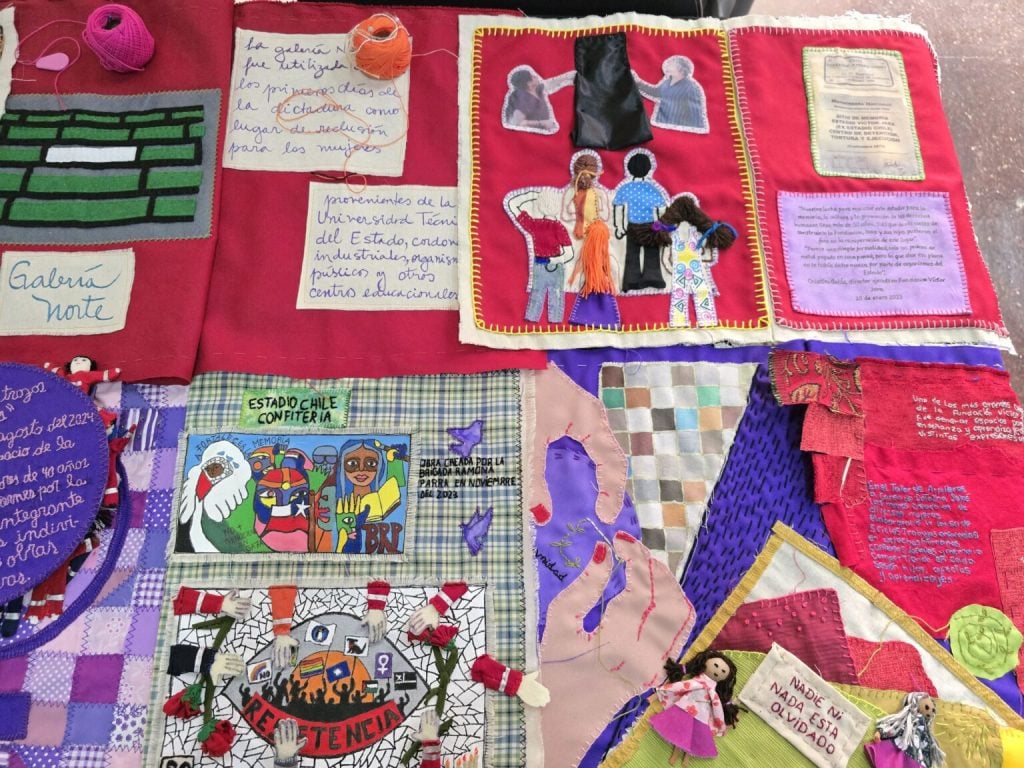
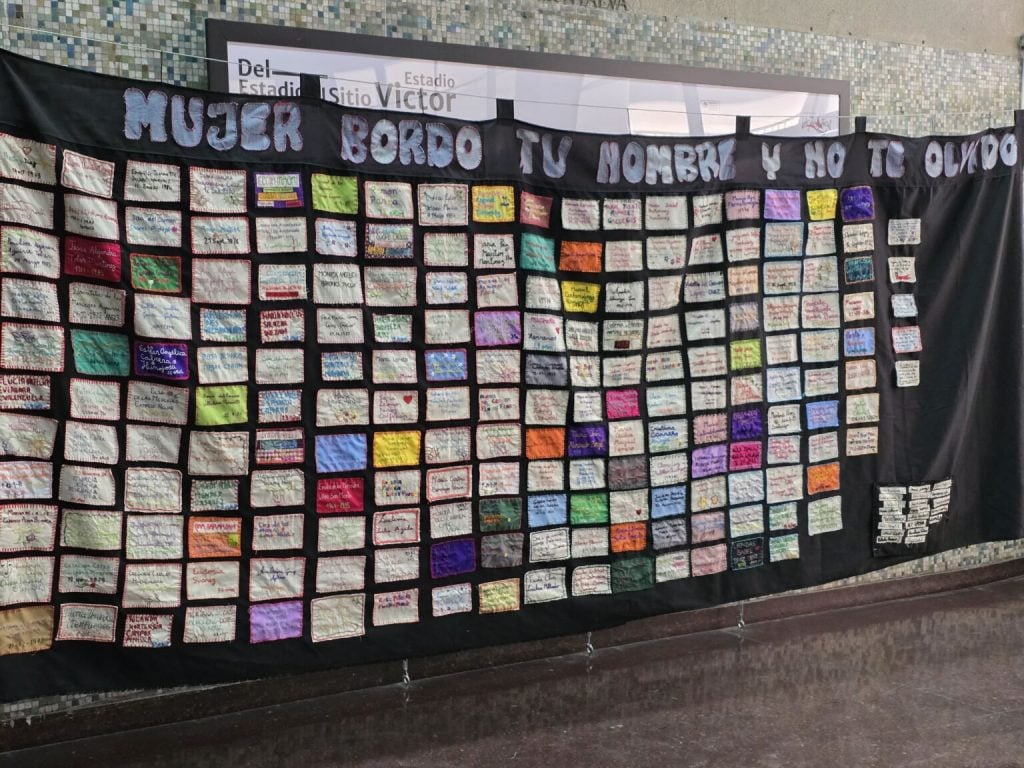
Woman, I Embroider Your Name and I Will Not Forget You
The Víctor Jara Foundation indicated that the textile workshop closures were scheduled for the week commemorating the International Day for the Elimination of Violence Against Women to raise awareness and advocate for this cause with the presentation of the collective canvas Woman, I Embroider Your Name and I Will Not Forget You, which was embroidered throughout the year at the Memory Site as a result of the textile action «Embroider to Remember.»
This initiative originated in March during the cultural day Women: Art and Resilience, but later took on a self-organized character, where women gathered to continue working on this canvas, meeting on the last Saturday of each month at the Memory Site to sew, reflect, and remember women who were executed and forcibly disappeared during the civil-military dictatorship and also in the post-dictatorship periods of our recent history.
El Ciudadano
Relacionados
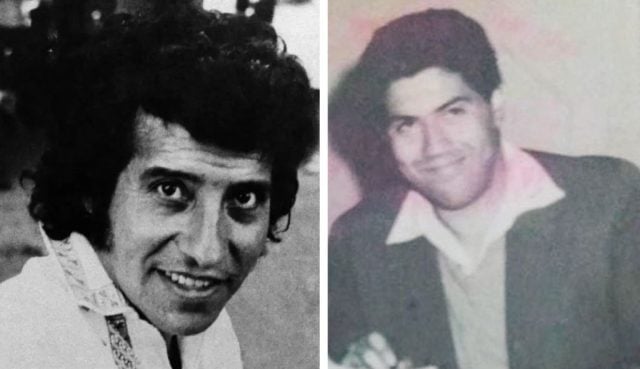
Justice for Víctor Jara and Littré Quiroga: Former Military Pedro Barrientos Charged With Kidnapping and Homicide
Hace 3 meses
MUDA Festival Rescheduled to a 2-Day Event: October 16-17, 2026, at Parque Estadio Nacional
Hace 2 semanas
Victor Jara Foundation Commemorates Mapuche Weaver Angelita Huenumán with Colorful Photos
Hace 6 días
Weavers from La Ligua Inspire Contemporary Circus Show Highlighting Memory and Women's Resilience
Hace 2 meses