Original article: Tribunal Ambiental suspende «Pascua Lama 2.0» y frena sondajes cercanos a glaciares de Alto del Carmen
Via Communications OLCA
Currently, drilling activities will not occur in the restricted zone of Pascua Lama. On November 9th, the Second Environmental Court suspended the effects of the Environmental Qualification Resolution for the «El Alto Mining Exploration» project, referred to locally as Pascua Lama 2.0.
This decision responds to a complaint filed in July by Irene Alvear Azcárate, president of the Alto del Carmen Community Environmental Committee (CAC), after the Executive Directorate of the Environmental Evaluation Service rejected all appeals against the project.
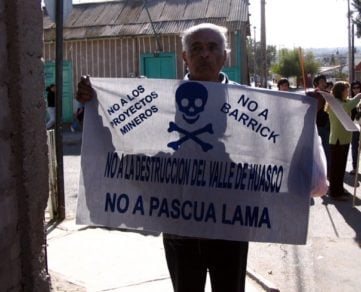
The ruling corroborates what the Huasco communities have been alleging.
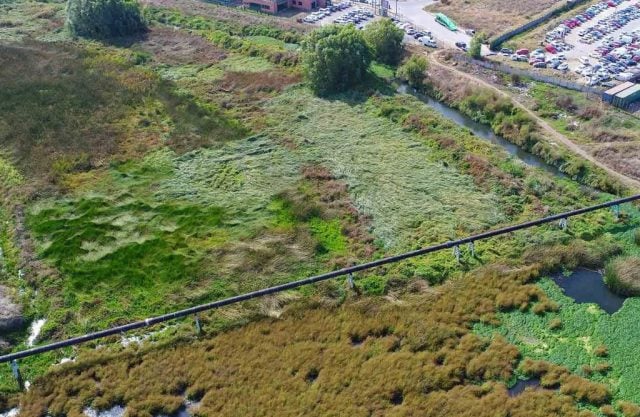
According to information from Sernageomin, the court confirmed that El Alto would drill in the same locations previously explored under Pascua Lama, within its former open-pit mining area and the closed zone.
This is on land that the Superintendency of the Environment fully and definitively closed in 2018, a sanction upheld by the Supreme Court in 2022.
Specifically, in February 2022, the highest court in the country ruled that the drilling conducted with Pascua Lama platforms was illegal and arbitrary, as it was incompatible with a closure plan whose sole purpose is to terminate all activities of the sanctioned project.
Four years later, the Atacama Evaluation Commission approved drilling up to 700 meters deep on 43 existing platforms in the same area with a simple Declaration of Environmental Impact.
The tribunal warned that executing the project would solidify a situation whose legality is in dispute, both due to the closure of Pascua Lama and the fragmentation of evaluations reported by the complainants.
For Irene Alvear, president of the CAC in Alto del Carmen, this case highlights institutional negligence: «The evaluation system, with all its different stages, seems designed to favor project implementation rather than truly protect our country’s natural assets,» she states.
From the outset, the Committee noted the overlap with Pascua Lama and the proximity to glaciers. The Municipality of Alto del Carmen, the DGA, the Regional Ministerial Secretary for the Environment, and the Atacama Regional Council later joined in demanding a Comprehensive Environmental Impact Study instead of just a simple declaration.
«We were not heard. They refer to it as ‘permissiveness’, but what truly exists is institutional negligence or excessive pressure and lobbying from businesses to approve poorly conceived or blatantly deceptive projects,» criticized the leader, who recalls that Pascua Lama was closed, yet its Closure Plan is still under evaluation, while the high Andes remain littered with a 15 million-ton tailings dump with potential for acid drainage, at the headwaters of the valley.
Alvear additionally denounces that the company has initiated direct cash transfer programs and «community development committees» in a community responsible for its environmental evaluation, which she describes as an evident conflict of interest.
Even the name of the project seems provocative to her. «El Alto» is what locals call the town of Alto del Carmen, which houses the municipality, Cesfam, and bank. «By naming it this way, they are even trying to take away our name, a heritage of all who live here,» says the community representative.
Glaciers and Permafrost Adjacent to the Drilling Sites
The RCA claimed that the project is not located over any cryoform. The court dismissed this assertion. The platforms are near the Toro 1, Toro 2, and Esperanza glaciers and glacierets, areas that Pascua Lama itself acknowledged being situated upon, and in a region with permafrost, the frozen ground that lies just where the probes would penetrate.
For the court, this constitutes a complex ecosystem crucial for the storage and provision of freshwater, already weakened by documented glacial area loss. Thus, they applied the precautionary principle: when there is a risk of serious or irreversible damage, the lack of scientific certainty cannot be an excuse for inaction.
With drilling scheduled for this second semester, awaiting the final ruling would have meant arriving too late.
Irene Alvear explains, «As a valley, we consider ourselves the last green frontier of the Atacama Desert because, indeed, these rivers have flowing water 365 days a year.» This ecosystem supports fruit farming, pisco and pajarete vineyards, both with designation of origin, and transhumant goat herding.
For this reason, the Committee calls for a comprehensive assessment of the entire watershed rather than evaluating each project individually. «Those of us who defend this valley are not opponents; we are protectors of something that nature has so generously bestowed upon us.»
30-Day Suspension and Pending Lawsuit
The suspension is effective for 30 consecutive days, subject to extension, and the court exempted the community from posting a bond. This decision was made by majority vote, with Minister Cristián López Montecinos dissenting, and the court notes that it does not prejudge the merits of the complaint.
The Committee will request an extension of the suspension, and the Municipality of Alto del Carmen has already asked the SMA to coordinate oversight to ensure the project does not proceed. Alvear links the case to a broader gap: Chile lacks glacier protection legislation.
«It is urgent to resume that debate so that the freshwater sources our country still has can be effectively protected,» she asserts.
The Alto del Carmen Committee submitted citizen observations during the evaluation, filed complaints with the SEA, and after their rejection, brought the case to the Environmental Court. Throughout this process, the Evaluation Commission and the SEA upheld the approval of a project located in the closed area of Pascua Lama.
The director of OLCA, Lucio Cuenca, demands that the suspension remain in place until the final ruling, that the Superintendency ensure no activities proceed in the closed area, and that this RCA be annulled.
«Pascua Lama was closed by the judiciary and cannot be reopened through the back door of the environmental evaluation system,» he asserted.
Finally, Irene Alvear sends a direct message to other territories: “The controversy is not about the environment or jobs, as the mining industry tries to artificially impose. The conflict is between life for the communities that inhabit various territories and the indiscriminate extraction of riches beneath the surface for the benefit of a few who do not even live here. That is what is truly at stake.”
We will continue to provide updates.
Obtén tu Pasaporte y apoya a El Ciudadano
Elimina la publicidad, accede a contenido exclusivo y sé parte de la comunidad.
Cancela en cualquier momento · Sin permanencia
Artículos Relacionados
Is the Pascua Lama Ghost Returning? Kast and Milei Revive Mining Treaty, Raising Glacier Concerns
Hace 3 meses