Original article: «Primero, no soy su primo; segundo, ¿quién es Ud.?; y tercero, ¿qué sabe de vanguardia?»: El día que Huidobro le hizo la desconocida a Edwards Bello en España
By Osvaldo Carvajal M., Scholar in Literature and Doctorate in Applied Humanities, U. Andrés Bello
Did you know that the term «avant-garde» originates from the military? It refers to the battalions that are at the forefront of battle. Now, when the avant-garde is represented by two young men from the Chilean upper class aiming to make a name for themselves as writers in Europe, things get intriguing: Myriam, bring the teapot!
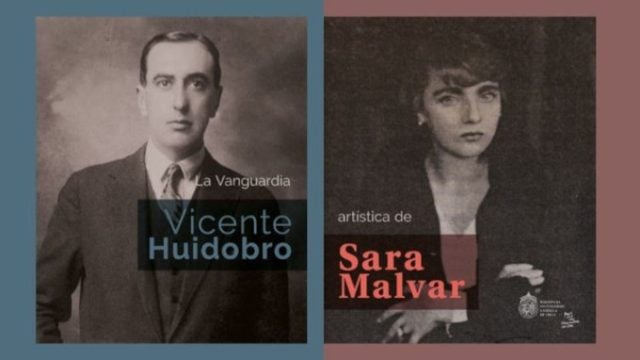
And we’re not talking about just any kids; we are referring to the legendary Vicente Huidobro and Joaquín Edwards Bello.
To put it into perspective: If the Church were to seize and burn Vicho’s books for being heretical, his mother—a largely unrecognized intellectual, whom we will discuss another time—would fund a magazine for him. As for Joaco, after being transferred from McKay School to the Liceo de Valparaíso, he founded his own newspaper at 14 to retaliate against the bullying from resentful classmates and teachers. Guess how that adventure ended? Yes, his father seized and burned all the copies and… took the family to Europe. You wouldn’t understand…
The reality is that these two young prospects aimed to jump into the big leagues: akin to Zamorano jumping straight from Cobresal to Real Madrid. However, unlike Bam Bam, this was not their first time crossing the ocean. What was the problem? They decided to return during World War I.
Until then, heirs of the Latin American elite were viewed with curiosity and disdain in Europe: they were called «rastacueros» because the fortunes they spent originated from cattle ranching. However, the war would soon turn them into «metecos,» foreigners speaking an unfamiliar language, potential spies, a danger!
It’s so profound that critic Rafael Cansinos Assens expressed his gratitude to French xenophobia for Huidobro’s arrival in Spain, which artistically had yet to surpass modernism. The Chilean not only brought his poetry book Horizon Carré (1917) but also had interacted with Apollinaire, Tzara, and Reverdy—literally the artistic avant-garde of the moment. Moreover, he had prevailed in a dispute over the authorship of creationism; a significant point because for avant-gardists, as for Bosé, being third equals losing and being second does not count… What truly matters is being first.
Let’s take a pause; we have neglected Andrés Bello’s great-grandson. Joaquín arrived in Spain nearly escaping. Due to his British ancestry, the army had enlisted him in Paris, and his brother, a diplomat, had to rescue him from a regiment: yes, the Edwards also shed tears. Nevertheless, he did not waste time, as he published in the French capital La Cuna de Esmeraldo (1918), an initial version of El roto that opened doors for him in the Spanish literary scene.
What truly made a difference was how he chose to introduce himself: Jacques Edwards, friend of Apollinaire and cousin of Huidobro, «who introduced and guided me in modern lyric.» This was stated in December 1919 by the avant-garde magazine Grecia in the brief text accompanying one of his poems written in French.
Imagine Huidobro’s reaction upon reading this: with the pepper still in its place, the author of Altazor anticipated Juan Carlos Bodoque’s fervor almost a century later and sent a letter from Paris in January 1920 to the editor: «1. Mr. Joaquín Edwards Bello is not my cousin / 2. Mr. Joaquín Edwards Bello has never introduced or guided me in modern lyric / 3. Mr. Joaquín Edwards Bello did not introduce me to the poet Guillermo Apollinaire.»
As if that weren’t enough, he concluded by stating that Joaquín understands not a word of his aesthetic and that if he met Apollinaire, it was because he parachuted into a dinner at his home. It was a matter of responding, not burying one’s head in the toilet.
However, having researched the author for years, something didn’t add up to me. You know how it is with gossip, so I headed to the archives, and in the correspondence secured by the Vicente Huidobro Foundation, I found the missing piece: Joaquín had written to the poet, surprised and indignant, as soon as he saw the lies published in Grecia. He declared that he was not Huidobro’s cousin but a distant relative of his wife Manuelita, that he was more interested in gambling than poetry, and authorized him to make his words public.
Unfortunately, the letter did not arrive in time, and following Huidobro’s incendiary response in the magazine, a second letter was sent in which Edwards Bello did not hold back: he denied crashing Apollinaire’s dinner and reminded Huidobro that he was the one who received him and helped him settle when he first arrived in Paris.
At this point, you may wonder: is there a chance for reconciliation? In May 1922, with El roto having become an editorial phenomenon and Huidobro fully established in the Parisian scene, Joaquín wrote to him to broker peace: «We had a malentendu, but I hope we can be friends now.»
By then, both had solidified their own trenches: Huidobro in poetry; Edwards Bello in the novel. Perhaps therein lies the true charm of this story: the forefront only exists while the territory is in dispute. Once each secures their place, the fight loses significance; the gentlemen retrieve their hats, adjust their monocles, and sign the peace.
Osvaldo Carvajal M.
Obtén tu Pasaporte y apoya a El Ciudadano
Elimina la publicidad, accede a contenido exclusivo y sé parte de la comunidad.
Cancela en cualquier momento · Sin permanencia