Original article: “Bochorno internacional”: ex cancilleres cierran filas con Bachelet y cuestionan al gobierno de Kast
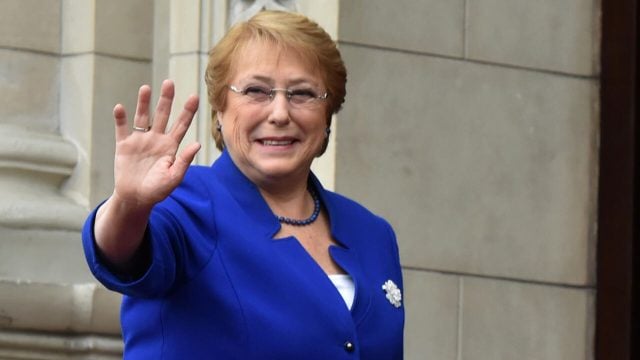
A coalition of former foreign ministers and deputy ministers has voiced strong support for Michelle Bachelet, criticizing the decision made by José Antonio Kast’s government to withdraw official backing for the former president’s candidacy for the Secretary-General of the United Nations (UN), labeling it an «international embarrassment.»
Michelle Bachelet (2006-2010 and 2014-2018) had been nominated by former President Gabriel Boric’s administration (2022-2026) alongside Mexico and Brazil. Chile’s Foreign Ministry justified the withdrawal, citing that “the dispersal of candidacies from Latin America and differences with key actors defining this process make the candidacy unfeasible and the eventual success of this nomination unlikely.”
In a public statement, former officials, including ex-foreign ministers Mariano Fernández, Carlos Figueroa, José Miguel Insulza, Heraldo Muñoz, Antonia Urrejola, Juan Gabriel Valdés, Alberto van Klaveren, and Ignacio Walker, along with former deputy ministers Cristián Barros, Gloria de la Fuente, and Edgardo Riveros, expressed their support.
They articulated their “firm support for the candidacy of the former president” and deeply regretted the Chilean government’s withdrawal of official support for her nomination.
“We endorse the former president’s candidacy considering the principles, objectives, and enduring interests of our foreign policy with a sense of state,” they stated, highlighting that it represents “an opportunity for Chile,” not only due to the prestige tied to vying for the highest position in the world’s leading organization but also because of the chance to “strengthen principles and norms important for Chile as an open country.”
The ex-ministers and deputy ministers asserted, “Bachelet’s candidacy embodies principles and continuities of Chile’s foreign policy such as multilateralism; respect for international law; peaceful resolution of disputes; and the promotion and defense of democracy and human rights. An open trade based on rules and – as the former president has proposed – profound reforms to the organization to adapt it to current times, making it more efficient and agile in tasks of peace, security, development, and human rights.”
They emphasized that her candidacy “is even more crucial when unilateralism, disrespect for treaties and rules, and the illegal use of force have begun to normalize, among other trends. For 70 years we have sought to progress towards a regulated society; now it seems we are heading toward a society without norms, dominated by the interests of great powers.”
Bachelet’s Candidacy Has Strong Chances for Success
With her nomination, Michelle Bachelet aims to succeed Portuguese António Guterres, who will complete his second term as UN Secretary-General on December 31, 2026.
Having held high-level positions within the international organization, former foreign ministers and deputy ministers from the Concertación and Gabriel Boric’s governments noted that “her qualifications make her candidacy one of the most viable.” They referred to her wide prestige and international respect, along with her experience and insight into the United Nations system, having served as Executive Director of UN Women (2010-2013) and UN High Commissioner for Human Rights (2018-2022).
Although not a formal practice, it is common to rotate the secretary-general position among regions, and this time it could likely go to a representative from Latin America. There has been momentum in her favor, given that in 80 years, no woman has held the UN’s top position, and there’s only one Latin American representative recorded, the Peruvian diplomat Javier Pérez de Cuéllar, who served from 1982 to 1991.
In their statement, the former officials also referenced the cross-sector movement advocating for a woman to take the position for the first time.
“Latin America has good chances due to the informal geographical rotation criterion since the only time someone from the region held the position was with Peruvian Javier Pérez de Cuéllar 35 years ago,” they emphasized.
The statement described how the election process for the UN Secretary-General unfolds, starting with informal votes in the Security Council until a name is agreed upon to be presented to the General Assembly, “which then proceeds to elect the organization’s highest office.”
In this context, the signatories reminded that the five permanent members have veto power, which can impact any candidacy.
Addressing potential speculation regarding the stance and voting of the United States, the former officials highlighted the relationship between Santiago and Washington during Bachelet’s second administration.
“We simply recall that the second government of Michelle Bachelet coincided with one year and two months of Donald Trump’s first term, and despite political-ideological differences, they maintained a productive, constructive, and mutually respectful relationship,” they pointed out.
“International Embarrassment”
In their public statement, the former foreign ministers expressed disappointment that the José Antonio Kast government had not acted with a sense of state.
“We hoped for a decision of state akin to when Senator Jaime Guzmán proposed Gabriel Valdés as Senate President, or when President Sebastián Piñera supported José Miguel Insulza’s re-election as Secretary-General of the OAS,” they indicated.
Additionally, they stressed that Bachelet’s nomination was also endorsed by Mexico and Brazil, asserting, “These two countries do not make hasty decisions in foreign policy, and their support has global significance.”
In fact, the former president confirmed that she will continue her candidacy for UN Secretary-General, despite the withdrawal of support from the right-wing administration.
In conclusion, the former officials labeled Kast’s decision to withdraw support and sponsorship for Bachelet’s candidacy as an “international embarrassment.” They questioned, “How can we explain such a withdrawal from a distinguished compatriot, with strong chances, who is also supported by the two largest countries in the region?”
They lamented that this episode will leave a negative mark on Chile’s foreign policy.
Artículos Relacionados

UDI President Declares Opposition to Bachelet's UN Candidacy, Kast Remains Non-Committal
Hace 3 meses
Russia Continues Strategic Support for Venezuela, Denies Diplomatic Withdrawal Amidst Western Media Claims
Hace 3 meses