Original article: Rusia-Ucrania y una esperada paz que el 10 de noviembre desde Abu Dabi pueda florecer
Diplomatic efforts led by special envoys from the Trump administration have reached a preliminary agreement to restart trilateral talks. The focal point of these negotiations, set for November 10 in Abu Dhabi, is the pursuit of peace between Russia and Ukraine. Ukraine is prepared to freeze the front lines, while Moscow maintains its territorial demands.
El Ciudadano
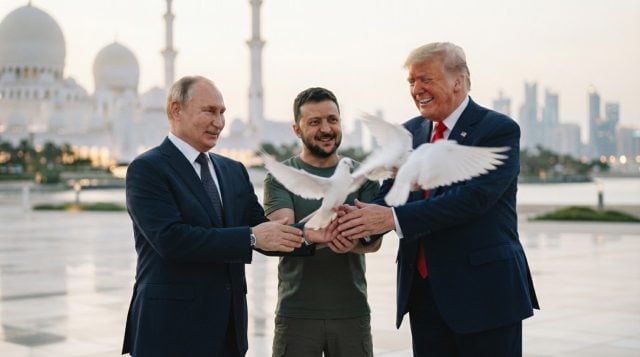
The war in Ukraine may enter a new diplomatic phase starting the second week of November. According to sources from both the Kremlin and the Ukrainian government, the United States, Russia, and Ukraine have agreed to resume trilateral talks «around November 10», tentatively scheduled to take place in Abu Dhabi, the capital of the United Arab Emirates. This announcement, made following a flurry of diplomatic activity, has been met with cautious optimism, although significant differences remain that could derail the process.
The Origin of the New Diplomatic Push
The catalyst for this diplomatic movement was the visit of the White House’s special envoy, Steve Witkoff. Last week, Witkoff met in Oslo with Ukrainian President Volodymyr Zelensky and European leaders. He subsequently traveled to St. Petersburg for a roughly three-hour meeting with Russian President Vladimir Putin.
Following these meetings, Kremlin foreign policy adviser Yuri Ushakov stated that Putin was «in principle» willing to resume dialogue. This proposal was well-received in Kyiv. Zelensky indicated he received positive feedback that «Russia supports a trilateral meeting at the team level,» noting that the U.S. side suggested holding it «as soon as possible.» The aim of this initial technical round would be to pave the way for a potential leaders’ summit.
The Cards on the Table: Freezing the Front and Security Guarantees
The most significant move came from the Ukrainian side. In an interview with Fox News, Zelensky accepted, for the first time, the possibility of «freezing» current front lines as a first step to halt the fighting. «We need to freeze the conflict. It’s the realistic way to end this war,» asserted the Ukrainian leader, adding that this would serve as the basis for later negotiations around security guarantees with the U.S. and Europe. This tactical concession would involve accepting the de facto loss of about 25% of the territory currently controlled by Russia, which complicates matters for Kyiv, given that there are territories that Russia claims which it has yet to conquer militarily. Yet, perhaps this time concessions may be the path to genuinely halt the war.
The Kremlin, for its part, has made it clear that the central topic for the upcoming meeting must be the construction of a new security system for Russia and Ukraine after the conflict concludes. In this regard, outlets such as The Economist have leaked the outlines of a potential peace plan from the White House that would include a demilitarized zone in Donbas, Ukraine’s formal renunciation of NATO membership, and a gradual lifting of sanctions against Russia in exchange for investments and a prospect of EU membership for Kyiv.
Obstacles on the Path
Despite gestures of goodwill, the road to peace is fraught with hurdles. Firstly, Russia has outright rejected the proposal to «freeze» the front as it currently stands. Moscow insists that Ukraine withdraw from the areas of Donbas it still controls, something Kyiv deems unfeasible due to the security risks involved.
Secondly, fighting has not ceased. While diplomats are discussing peace, both sides continue to exchange fire. Ukraine reported over 170 attacks against its energy infrastructure since the announcement of a supposed «energy ceasefire,» whereas Russia claimed to have destroyed hundreds of Ukrainian drones and continued bombarding the Kharkiv region. This dynamic of «diplomacy while firing» reflects mutual distrust and each party’s need to improve its ground position before sitting down to negotiate.
A Window of Opportunity, Not a Guarantee
The meeting on November 10 in Abu Dhabi represents the most concrete opportunity for peace in months. The fact that these talks occur after the U.S. midterm elections could provide the Trump administration with greater political maneuverability.
However, the success of this round will depend on the parties’ ability to turn symbolic gestures into real commitments. Ukraine has shown flexibility by agreeing to discuss a ceasefire based on current positions but demands robust security guarantees. Russia, meanwhile, appears willing to negotiate, but without relinquishing its territorial goals. The international community is watching closely: the window for peace is open, but substantial diplomatic efforts are needed to prevent it from closing once more.
El Ciudadano
Obtén tu Pasaporte y apoya a El Ciudadano
Elimina la publicidad, accede a contenido exclusivo y sé parte de la comunidad.
Cancela en cualquier momento · Sin permanencia