Original article: Ignacio Fritz y la memoria de la tortura: Ciencia ficción, delirio y violencia política en «Factoría de brutalidades»
Interview by Mariana Hales
What happens when fiction delves into the darkest corners of history?
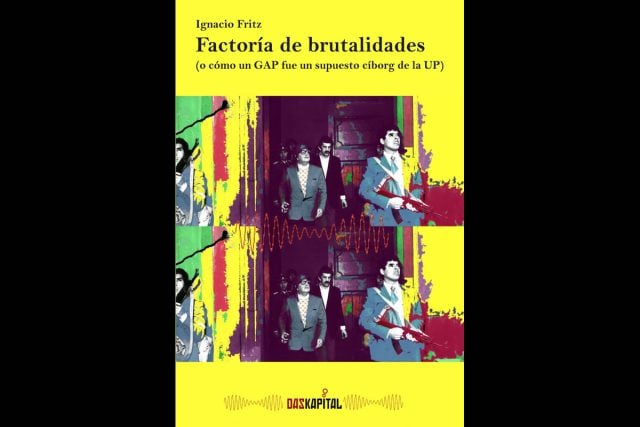
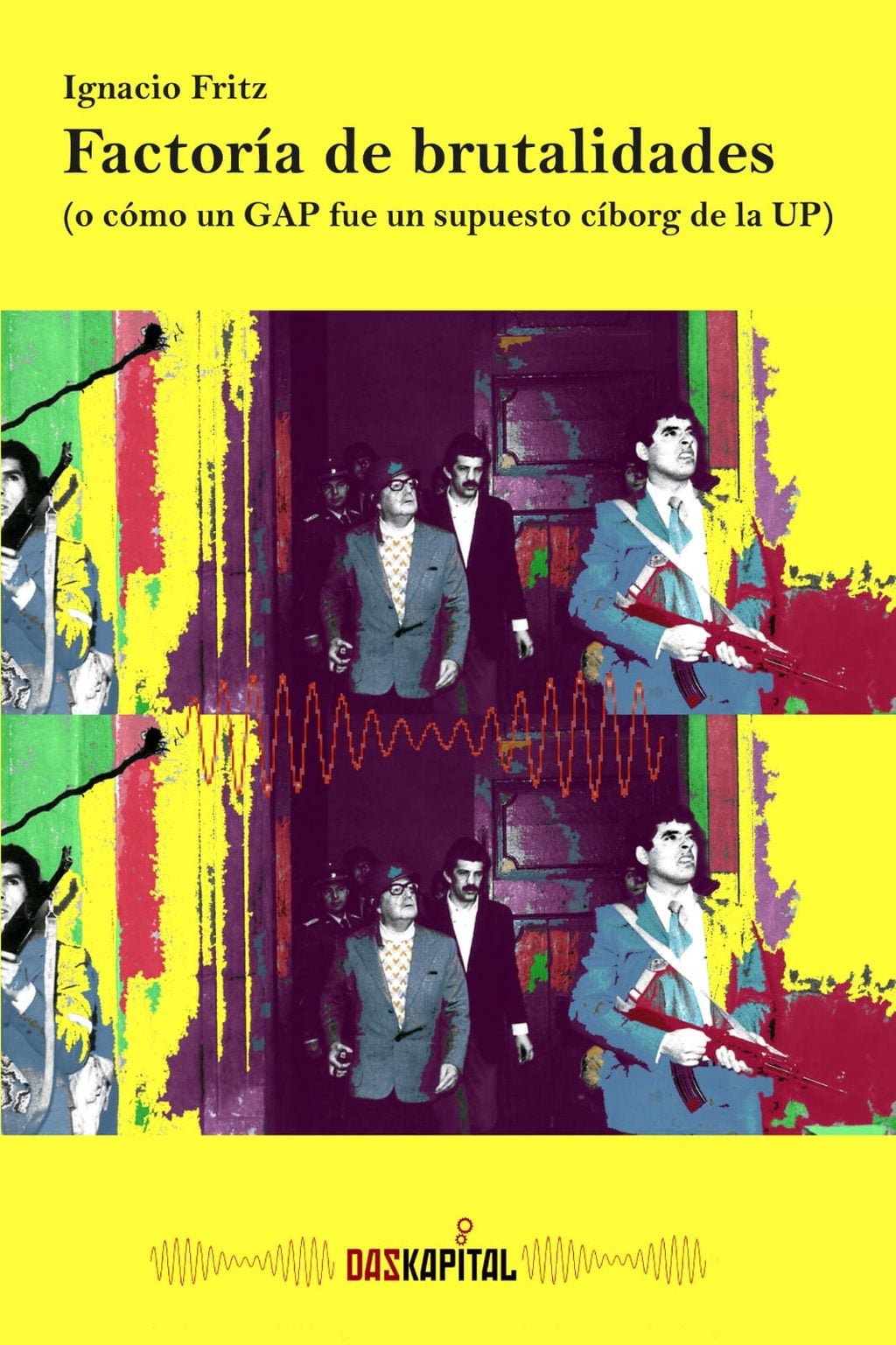
This question underpins Factory of Brutalities, the latest novel by Chilean author Ignacio Fritz, released by Das Kapital. The work addresses torture and political repression during the dictatorship in Chile through a unique fusion of science fiction, horror, pulp, and dark humor.
The book will be launched on Wednesday, November 25, at 19:00 hrs. at Bar Liguria located at Merced 298.
The story’s protagonist is Hercules Saladino Weldt Montag, a communist militant, proletarian, and member of the Personal Friends Group (GAP), which served as the personal guard for President Salvador Allende.
Following the coup d’état on September 11, 1973, Hercules is arrested and taken to the National Stadium, one of the dictatorship’s main detention and torture centers.
Amid torment and an experience that pushes his perception to the brink, he begins to convince himself that he is the first cyborg of the Popular Unity: a technological prototype created to protect Allende.
From here, Fritz constructs a delirious universe where historical violence intersects with conspiracies, vampires, demonic pacts, and references to popular culture.
Defining his work as a piece of «carnivalesque and grotesque science fiction,» the author reveals how imagination becomes a tool to explore the silences, wounds, and subjective dimensions of repression.
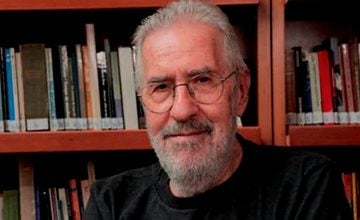
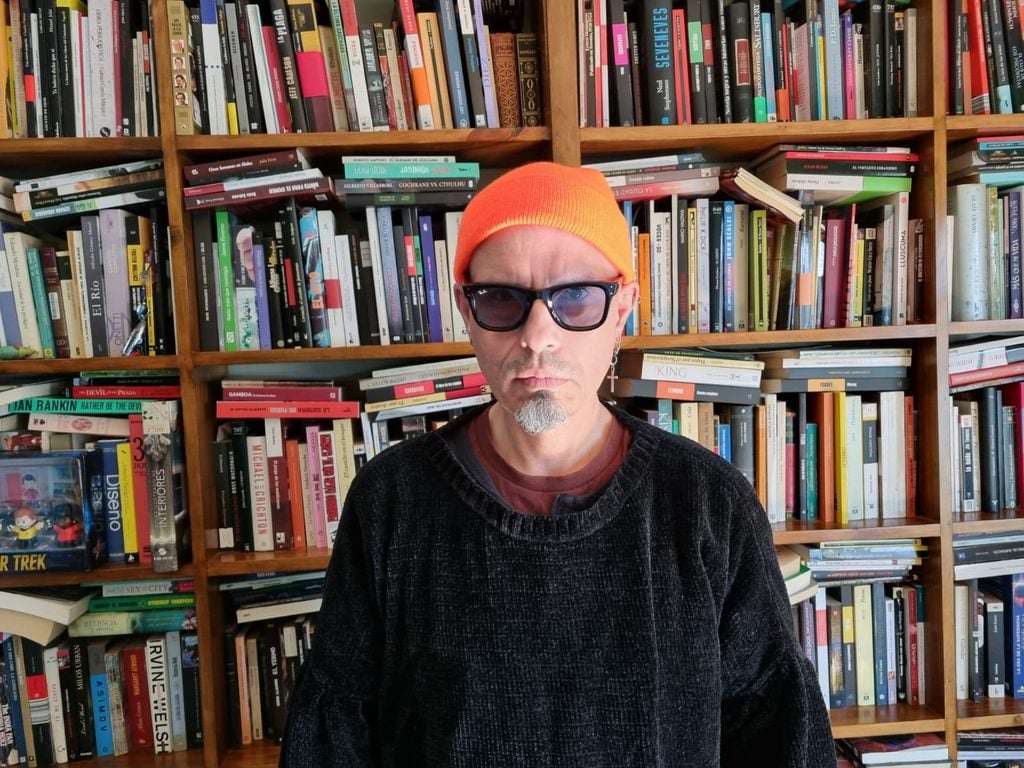
Born in Santiago in 1979, Ignacio Fritz is a writer, journalist, and graduate in Social Communication. His literary journey includes genres like horror, science fiction, noir, and pulp, as seen in titles such as Eskizoides, Marxist Terrorism, Zombie Providence: The Eternal Mystery, Mausoleums in the Desert, and The Specialists of Evil. He has also contributed to more than a dozen national and international anthologies.
In conversation with El Ciudadano, Fritz discusses the relationship between fiction and historical memory, the necessity of writing about torture amid denialism, the creation of his protagonist, and the place of Factory of Brutalities within his literary path.
-In a national context where denialism is part of the ruling sector, Factory of Brutalities confronts that stance by revealing the rawness of torture. Why do you think it is necessary to write about repression?
-It is essential to write about this because what is not remembered or spoken about risks being overlooked, relativized, or repeated. It feels as if I’m talking to a wall or shouting into the wind. Fiction does not replace testimony or historical documentation, but it can approach the profound pain from another angle. Factory of Brutalities corresponds to a creative phase marked by my engagement with the historical and contemporary. Displaying what happened to those tortured for political reasons allowed me to empathize with horror and memory.
Jorge Calvo remarked during the presentation of Marxist Terrorism in 2023 (considered a younger sibling to Factory) that writing about torture without having experienced it could be disrespectful. Yes and no. You don’t have to be an astronaut to write about one, but you do need to research, imagine rigorously, and avoid trivializing trauma.
The novel originated from a character who, due to his thoughts and actions, ends up subjected to torment by cold-blooded agents. Every murder is condemnable; if it is left unpunished, the wound remains open. I think a lot has been said about this issue, but without the attention it truly demands.
–Hercules Saladino Weldt Montag takes refuge in the notion of being the first cyborg of the Popular Unity. Is there a connection to the Synco project?
-There was no conscious connection to the Synco project (or Cybersyn, as it is known in English), although the association is relevant. I also don’t recall having Synco, Jorge Baradit’s novel, in mind.
The idea of the cyborg primarily originates from The Six Million Dollar Man, a series starring Lee Majors as Steve Austin, an astronaut reconstructed with bionic implants. While I do not explicitly mention the Synco project, everything related to the Popular Unity helped me to expand the boundaries of the narrative.
Hercules Saladino Weldt Montag finds himself in such an extreme mental state that he could ascribe the start of the Chicago fire to himself. It was plausible for him to hallucinate and cling to the fantasy that Allende and his colleagues could still be saved after the harrowing shipwreck on the morning of September 11, 1973.
–Where do you see the boundary between fiction and historical memory? What can fiction reveal that historical narrative might not?
-In my writing, the boundary between fiction and historical memory is quite blurred. Perhaps that’s why I don’t write historical novels in a strict sense. Factory of Brutalities is neither a historical novel nor a documentary. It is carnivalesque and grotesque science fiction—a collage. It contains passages close to essay, yet its main material is invention.
The history provides a foundation while inventiveness and language explore its dead ends, silences, and omissions, although the theme of silences is also overused.
–How do you perceive the state of literary creation in a context where culture is not a priority for many? Why continue writing?
-Until 1997, I wanted to be a criminal lawyer. My parents were lawyers, and my father had been a judge. I also flirted with politics: I attended meetings of the Christian Democracy and even considered a career in leadership. But in 1998, I was selected for the «Contact Zone» of El Mercurio. That changed my perspective.
That same year, I had enrolled at Preuniversitario Pedro de Valdivia but never attended; I played truant. I hadn’t been a big reader until 1996 and preferred to rewatch the same cable movies while only reading the basics: Luis Sepúlveda, García Márquez, José Luis Rosasco, Manuel Rojas, etc.
Today, writing may seem like a luxury for eccentrics. Many do not view it as a “normal” job, and to make matters worse, there is no conventional compensation involved, such as money. Personally, I write because it is the only thing I know how to do, because it brings me joy, and because I intend to go down with my boots on.
–After a career linked to horror, science fiction, noir, and pulp, what does Factory of Brutalities signify within your body of work? What do you hope readers will reflect on or feel after reading it?
-I started writing it in 2019 and submitted it to Das Kapital in 2023. Within my body of work, Factory of Brutalities represents a high-voltage book: a vanguard, excessive release that is acutely aware of the garbage existing in the world manipulating that same world.
I hope it is read without prejudice or political bias and that the representation of ferocity is not mistaken for an apologia for it. I do not seek to impart a lesson or judge anyone; instead, I aim to open a narrative, philosophical wound of critical thought that forces readers to confront what some would prefer to ignore.
–In your book, Delfina Edith reappears, a detective you created for The Indifference of God. What is the reason for this crossover of characters, along with the presence of figures like Víctor Chanfreau?
-My mother was named Edith Delfina. According to Ramón Díaz Eterovic, winner of the 2025 National Literature Prize, Delfina Edith is one of the first private investigators in Chilean literature. The crossover of names reflects a playful element. I included Víctor Chanfreau merely as I was sketching an idea regarding the «reformulation of reality» that was purportedly going to take place with the Popular Unity project.
Similarly, other historical figures, such as Reagan or Churchill, are referenced. Hercules Saladino Weldt Montag is the uncle of my alter ego, Milo Anteros Weldt, the protagonist of my novel Tribe, which I later rewrote and published under the title At the Exit of the Viper Room.
Obtén tu Pasaporte y apoya a El Ciudadano
Elimina la publicidad, accede a contenido exclusivo y sé parte de la comunidad.
Cancela en cualquier momento · Sin permanencia
Artículos Relacionados
"Chocolate Heart": A Play Inspired by the Fruna Case Returns to the Stage to Wrap Up Ocaso Teatro's Retrospective
Hace 3 meses