
Original article: “Defensor de Pinochet” y “ultraconservador”: así describen medios internacionales el triunfo de Kast
In their early reactions to the Chilean runoff election, various international media outlets have characterized the triumph of José Kast as a resurgence of Pinochet’s policies and a milestone for the country’s most right-wing president since the return to democracy, branding him as a «defender of the dictator’s legacy» and «ultraconservative lawyer» in their headlines and analysis.
«Pinochetism Returns»: Kast as the Continuator of the Dictatorship’s Legacy
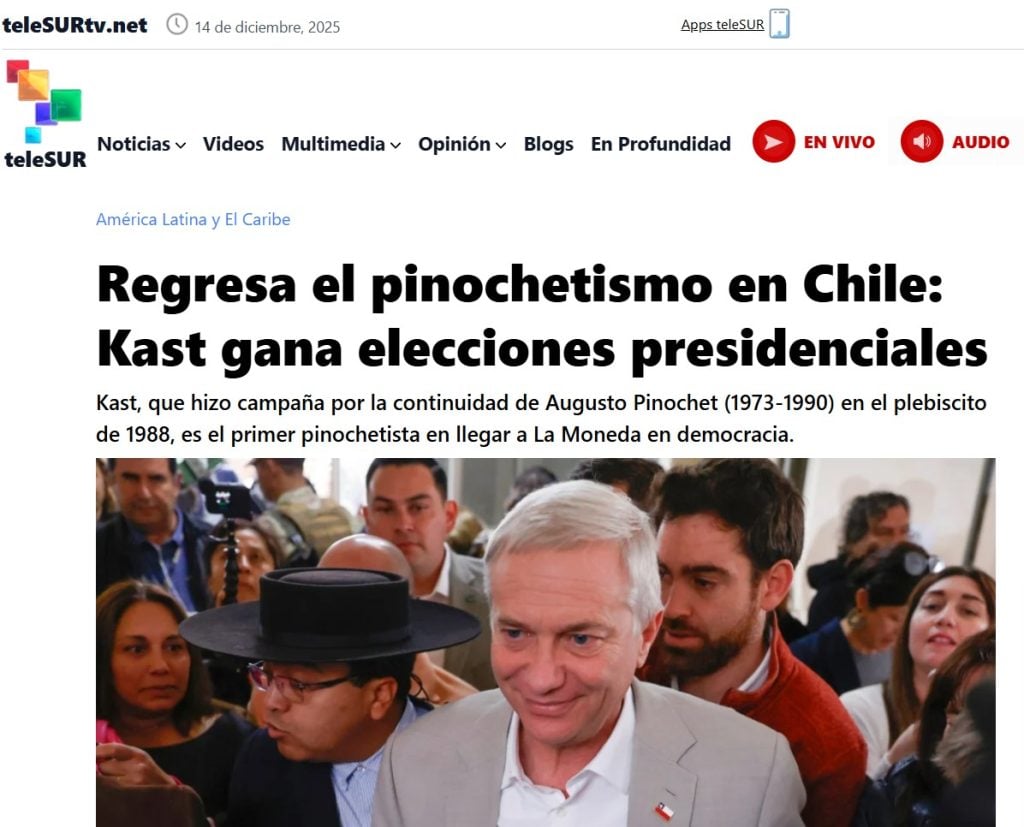
The first to respond was teleSUR, which headlined its main article: «Pinochetism Returns in Chile: Kast Wins Presidential Elections«. The outlet states that Kast, who «campaigned for the continuation of Augusto Pinochet during the 1988 plebiscite, is the first Pinochetist to reach La Moneda in democracy.»
The piece recalls that the now-elected president supported the «Yes» vote for the regime’s continuity in 1988 and emphasizes that, unlike other right-wing leaders of the post-dictatorship era, Kast openly identifies with that past.
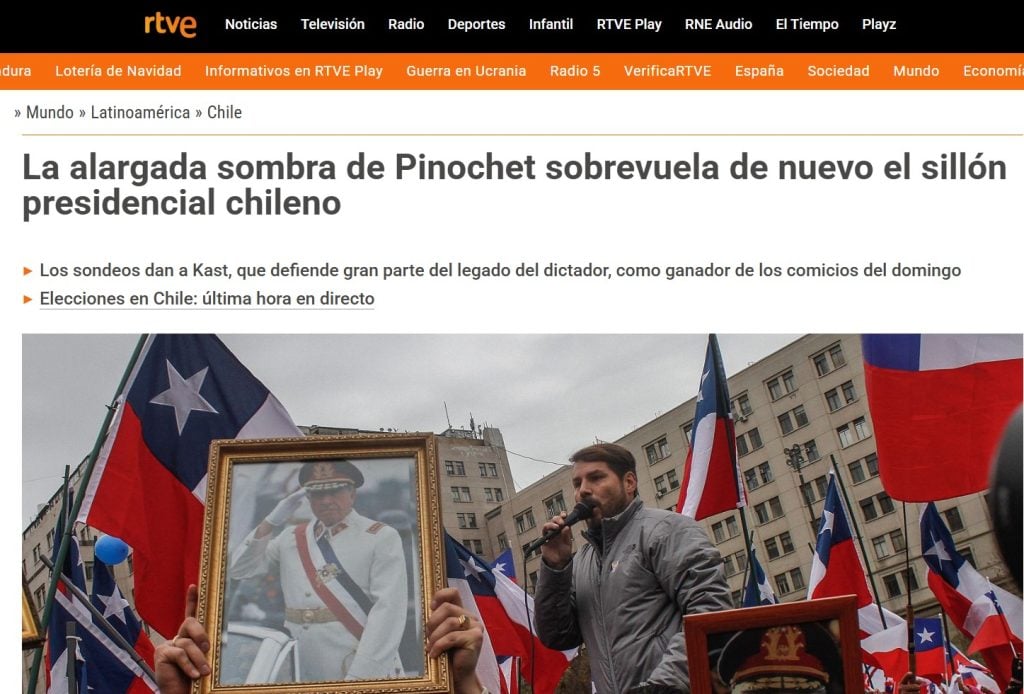
From Spain, the public broadcaster RTVE published a report titled “The Long Shadow of Pinochet Hovers Over the Chilean Presidential Seat Again”. The report notes that polls indicated Kast as the winner, stating that he «defends much of the dictator’s legacy.»
“Ultraconservative Lawyer” and “Ultra-conservative”: Common Labels Repeated
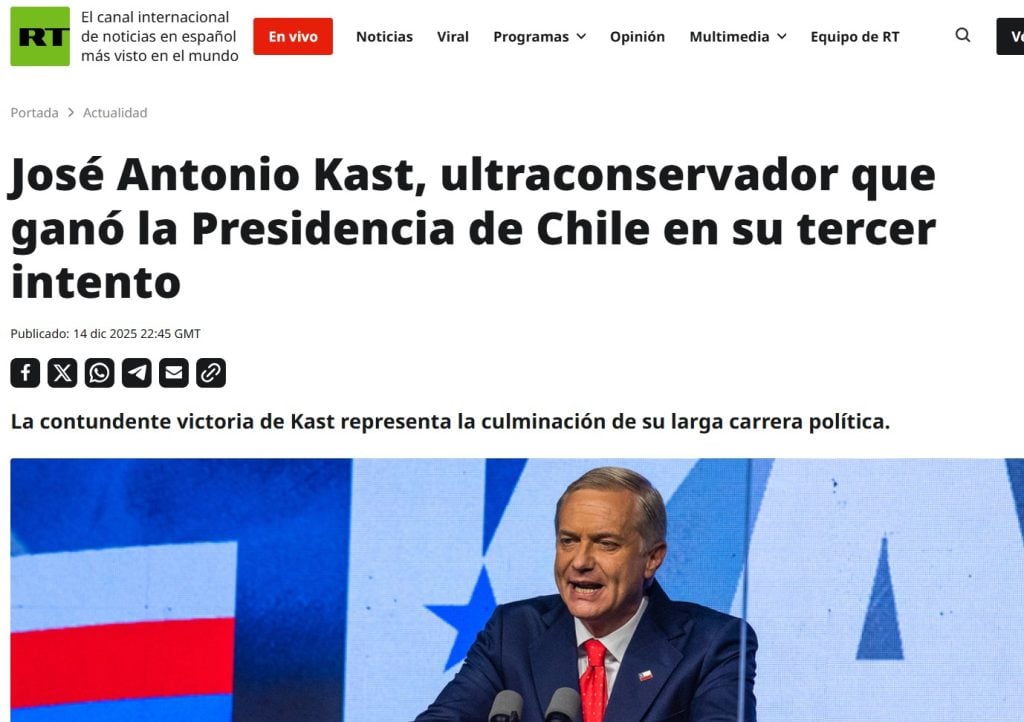
A recurring theme in titles is the labeling of Kast as ultraconservative. The Russian channel RT reported: “José Antonio Kast, the ultraconservative who won the Chilean presidency in his third attempt”, highlighting that the 59-year-old lawyer secured victory in his third consecutive presidential campaign.
From Cuba, Cubadebate reported that «the ultraconservative lawyer José Antonio Kast, 59 years old, has been proclaimed president-elect of Chile after a resounding victory,» emphasizing that his campaign centered around a «hardline discourse and fortified borders.»
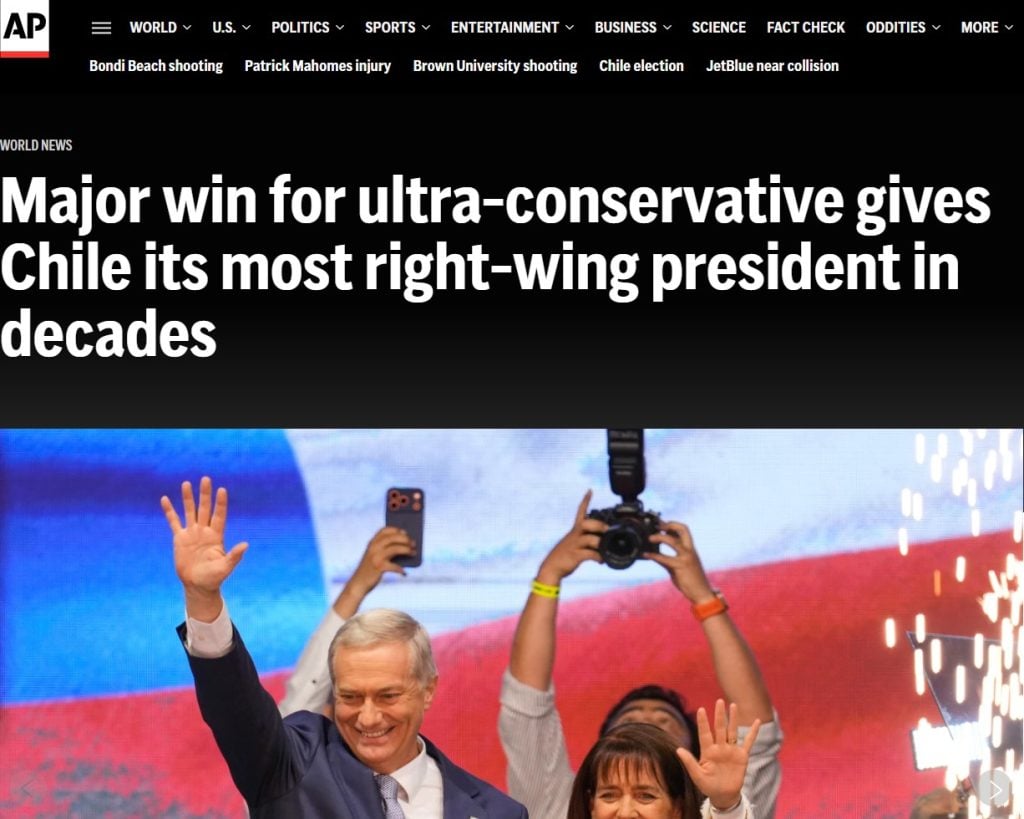
In the English-speaking world, the Associated Press (AP) published an article whose headline summarizes the outcome as a “major victory for an ultraconservative that gives Chile «its most right-wing president in decades«. In the opening paragraph, AP describes Kast as an “ultraconservative former legislator” who achieved a shocking victory in the presidential election and “set the stage for the most right-wing government in 35 years of democracy.»
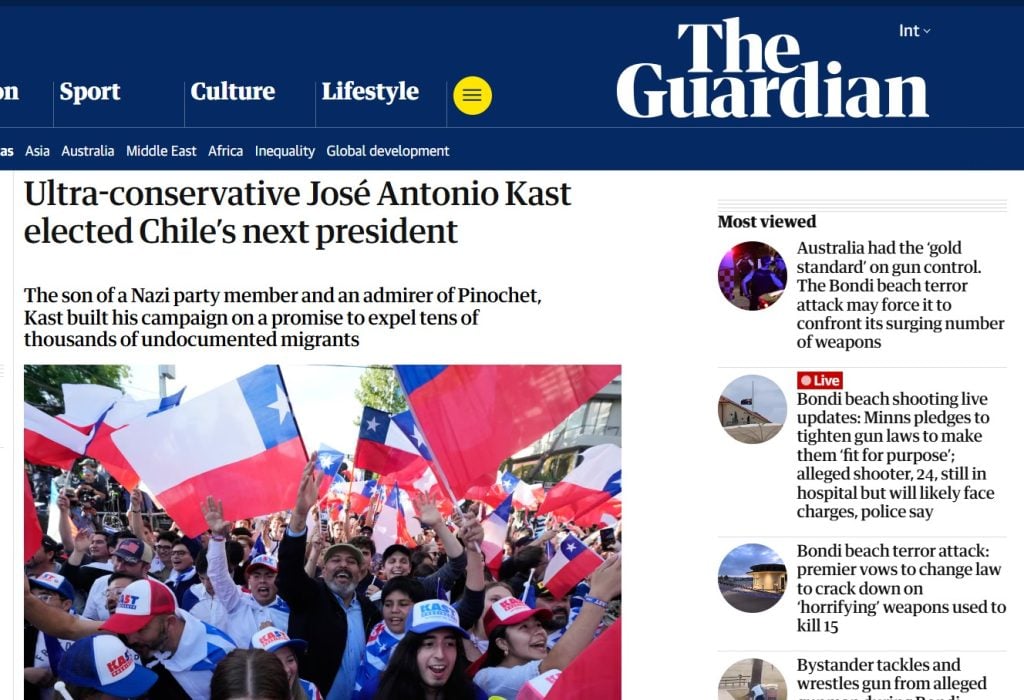
The British newspaper The Guardian opened its report with the headline “Ultra-conservative José Antonio Kast elected Chile’s next president”, describing him in the subtitle as “son of a Nazi party member and admirer of dictator Augusto Pinochet.” The body of the text highlights his known opposition to abortion and same-sex marriage.
Also in the UK, summaries from The Times emphasize the notion that a “Pinochet admirer” has won the Chilean election «in a shift to the right,» reinforcing the perception of continuity with the authoritarian and economic legacy of the dictatorship.
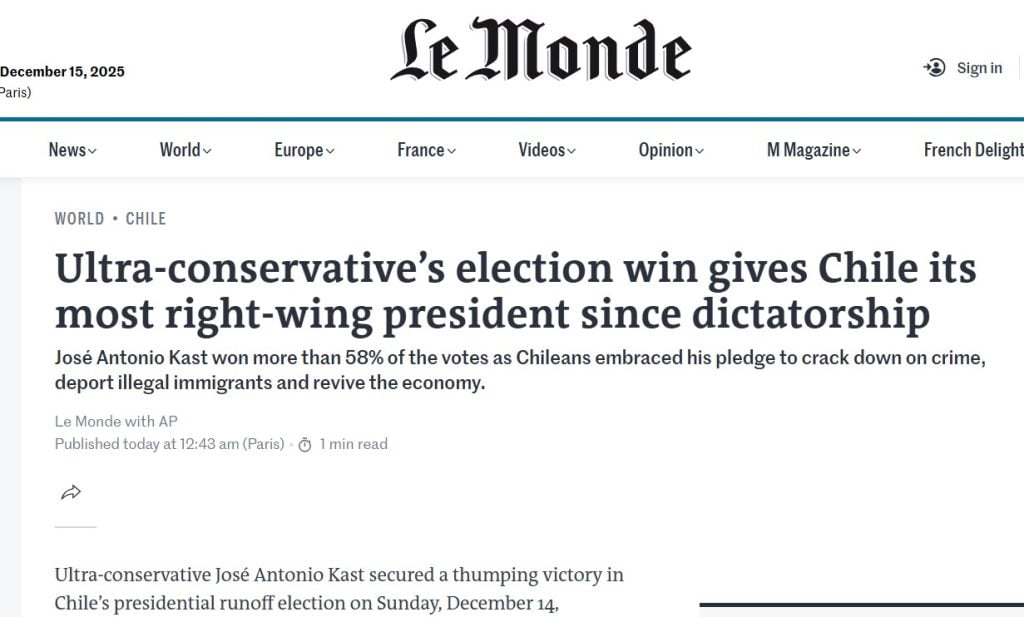
In France, Le Monde also highlighted the ultraconservative element in its English edition: “Ultra-conservative’s election win gives Chile its most right-wing president since dictatorship” (in Spanish: “(La victoria de un ultra-conservador da a Chile su presidente más derechista desde la dictadura”), highlighting that Kast surpassed 58% of the votes against the communist candidate Jeannette Jara.
Together, these perspectives indicate that for a significant portion of international media, José Antonio Kast’s victory not only installs an “ultraconservative lawyer” in La Moneda but also marks the first president explicitly linked to the legacy of Pinochet since the return to democracy, with a hardline agenda, immigration control, and budget cuts that will be closely monitored outside of Chile.
Relacionados




Democracy at Risk in Upcoming Election, Warns Former Frei Secretary Guillermo Pickering
Hace 2 meses