Original article: «La próxima guerra con EEUU será corta y devastadora», prevé analista iraní en medio del aumento de las tensiones
Via Brasil de Fato.- In Tehran and Washington, the sentiment is clear: another round of the U.S. and Israeli conflict against Iran could ignite right after the American legislative elections on November 3.
On Saturday, the 31st, Supreme Leader Mojtaba Jamenei met for the first time with senior military officials and ordered that any threat must receive an «immediate, effective, and geographically unrestricted» response, according to the Tehran Times.
In Washington, the establishment itself is skeptical of the plan. The Financial Times reported insights from former U.S. military leaders who believe none of the offensive options would topple the Iranian government, noting that the Congressional Research Service has already documented 81 U.S. aircraft either lost or damaged and 21 military personnel dead.
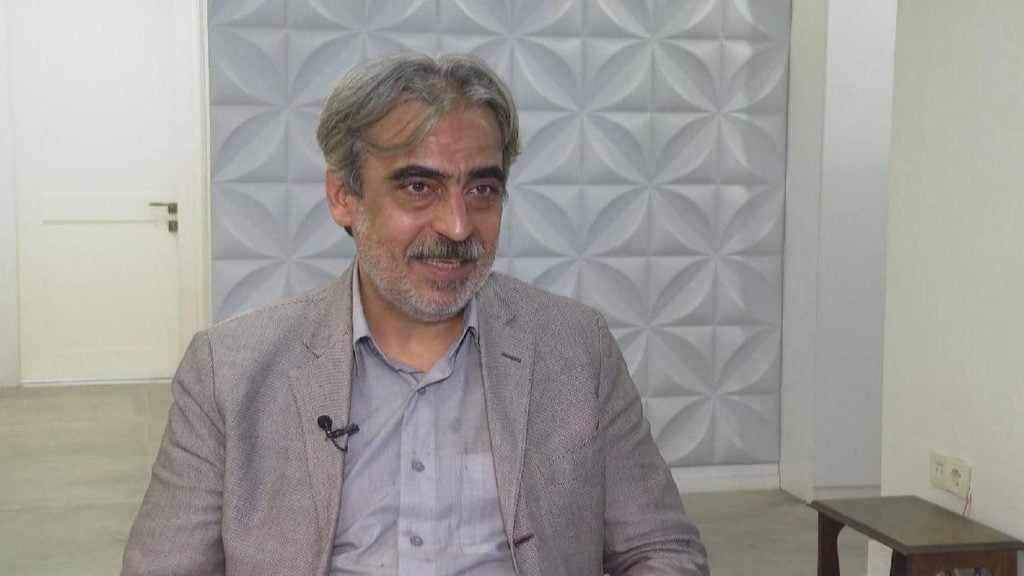
It was in this context that Seyed Mostafa Khoshcheshm, a senior analyst and strategist from Iran, welcomed Brasil de Fato at the Fars Media headquarters in Tehran in mid-October.
We talked for nearly two hours over tea and Iranian sweets, and he didn’t hold back on predictions. «This will be a shorter war from the American side, but much more intense,» he stated.
«This time, Iran believes there should be no limits, and will attempt to impose the highest possible costs on the United States.» Three weeks later, Jamenei’s order echoed that conversation.
For Khoshcheshm, Donald Trump has lost the leverage he once relied on. «He always defeated his opponents through escalation, the madman strategy. In this round, he lost that card. Now it is Iran that embraces escalation to bring everything to an end.»
The Iranian response, he warns, will take the war to the Indian Ocean and to «countries that never imagined it,» using missiles and drones that Iran has yet to deploy outside testing.
This interpretation has been heard more than once in Tehran: that the third round will be the last, with «one side prevailing and putting an end to it all.»
The strongest explanation for Iranian confidence, however, lies not in arsenals but in faith. He recounts that, in his neighborhood in eastern Tehran, the locals said in front of bombed houses: «This is nothing compared to what happened to Hussein.»
A descendant of the Prophet Muhammad, Imam Hussein was killed in 680 in Karbala, present-day Iraq, alongside a handful of companions, facing a much larger army. His martyrdom is central to Shiite identity.
For Khoshcheshm, this is the key that the West has never understood.
–Many people here in Tehran expected an attack before the U.S. elections on November 3, and you predicted a third, more devastating war extending beyond the region. What is the calculation of Israel and the United States? And how should Iran respond?
Donald Trump does not always think rationally or strategically, so he could attack even before the elections, but it is much more likely he would do so afterward, especially if he lost. In that case, since the current representatives remain in office for two more months, it’s likely he would attack in late November or early December.
I believe it will be a shorter war from the American side, but much more intense. Whatever the attack is — total war, targeted assassinations, or pinpoint strikes — the Iranian response will be total war, extending far beyond the region, past Yemen, Bab al-Mandab [the strait between Yemen and the Horn of Africa, gateway to the Red Sea], and the very Axis of Resistance [the regional alliance led by Iran, including Hezbollah in Lebanon, Yemen’s Ansarullah, Iraqi militias, and Palestinian groups].
Iran is determined to end this war. There will be a third round, perhaps in the next one or two months, and it will be the last. One side will prevail and put an end to it all.
–What phase is the war in now?
We have had several phases. The first was decapitation, the initial U.S. attack, which failed. Next came the second blow, the Iranian response. Then came the Islamabad Agreement [the April 2026 ceasefire mediated by Pakistan], which opened the third phase, the economic and political resistance by both sides.
Now we are entering the fourth phase: both sides are preparing for the final round, a very bloody war. Each side seeks to determine three things. The first is when the war will begin. The second is where it will take place: the U.S. wants to limit it to Iran, while Iran wants to expand it. The third is at what cost.
–When you refer to «beyond the region,» could that include, for example, the U.S. base at Diego Garcia [in the Chagos Archipelago, Indian Ocean], or even Europe?
I cannot say that, but I can tell you that you will be surprised to see Iran in places it has never been before. They will be compelled to fight Iran in the Indian Ocean, in distant seas, in countries they would never imagine.
Iran will utilize everything it has, including the latest generations of missiles and drones that it has not yet used extensively, except for testing.
And there is the cost. In previous wars, the 12-day war [June 2025] and the 40-day war [February to April 2026], Iran wanted to control escalation, responding in ways that were not severe enough to provoke a wider conflict. This time, Iran believes there should be no limits, and it will attempt to impose the highest possible costs on the United States.
The United States knows this. It cannot tolerate, for instance, the complete closure of Bab al-Mandab, which is currently only closed to Saudi vessels. If they bring in British and French forces, who have promised to participate in defensive operations, I believe they will not come to Hormuz, but will position themselves around Bab al-Mandab to defend Saudi energy.
If they do that, the Yemenis will close Bab al-Mandab themselves, as they are now more capable than ever following their recent victories.
Iran has warned that this time its responses will be disproportionate. When you attack an oil tanker, you are very careful not to kill sailors, as the goal is just to divert the ship from its route. In total war, nothing can be guaranteed. There will be a lot of blood.
Donald Trump always defeated his adversaries through escalation, the madman tactic. In this round, he has lost that card. Now it is Iran embracing escalation to bring it all to an end. Until a few weeks ago, every time Iran attacked ships trying to cross illegally, there was an American response. For weeks, Iran has been punishing tankers, and the U.S. has not responded.
This shows that they do not want to escalate into the unknown. It will also be a shorter war because the U.S. is no longer stocked with ammunition. But it will be devastating.
–One layer of Iran’s strategy is economic warfare, hitting the U.S., the West, and also Asian allies like Japan and South Korea. But Iran also suffers: oil exports have plummeted; there is inflation. In military terms, even U.S. think tanks say that Iran has the upper hand. How long can Iran hold out economically over the next three or four months?
It depends on the perspective. According to Scott Bessent [U.S. Treasury Secretary], we were supposed to collapse yesterday, and we didn’t collapse. Iran has been under sanctions for four or five decades and has learned to circumvent them, sometimes quietly, sometimes making noise on purpose.
Iran is a huge country, with 80 to 90 million inhabitants, bordering 15 countries, nine of them by land. A country like this cannot be truly besieged.
Since the siege began, after the Islamabad Agreement, Iran has initiated many actions to activate its land borders with Pakistan, Afghanistan, Azerbaijan, Turkmenistan, Russia, Turkey, and Iraq. Rail and road transport have advanced, and this potential has yet to be fully utilized.
-Including the railway that comes straight from China.
Exactly. That is not to say there is no pain. Sanctions hurt, but Iranians have learned to endure and continue with their normal lives. Just look at the streets of Tehran: people shop, go to stores. Foreign dignitaries, including Europeans, come here and are surprised.
A German told our authorities that he couldn’t understand how life continued normally, because the image they have of a war-torn country is that of southern Lebanon, Syria, or Gaza.
Inflation is high, war has costs, no one denies that. But this war has raised the threshold of tolerance for Iranians and has helped them set aside their differences.
In the face of a foreign threat, some nations become divided and collapse. Others unite around the flag, as the people here do every night. On nights when we launch missiles, the streets are much fuller.
Iranians have 7,000 years of civilization and 2,500 years of empire. They have endured the Mongol invasion, the Arab invasion and occupation, and know how to resist and strike back. Iran has several cards it has yet to play, while the U.S. has played them all: cyberattacks, assassinations, bombings, the killing of generals, leaders, and scientists, bombing cities and even schools, like the one in Minab [a city in Hormozgan province, southern Iran].
That is why Iranians believe a third round would be favorable for them: it would close the chapter, and they would emerge victorious. That belief helps them endure the economic hardship.
–I was here last November and I notice that people are much more confident now. At that time, they had survived the 12-day war, but the economy was faltering, and in December there were protests, initially legitimate ones, acknowledged by the Leader himself [Ayatollah Ali Jamenei, who was Supreme Leader from 1989 until he was killed in a February 2026 attack], but then co-opted by the West and Zionists. Today’s situation is more complex, but people say: «We will survive; the leaders know what to do.» Why?
Because they have gone through two consecutive wars. In the first, they lost their top generals, and in the second, the 40-day war, they lost their Leader.
Sometimes, losing a leader causes a nation to crumble and surrender, and that was precisely Trump’s plan. Other times, it mobilizes the people to seek revenge, and that is what happened on the second and third days.
The martyrdom of the Leader was a shock, but instead of remaining passive, Iranians took to the streets seeking vengeance, claiming their blood, and they continue to do so.
That has roots in Iranian ideology. If you analyze only politics and economics, as one would do with any other country, Iran should have collapsed between the first and fifth day of the 12-day war last year, or of the 40-day war this year.
It did not collapse due to two ideological currents. The first is Shiite Islam and the story of Imam Hussein [the grandson of the Prophet Muhammad and the third Imam of Shia], in Karbala [the 680 battle, in present-day Iraq, where Hussein and his companions were killed by the Umayyad army].
The second is Iranian identity: just look at Iranian myths to see that many Iranians were like this two thousand years ago, even before Islam. That is why they embraced Shiism and Imam Hussein so passionately: it’s the same.
–What myths are those, and how do they connect with Shiite culture and with the history of Hussein?
The history of Imam Hussein plays a more prominent role in Iranian resistance, of course. But before that, Iranian civilization had its ups and downs, and there were myths that Iranians cherished. One such myth is Ariobarzanes (Ariobarzan in Persian; the name we use in Spanish comes from Greek).
Iranians take pride in their victories, their empire, having ruled half the world. But why Ariobarzanes? Because he is a hero of the time of defeat. When Alexander [the Great, king of Macedonia, who conquered the Persian Empire between 334 and 330 B.C.] faced the Achaemenid army [of the dynasty founded by Cyrus the Great] and the Iranians lost the war, there was a commander who had never lost a battle.
He received the order to retreat because the entire army had been defeated. The others went back to central Iran, to Fars province. He, however, went west.
To invade Iran, Alexander needed to traverse the Zagros Mountains, through a very narrow valley surrounded by high mountains, which still exists, in present-day Kohgiluyeh and Boyer-Ahmad province. Ariobarzanes had about a thousand soldiers. He climbed to the mountains and awaited an army of tens of thousands, and he halted them.
He was expected to resist for a day, two, a week; he withstood for a month until he ran out of spears, swords, stones, fire, any weapon. Eventually, Alexander found a way through to the heights.
Ariobarzanes and his men could have fled to Persepolis [the ceremonial capital of the empire], but they did not flee. With the few men they had left, unarmed, they attacked that army hand to hand. Four or five of them died to kill one soldier of Alexander. That is courage.
–It sounds like the story of Hussein.
Yes. When I say that Iranian identity helped Iranians embrace Shiism and Imam Hussein, this is not something that happened overnight. It has roots in history.
Iranians take pride in what they have conquered, but they take even more pride in Ariobarzanes. The story of Hussein is much greater, with far more implications: they were few and were massacred by Yazid’s army [the second Umayyad caliph].
That admiration exists among all Iranians, even among those who are not Shiite. We have a substantial Sunni population that admires Imam Hussein. I personally know Christians, Armenians, and other minorities who take to the streets every year during Muharram, the annual mourning for Hussein. They stand on the sidewalks, weep, and make donations in his name.
They say: «We do not want to be Muslims; we have our religion, but we love Hussein and Abbas, his half-brother. To us, he is like Jesus Christ.»
This was evident in this war. In my neighborhood in eastern Tehran, Americans seem to have a daily quota: they bombed several times a day during the two wars, killing many people.
Even in the early attacks, documentarians rushed to the scene, and to my surprise, found locals in front of their homes saying: «Thank God we are alive. This is nothing compared to what happened to Hussein. We will rebuild, and we will stay here until we do, for Hussein.»
For years, during annual ceremonies, they say: «I wish I had been in Karbala that day, 14 centuries ago.» Now they see themselves in Karbala, with the opportunity to do so.
That is the difference. That is why Donald Trump could abduct Maduro [Venezuelan President Nicolás Maduro, captured by U.S. forces in January 2026] in Venezuela and transform everything without cost, and here he failed. He imagined he would do the same.
I have been telling the international press for two decades: you believe you have orientalists who know the history of Imam Hussein by heart, but they fail to break Iranian resistance precisely because of him. If you understand that, you will understand why you have failed time and again.
You cannot advance with pressure, whether sanctions or wars. Unless they kill us all, Iranians will not submit. They have learned from thousands of years of invasions: whenever they surrendered, nothing remained of Iran, they lost territory and were massacred.
-Does the public also call for a stronger response?
Many complain: «Why don’t we show what we have? Let’s put an end to the atrocities of Israel and the United States.» And they call more than ever for the atomic bomb.
–What percentage of the population supports the atomic bomb today?
I don’t know; I would need to see reliable surveys, not just one or two. But that discourse today goes much further than the revolutionary sector of society. Others say: «Like it or not, we have invested a lot and sacrificed a lot for this peaceful nuclear program, and they are not going to let us move it forward. Apparently, they have left us no option but to build the bomb.»
No one dares to attack North Korea. Trump himself said he has to say «yes, sir» to the North Korean leader and that if Iran had the bomb, it would have to be treated completely differently.
Iran never wanted the atomic bomb. There is a fatwa [a religious decree from Ali Jamenei that prohibits nuclear weapons], and the position of the Iranian elites was: we do not need it. The bomb belongs to the 20th century. In the 21st century, hybrid warfare forms that bear no responsibility are used, like cyberattacks or biological warfare.
We do not want to do that, but still, the era of nuclear deterrence is over: we attacked the United States, a nuclear-armed state, and we attacked Israel, a nuclear-armed regime. The theory of nuclear deterrence has to be revised precisely because of what Iran did against them.
But nuclear deterrence still provides some security against a nuclear attack. And that is what Iranians, including elites and the educated class, are saying now: «We did not want it, but they left us no choice. If it is to end it all, we need the bomb.» It is a product of the American war against Iran.
The debate has changed entirely: two years ago, a significant part of society, even within the revolutionary camp, said it did not want the bomb. Today, it is the opposite.
–When you refer to the revolutionary sector of society, how large are we talking about?
There are no reliable numbers. But one thing is certain: during nighttime gatherings, especially in the first month or two, you could see from appearances that all classes of society were on the streets.
There are numerous interviews, photos, and videos showing that even those who do not adhere to the Islamic dress code were there. Why? Because they are defending the country. They believe that the United States and Israel are not just enemies of the Islamic Republic, but of Iran.
This is also happening outside the country, in the diaspora. Many have returned since the end of the 12-day war. Another segment of the population, so to speak, was enlightened by the attack.
Previously, they blamed the Islamic Republic for various reasons, under the influence of the media empire of the opposition, from channels like Iran International and BBC Persian [Persian TV networks based in London], which conducted psychological operations.
-There are many channels in Persian abroad, aren’t there?
Between 200 and 400, depending on how you count. It’s a world record, a war record. Those channels said, for instance, that the Supreme Leader was hiding 60 or 100 meters underground. They attributed to him what Netanyahu was doing or said he had fled.
When he was martyred in his office, many people’s views changed. Those people said on camera: «We heard he was hiding, and now we are moved to know he was in his office and was martyred.» I call it an era of enlightenment.
There were rifts before, but now people tolerate differences and unite around the same flag. This has expanded the camp of those who believe. The martyred Leader always said: «Believe in the system or not, cast your vote.» His martyrdom opened that path: many reconciled with the system.
One sign of this is the deep divisions among the opposition led by Reza Pahlavi’s royalists [the son of the last Shah, who lives in the U.S.]. They now fight among themselves, even royalists against each other. Well-known opponents, who have been refugees in Europe and the United States for decades, have publicly stated they want to return to the country. They have realized that what they have been saying for five decades, that the Islamic Republic would fall soon, was a myth they invented themselves.
This has been my third war. The first was against Saddam Hussein [the Iran-Iraq war, from 1980 to 1988], and there was a revolution before that. The reactions are the same. The generation from five decades ago reacted like this during the revolution and the war against Saddam. Today’s youth, born 20 or 30 years ago, have modernized but behave in exactly the same way.
–So the last time the country had such unity was at the end of the 1980s, during the war?
Exactly. Look at the internal politics. There have always been two main factions in Iran, reformists and revolutionaries, and whoever was out of power would go to any lengths to topple the one in power. It was a bipolar politics. But over the last year and a half to two, that is no longer visible.
I always tell my friends that Pezeshkian [Masoud Pezeshkian, President of Iran since 2024] is the luckiest President in the world because no one blames him for anything. He is a reformist leading a reformist government, but even the revolutionaries do not critique him, even when they should.
Everyone, including the press, says: let’s help him in every possible way. That is the latest product of the war and American policies.
Whenever Iranians say, «we do not cross our lines; the United States must accept our conditions, but we are in favor of negotiation,» many critics say that is not the right discourse. But it produces something important: it shows all Iranians that everything possible has been done to avoid war.
No path remains but resistance. Otherwise, they will destroy you and your country.
–And Iran surprised the entire world with its military capability to challenge the U.S. and Israel at the same time, didn’t it?
Even we were surprised. I follow military matters and always thought there would someday be a war between the U.S. and China, and that the Chinese would show the world that the U.S. is no longer that powerful. But I never imagined that it would be us, the Iranians, who would do it.
The World Endures the «Painful Birth» of a New Order
In the second part of the interview, Seyed Mostafa Khoshcheshm discusses the shift of power to the East, the hybrid war anticipated against China, the competition for artificial intelligence, and Latin America’s place in the new order.
Last week, oil exports through the Strait of Hormuz fell to 8.7 million barrels per day, half the pre-war level, according to consulting firm Kpler, as cited by the Financial Times.
Diesel reached $220 per barrel in the wholesale market, more than double its price before the conflict, and the five largest Western oil companies reported over $50 billion in profits in the third quarter.
For Seyed Mostafa Khoshcheshm, this is proof of what he calls Iran’s most powerful weapon. «It’s a weapon millions of times stronger than the atomic bomb,» he told Brasil de Fato.
«With an atomic bomb, you strike a country once. With the Strait of Hormuz, you strike the entire planet repeatedly.»
In the first part of this interview, the Iranian strategist spoke about the new round of war that is expected. In this second part, the conversation at the Fars Media headquarters in Tehran shifted from the strait to the world order.
For him, the 2020s are a «painful birth»: the transition of power from the West to the East, which the empire led by the United States «does not relinquish easily.»
He predicts none of the superpowers will emerge from this decade of wars, but rather four great powers — China, India, Russia, and Iran — all part of BRICS and the Shanghai Cooperation Organization.
Khoshcheshm does not believe that this transition will be decided solely by missiles. Defeated by Iran, he claims, the United States «will have no capacity to confront China,» turning instead to hybrid warfare, even biological warfare.
«After Iran, it will be China. I believe that by 2027, we will see the spread of viruses like Covid.» The next conflict, he warns, will be over artificial intelligence, which will divide the world between «the masters and the slaves.» The Gulf monarchies that chose the American camp have already lost, and their data centers, he says, «will be next» in the third round of warfare.
The conversation concluded with a reflection on Ali Shariati, the sociologist who inspired the generation of the 1979 Revolution. For the Shah, Khoshcheshm recounts, he presented a more rooted threat than armed groups because «he never took a rifle, he took the pen.» Here is the second part of the interview.
–You must have read Robert Kagan’s article in The Atlantic. Kagan, one of the leading neoconservative thinkers, wrote that the United States suffered the worst strategic defeat in its history, declared checkmate, and stated that Iran will emerge as the main regional power. The third round is still pending, but what should happen? What will Iran be like as a regional power, its relationship with Arab countries, and the future of the United States in the region? Can Iran become a global power?
The world is undergoing a power transition from Western civilization to the East. For over a decade, even American and European intellectuals have been saying this.
To me, the 2020 to 2030 decade is one of this painful birth, and there will be increasing wars. Whoever holds the power, the Western empire led by the United States, does not relinquish it easily. There will be wars and frictions, particularly with emerging powers: Russia, China, and Iran. Therefore, I believe we will see some form of war against China in 2027 or 2028.
–And the Chinese are already saying so. They are preparing.
It will not be so simple. If we accept that the United States will be defeated by Iran, it will have no capacity to confront China. They will increasingly resort to hybrid warfare, and that hybrid war will be entirely different. We have the experience. I suspect they will turn to biological warfare, various types of war alongside military ones, possibly even nuclear. Whatever it is, they are resisting, much like the Europeans against Russia.
After Iran, it will be China. I believe that by 2027, we will see the spread of viruses like Covid. The United States will not easily relinquish power. Trump may like Putin, but there is a deep state that he does not control. They will not allow Putin and Russia to win everything so easily. If they cannot achieve that militarily, they will do it with biological weapons.
The same goes for China. In Iran itself, the same applies. I know the Americans, their hybrid war, the deep state’s intentions and behavior. The pattern tells me that when they feel hopeless and defeated, they will unleash asymmetrical warfare, new forms of warfare, including that, and cyberattacks will intensify, not as they do now.
Even in cyberwarfare, it is like this. Before 2010, before Stuxnet [a computer virus attributed to the U.S. and Israel that sabotaged Iran’s nuclear program centrifuges], the world lived in an atmosphere of security threats, with industrial data theft and things like that. Stuxnet transformed that into state-level cyber warfare.
Since then, all major actors have been building capacity and investing in it in unknown ways. Artificial intelligence is the new version of everything: cyber war, hybrid warfare, in various aspects.
If the world were not in a power transition, with wars like this, the world of the future, for me, would no longer be that of oil or fossil fuels. It would be one dominated by artificial intelligence, split between the masters and the slaves: those who own the software and hardware of AI, and the rest.
One of the main disputes today between the West and the East is who will be the master of AI in the future. The fields are forming. Saudi Arabia and the Emirates, among the Gulf Arab countries, decided to align with the U.S. camp.
–Qatar is also investing heavily in it.
A lot. And one thing those Gulf Arab countries have already lost is AI, because they depended too much on the United States. Until now, we have spoken of two wars; the third has yet to occur. The data centers will be next, in the third. That is among the things that they and Israel will lose. That is very important.
-If Biden were in power, the U.S. would be tougher on Putin.
Without a doubt. With Trump, it’s different; he plays too much in Putin’s field.
–But wouldn’t that be a strategic calculation? People in Trump’s circle said, even before the election, that the war against Russia was a mistake because Russia is not the main adversary. They would end that war to focus on China.
There is no doubt that Iran is the U.S.’s primary ideological enemy, and China is the economic enemy. But not everything is controlled; sometimes wars just break out. Or Russia perceives, for example, that an imminent threat is rising.
Perhaps they made the calculations: if we do this, there will be no war against us; let’s weaken them now, before it’s too late. Because they would not enter a total war, like in Crimea.
After a decade of wars, there will be no superpower left: the capacity of all will be worn thin. But power will be in the East. The new world order that will emerge on the horizon, probably after 2030 or 2032, will be defined by regional and international coalitions like BRICS and the Shanghai Cooperation Organization, which are equivalent to the G7, NATO, and the OECD of the West.
The Munich Security Conference [an annual forum on international security in Germany] has already taken center stage; today, its rival, the Saint Petersburg conference, is gaining importance and prestige. I was present at the last one. There will be no superpowers, but those groupings will define the new order.
Most thinkers believe there will be four great powers, not superpowers: China, India, Russia, and Iran. If they remain united, they can initiate something new in the world. If they fight among themselves, there will be confusion worldwide.
–It is interesting to think that all four are members of BRICS and the Shanghai Cooperation Organization.
Yes. There are great differences between China and India, but both are in BRICS because they realized that. Now, why would Iran be among them?
Economically, it does not compare with the other three. Militarily, China and especially Russia are far ahead. The reason is what makes Iran unique: the Axis of Resistance [the regional alliance led by Iran, including Lebanese Hezbollah, Yemeni Ansarullah, Iraqi militias, and Palestinian groups], on land and at sea.
On land, it is a market of 400 to 500 million people in the world’s most strategic region, the heart of the world: West Asia, with energy reserves, minerals, ancient civilizations, and religions, connecting north to south and east to west.
In the next 10 or 20 years, anyone wanting to do business or impose a new world or regional order will have to work with Iran, because this Axis of Resistance has withstood the test of time.
The sea is even more important. There are seven strategic straits and canals in the world, including the Panama Canal, Suez Canal, Malacca, Hormuz, and Bab al-Mandab [the strait between Yemen and the Horn of Africa, gateway to the Red Sea].
They are crucial because most global trade and military deployments go by sea, and those shortcuts change time, cost, insurance, and risk.
Neither the United States, nor China, nor Russia, nor India, nor Germany or France control these seven. In Malacca, I believe that if war breaks out, it will not be over Taiwan, but over control of the strait. Whoever controls Malacca controls the markets and economies of Southeast Asia.
–That is why the U.S. is advancing so quickly in the Philippines. They had five bases, now they have nine. One of Bongbong Marcos’s [Ferdinand Marcos Jr., president of the Philippines since 2022] first decrees after being elected was to give four more bases to the Americans.
Exactly. And Iran controls Hormuz, through which a third of the world’s energy flows. Even when there is no longer a superpower called the United States, the Chinese will need the oil that passes through there, so they will need Iran.
The other is Bab al-Mandab, under the control of Ansarullah [the Houthi movement ruling northern Yemen], in Yemen, which is part of the Axis of Resistance.
Bab al-Mandab, the Red Sea, and the Suez Canal function as a pipe: what enters one side exits the other. After Ansarullah closed Bab al-Mandab during the war that began with the Deluge of Al-Aqsa [the Hamas offensive against Israel on October 7, 2023], Egypt published three reports in one year stating that they lost 60% of the canal’s revenue and maritime traffic.
That means Iran, at the forefront of the Axis of Resistance, controls at least two and a half straits.
This showed me years ago that the United States would end up going to war with Iran, on top of all the other reasons, like Israel. They cannot accept that while they escalate tensions with China in Malacca and Panama over Chinese operators in the canal.
They will not leave you in peace; they will come to fight. Iran will be one of the great powers if it maintains control over these routes, and thus far Iran and Ansarullah have shown they can. The world needs them today and will need them tomorrow.
All economies have been hit by the closure of Hormuz, and even if the strait were to reopen today, the world calculations imply two more years of high oil prices. We will see even worse economic days in the upcoming months.
–I read a letter from Ali Akbar Velayati [Iran’s foreign minister from 1981-1997 and adviser to the Supreme Leader on international affairs since] to the new Leader [Mojtaba Jamenei, son of Ali Jamenei, elected in March 2026] proposing an Islamic pole centered in Iran, along with strategic allies Russia and China and accompanied by «truly non-aligned» countries, such as South Africa, Brazil, and Cuba. In April, he referred to it as the «third pole» of the world. Do you share that vision? I’m thinking about the public in Latin America and Africa. Is there room for us?
Not exactly like that. My vision is somewhat different. I believe that as China, Russia, Iran, and even India gain more power in the BRICS format, more countries will join.
As the dollar loses value and market share globally, more countries will feel free to do what they want, including Latin Americans. They will forge economic and political ties with Russia, China, Iran, and even India, depending on India’s future policies, and they will enter BRICS.
But that won’t happen in the coming years. After a decade of shocks and wars, everyone will be weak, and there will be disorder in the world. Then, regional coalitions will emerge: Latin America will form its own, as it has common interests and threats.
At the same time, BRICS and the Shanghai Cooperation Organization will gain importance, as there will be a power vacuum, and some of the world will be free from the yoke of the West.
The world will need a new order, but it will not accept one like the post-war order after World War II, the Western order, with the categories of masters and slaves. Everyone will have a larger share, albeit with flag bearers: these four great powers.
–And what about relations with Arab countries?
Iran wants to promote unity among Muslims and wishes to befriend those nations because it has a priority: to defeat the main enemy, Israel and the United States. It does not want friction.
We believe that «divide and conquer» has always been the British policy. They divided us, fragmented the Umma [the Islamic community, beyond national borders].
But that does not happen overnight; there are stages. In the case of the Gulf Arab countries, the first is to win this war and maintain control of Hormuz, which Iran has always had. That will be the tool to redefine geopolitical, strategic, and neighboring relationships because it is a weapon millions of times stronger than the atomic bomb.
With an atomic bomb, you strike a country once. With the Strait of Hormuz, you strike the entire planet repeatedly. Since World War II, no one has managed to move so much on U.S. bond yields, the price of oil, and U.S. inflation.
Iran will not use that weapon to colonize those countries but to correct its relations with them. What does that mean? The United States is an enemy that attacked Iran using those countries’ territory as a launching pad. So there should be no U.S. bases there.
Israel works closely with the Emirates and others, including the Saudis. Iran wants Israel out. After they demonstrate that they do not pose a threat, there will be healthy equal relations because we have common threats and enemies.
How do we know this will be the case? In the government of President Raisi [Ebrahim Raisi, president from 2021 to 2024], foreign minister Amir-Abdollahian [Hossein Amir-Abdollahian, killed alongside Raisi in a helicopter crash in May 2024] launched a plan two or three years ago for a dialogue and regional security forum with the Arab countries: the six from the Gulf, plus Iran and Iraq, the so-called «six plus two.»
The idea was to ensure mutual security without external countries involved. Iran had already taken these initial steps before the war. It aims to repair ties with Arab countries but only after they abandon Israel and the United States and stop allowing the Mossad, CIA, and others to attack Iran.
You cannot fight everyone forever. We have a clear goal and a clear plan for the future.
–You have been preparing for this for decades, haven’t you?
For decades, we have been preparing for this war and for the Strait of Hormuz, because we knew that someday it would happen, sooner or later. If not now, within two decades.
The Pentagon budget is a hundred times greater than Iran’s military budget. According to earthly, military, and economic logic, they should have defeated Iran in the first days. Why haven’t they succeeded? Everyone is surprised, and it is not just due to the asymmetric warfare we practice. Might does not always make right.
–To wrap up: Ali Shariati (1933-1977) is a little-known figure outside Iran. An Iranian sociologist and thinker, he was a voracious reader of Karl Marx, the translator and interlocutor of Frantz Fanon, and a friend of Jean-Paul Sartre, with whom he debated extensively. What is his influence on the Islamic revolutionary movement and all the mystique surrounding Hussein and resistance?
He played an important role, but this has been a process of 14 centuries. Since the martyrdom of Imam Hussein [the grandson of the Prophet Muhammad and the third Imam of Shia, killed in 680 in the Battle of Karbala, in present-day Iraq], it is like a torch passed from hand to hand, whether you are a thinker or an ordinary citizen.
When the torch arrived at Ali Shariati, he awakened the revolutionary spirit of Hussein in an entire generation that lived between two interpretations of Islam: the traditional and the revolutionary, that of Shariati and that of Imam Khomeini [leader of the Islamic Revolution of 1979 and Iran’s first Supreme Leader (1902-1989)].
There were differences, not chasms, between Shariati and the revolutionary clergy. Shariati thought revolutionary Islam did not need as much religious leadership; the revolutionary clergy believed in clerical hierarchy. But they worked for the same cause, and that separated them from the traditional religious system. Many young people transitioned from a religion of customs to a revolutionary vision of Islam.
The Shah [Mohammad Reza Pahlavi, who reigned from 1941 to 1979] spoke of the red threat and the black threat: communists and revolutionary Shiism. Navvab Safavi [a cleric and founder of the armed group Fadaian-e Islam, executed in 1956] took up arms against the regime, and for the Shah, that was the immediate threat.
Shariati was the most rooted; he never took up arms but took the pen. They feared his books and, above all, his lectures at the Hosseiniyeh Ershad [a religious and cultural center, closed by the Shah’s regime in 1972], here in northern Tehran.
Whoever studies Hussein beyond the earthly sense of thirst and decapitation finds meaning everywhere. Even a communist [Khosrow Golsorkhi, a poet and journalist, executed in 1974] tried by a military tribunal of the Shah, in a televised trial meant to scare the people, said he was inspired by the martyrdom of Hussein and the justice of Ali [the Prophet Muhammad’s cousin and son-in-law, the first Imam of the Shia].
His phrase remains: I prefer the red death to living in humiliation.
Karbala is not just mourning and ritual; it is a way of life. Read the letters of our martyrs: almost all speak of Karbala. Reza Shah [the father of Mohammad Reza and founder of the Pahlavi dynasty, ruled from 1925 to 1941] banned Muharram rituals; under his son, the Savak [the political police of the Shah] tolerated the rituals but persecuted any discourse touching upon revolutionary Islam.
In that environment, speaking of the revolutionary Hussein, as Shariati did, required courage. The courage of Hussein himself.
Via Brasil de Fato.-
Obtén tu Pasaporte y apoya a El Ciudadano
Elimina la publicidad, accede a contenido exclusivo y sé parte de la comunidad.
Cancela en cualquier momento · Sin permanencia