Original article: “Es una tergiversación, una noticia falsa”: Desmienten publicación de El Mercurio sobre Espacios Costeros de comunidades de Aysén
Disinformation Following Rejection of Two ECMPO Requests in Aysén
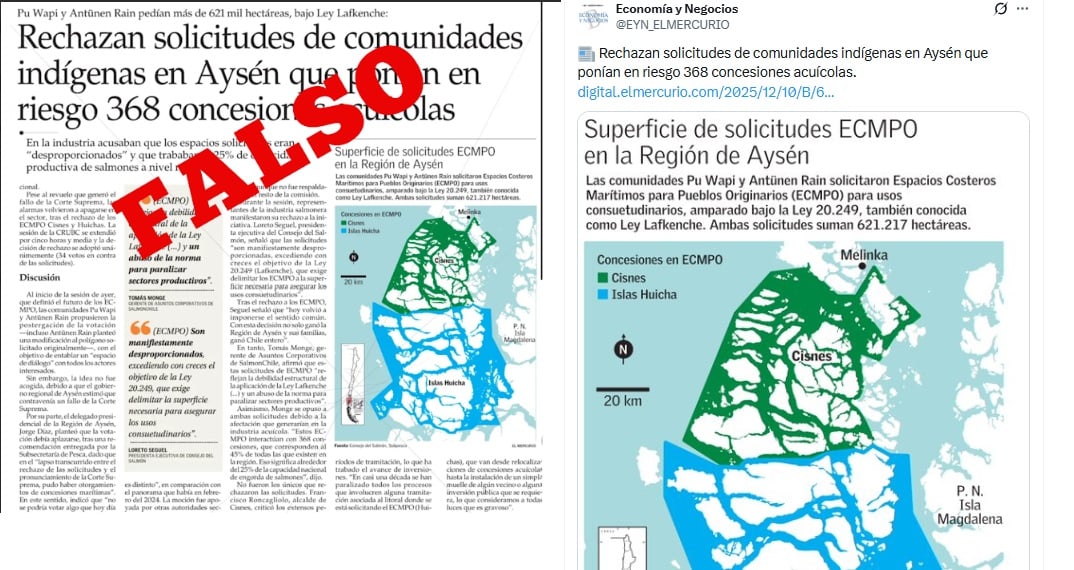
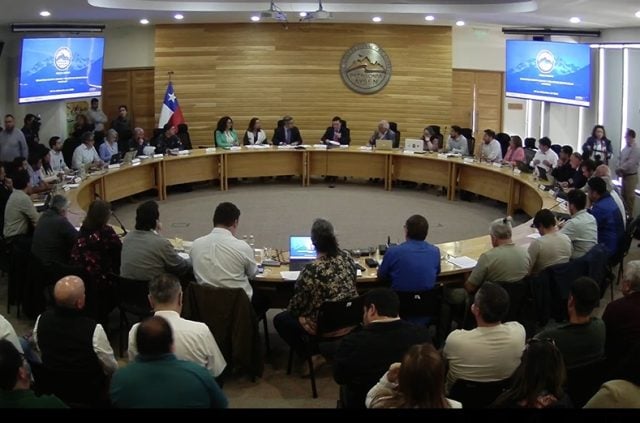
In an act deemed a defiance of justice and under intense pressure from the salmon farming industry, the Regional Coastal Use Commission (CRUBC) of Aysén rejected for the second time on December 9, 2025, the requests for Maritime Coastal Space of Indigenous Peoples (ECMPO) for Islas Huichas and Cisnes (Weywen Wapi), submitted over seven years ago by the Indigenous communities of Antünen Rain and Pu Wapi, respectively. This decision comes less than a month after the Supreme Court ordered a review of the process in November 2025, acknowledging that the initial rejection (February 2024) was discriminatory, lacked sufficient technical justification, and violated the principle of equality.
See also / Aysén: Second Rejection of Coastal Space Requests from Indigenous Communities Ignoring Supreme Court Ruling and Conciliation Proposals
Despite the judicial mandate to issue a well-founded resolution and to reconcile uses, the CRUBC proceeded with a direct rejection, disregarding substantial proposals from the communities. In an act of goodwill, they had proposed on December 7 a significant reduction of areas accredited by CONADI: from 393,772 hectares to 214,523 for Islas Huichas, and from over 227,000 to 105,563 hectares for Cisnes, aiming to address overlaps with aquaculture concessions.
You may be interested / Communities and Experts Warn of Risks with Modification to Lafkenche Law: «The Problem is Not Legislative, But Administrative»
The process was questioned even within the CRUBC, where several commissioners, including the Presidential Delegate and Provincial Delegates, expressed disagreement with the voting method or requested its postponement. The refusal of Regional Governor Marcelo Santana to establish a dialogue table formally requested on December 4 paved the way for the rejection vote, ignoring the spirit of the Lafkenche Law (No. 20,249) that seeks to protect customary uses.
Related / Moratorium on the Lafkenche Law or on Salmon Expansion? The Intense Conflict of Aquaculture Companies in Patagonia
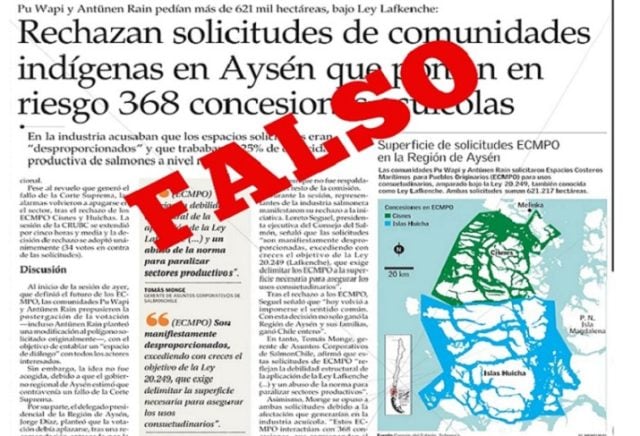
Meanwhile, media coverage of the case has come under harsh criticism for misinformation. Referring to the headline from El Mercurio on December 10: «Requests from Indigenous Communities in Aysén that Risked 368 Aquaculture Concessions Rejected», geographer and territorial planning advisor Álvaro Montaña stated firmly:
«It’s a Distortion, a False Report»
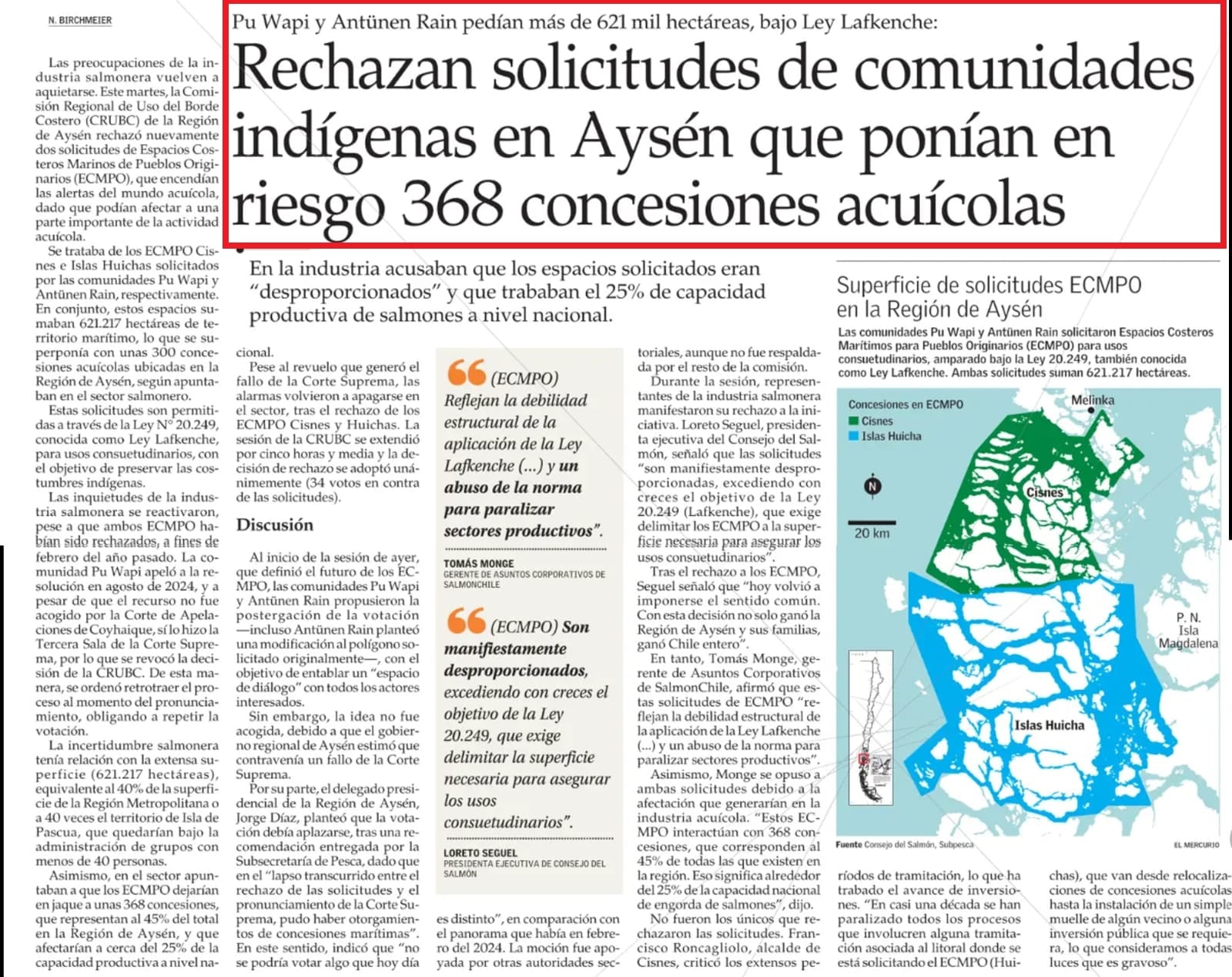
Authorities refute El Mercurio’s report on the request for Coastal Spaces of Aysén communities. Álvaro Montaña, a geographer and advisor on territorial planning initiatives, mapping, and biocultural heritage conservation/defense in Chiloé and Patagonia, explained: «Article 7 of Law 20,249, which creates the maritime coastal spaces for Indigenous Peoples, clearly establishes that these cannot be granted or even processed over concessions and maritime destinations, aquaculture concessions, port works, mussel seed collectors, salmon farms, or areas of benthic resource management for fishing unions. Coastal spaces cannot be granted over these private management frameworks of the sea, thus it is absolutely false that the declaration of maritime coastal spaces of Indigenous peoples affects employment-related activities linked to artisanal fishing or aquaculture of seaweeds, fish, or mussels, as is the case here in southern Chile.»
Related / Demand from the Salmon Sector to End Attacks Against Coastal Communities: «They Threaten Integrity»
Montaña added: «This is misinformation by the media; a distortion, fake news, as the designation of an expo does not influence, nor can it affect, the operations for farming commercially important species.»
Act of Defiance
The communities have denounced the act as a defiance and are considering new legal actions.
Related / Lies and Truths About the Lafkenche Law: A Critical Analysis by Geography Experts
Nelson Millatureo, President of the Antünen Rain Community, stated in a recent publication: «The vote in the CRUBC is a democratic test: it shows whether the state is willing to comply with its own regulations.»
Lawyer Felipe Guerra from the Citizen Observatory stated that the decision “is illegal and constitutes a blatant defiance of what was resolved by the Supreme Court,” ignoring the delimitation proposals and repeating an unfounded rejection.
Related Information
Denounce Misinformation and Racism Against Marine Coastal Spaces of Lafkenche Law
Chiloé Communities Emphasize Collective Governance Under Lafkenche Law: ‘The Sea Has No Owners and Will Not Have Them’
Allegations of Deliberate Delays in Admission of Coastal Spaces Under Lafkenche Law: Focus on Subpesca
New Assault on Indigenous Coastal Rights Following Salmon Industry Pressure: Rejection of Kawésqar Community Request
5 Salmon Industry Conflicts: Key Insights into Its Impact on Southern Chile’s Coasts
Relacionados

Tras fallo histórico, Gobernador de Aysén convoca a votación sobre espacios costeros a espalda de las comunidades
Hace 2 meses