Original article: Jaime Guzmán en el Foro de Madrid
By Bernardo Jorquera Leyton, social anthropologist and member of the La Florida Solidaria Movement
Can the right-wing heirs of Jaime Guzmán be classified as «radical right»?
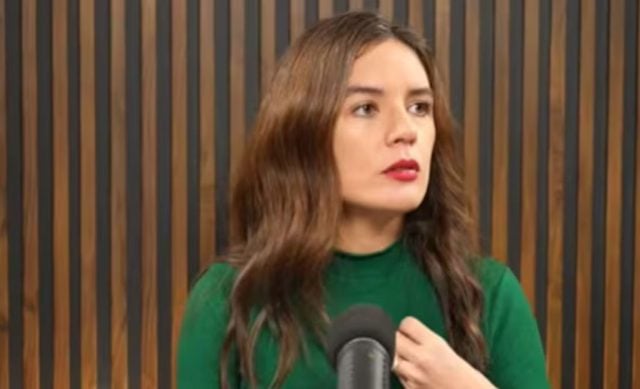
In the podcast “Animales Políticos,” Pablo Ortúzar, a prominent young intellectual on the right, challenged the categorization of José Antonio Kast and the Republican Party, arguing that the current president’s ideas align closely with what Kast considers the “original ideas of the UDI” and are therefore distinct from this label.
With a hint of irony and perhaps a touch of decolonial sentiment, he critiqued the reliance on Dutch political scientist Cas Mudde—an authority on the study of the far-right—to understand the emergence of the Republican Party within the executive branch.
By doing so, Ortúzar indirectly sought to provoke debate with scholars like Cristóbal Rovira or Lisa Zanotti, who have categorized the current president’s political variant as “radical populist right,” arguing that they misapply foreign concepts to explain a unique phenomenon of the Chilean right.
Ortúzar raises a valid point; the branch of the right descended from Guzmán did not originate with figures like Orbán, Salvini, or Abascal, nor with the likes of Milei or Bukele. To view it solely as an imported reflection of phenomena from the new right would be a reductionism that does not aid in understanding.
However, recognizing its historical and ideological sediment does not render it unclassifiable or a unique phenomenon, especially in light of current events. It remains essential to consider the debates regarding Mudde’s concept of populism, which critics like Enzo Traverso and Steven Forti offer alternative perspectives on.
To categorize this ideology, beyond mere labels, we should examine the political practice of its founder.
If, as Ortúzar claims, Kast broke away from the UDI to pursue the “original” spirit of Guzmán, then how should we define Guzmán? According to Daniel Mansuy, to encapsulate the founder of the UDI in a single phrase, Jaime Guzmán was above all an anti-communist.
In this regard, Guzmán combined national-Catholicism from his youth in the mid-1960s with a deep economic liberalism that emerged in the early 1980s, particularly influenced by his association with economists from the Chicago School during the dictatorship.
Following Isabel Jara, Guzmán was inspired by Osvaldo Lira as a primary intellectual reference, who drew from Spanish traditionalist sources such as Donoso Cortés and Vázquez de Mella. These thinkers were profoundly critical of liberal modernity, universal suffrage, and the party system, emphasizing that political liberalism distorted the relationship between authority and Christian order.
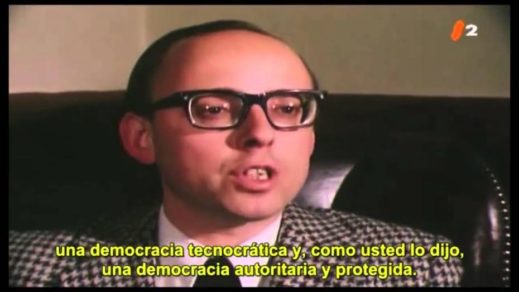
Indeed, Guzmán, in the principles laid out by the Military Junta, appealed to the essence of this traditionalism, advocating for a political model independent of party systems and emphasizing intermediate bodies and an authoritarian, impersonal government.
Moreover, around 1979, he justified the reforms enforced by the dictatorship by referencing what Vázquez de Mella termed the “universal suffrage of the centuries,” implying that power is a sacred entity rooted in Catholic tradition, divorced from popular voting.
According to Mansuy, from the 1980s onward, Guzmán shifted his stance by allying with the “Chicago Boys,” where this national-Catholic traditionalism fused with deep economic liberalism because, above all, Guzmán was an anti-communist. Thus, despite a tension with liberalism stemming from his Catholic tradition, his political position was shaped by the bifurcation presented by the Cold War, necessitating a flexible heterodoxy to embrace both traditionalism and free-market ideas.
Mansuy does not view this alignment as philosophical sophistication but as an extremely pragmatic action, where subsidiarity shifts away from intermediate bodies and an organic understanding of society, and instead focuses on the individual’s importance against the State.
As Mansuy states, Guzmán was not a philosopher; he was a politician who did not aim to reconcile corporatism with neoliberalism into a coherent philosophical-political system.
Thus, returning to Ortúzar’s initial question of what Guzmán represents, we might answer by adding to Mansuy’s characterization of him as an anti-communist: He was a pragmatist who adeptly adapted his deep national-Catholic convictions to ideologies starkly different from them, such as radical free-market ideas.
In this context, Cas Mudde, within the categorical umbrella of the far-right, distinguishes between extreme right and radical populist right. The latter is defined by Mudde through concrete characteristics such as authoritarianism, nativism, and populism, indicating that it is not necessarily defined by specific ideological doctrines—a point where Ortúzar might argue there is some exceptionalism.
These characteristics can intertwine with very different ideological elements, as seen in the European radical right parties advocating for protectionist economic measures, while in other scenarios they embrace neoliberal ideas. If Guzmán represented pragmatism at the peak of his influence, it is more valuable to judge him based on his political practice than his theoretical doctrine.
In particular, Rovira and Zanotti do not misapply categories without acknowledging the unique particulars and history of the Chilean right; they recognize that while European radical right emphasizes nativism, Kast and the Republican Party more prominently prioritize authoritarianism rooted in a nostalgia for the Pinochet dictatorship. Thus, they are a party that carries forth the regime’s legacy and inherits the authoritarianism of “protected democracy” and constitutional locks.
In this way, just as Guzmán found support among Chicago economists to combat communism, Kast now seeks backing in international radical right networks like the “Political Network for Values” (PNfV), a global conservative network once led by the Republican founder, to confront the new cultural and political battles traditionalism and neoliberalism face today against leftist, progressive, and feminist forces.
Finally, let’s consider the founder of the Madrid Forum: VOX. The party led by Santiago Abascal has traversed a path similar to President Kast’s. They formed as a party through a split from traditional right—specifically, from the Spanish Popular Party—conducting an operation very akin to Guzmán’s past actions, which Kast continues today: reconciling Catholic traditionalism with neoliberalism.
Gilberto Aranda and Rodrigo Escribano analyze VOX as a “hybridization” of Spanish conservatism, intertwining anti-liberal nationalism with modern liberal conservatism, which they define as “post-Franco populism.”
In this line, it echoes what Rovira and Zanotti observe about the Republican Party: a radical right marked by nostalgia for a previous authoritarian period. Thus, two political formations emerge from this global radical right narrative, invoking an authoritarian and conservative past while also adopting a distinctly neoliberal stance.
In conclusion, the arrival of the Madrid Forum in Chile represents a significant moment of continuity that crystallizes the pragmatic and heterodox political practice that honors Guzmán’s legacy, as reflected in José Antonio Kast’s international ties with the radical right on a global scale.
This pragmatism has led Kast to share spaces with organizations such as VOX, a staunch defender of Ukraine, alongside Viktor Orbán, Hungary’s former Prime Minister and a former ally of Putin in the heart of Europe.
Ultimately, the radical right—a category that Ortúzar questioned—is one of the new ideological and political foundations under which Kast and the Republican Party continue with the pragmatic and heterodox guidance that once characterized the revered founder of the UDI, Jaime Guzmán Errázuriz.
Bernardo Jorquera Leyton
Obtén tu Pasaporte y apoya a El Ciudadano
Elimina la publicidad, accede a contenido exclusivo y sé parte de la comunidad.
Cancela en cualquier momento · Sin permanencia