Original article: Buscar trabajo, arriesgar la vida: La precariedad que sostiene el éxito agroexportador
By
Nicolás Arraño, Assistant Researcher, Migration Studies Center-USACH
Camila Dinamarca, Anthropologist, National Association of Rural and Indigenous Women
José Tomás Huerta, Anthropologist
Fabián Frey, Sociologist
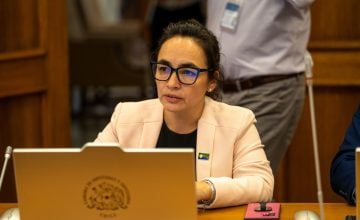
The tragic death of Oshin Santos Santos (pictured), a Bolivian seasonal worker who passed away on October 24 in Melipilla, has ignited calls for justice regarding the systemic risks and vulnerabilities faced by laborers in the export fruit industry.
According to information released by the prosecution and reported in the media, the suspect allegedly deceived her with a job offer to lure her into his vehicle.
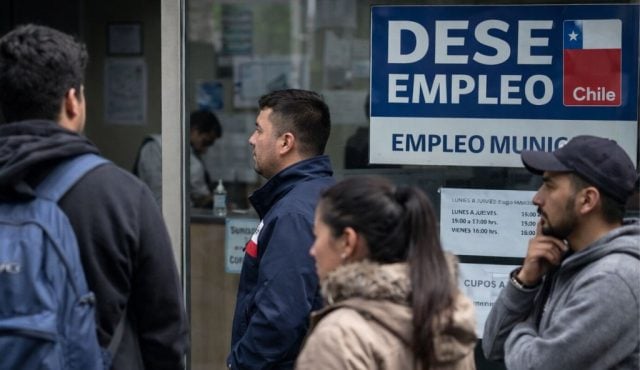
As contractor vans picking up workers for various job sites have become a daily routine, the danger of getting into an unfamiliar vehicle in response to a job offer is increasingly normalized, even when information about the job or the offeror is scant.
From inside the vehicle, Oshin attempted to flee amid a reported sexual assault, suffering injuries that ultimately led to her death.
While the criminal investigation must clarify the responsibilities surrounding Oshin’s death, public outrage emphasizes the need to address the systemic precarity and lack of protections that characterize agricultural hiring practices, which can no longer be contingent upon another tragedy.
Melipilla plays a critical role in this discussion, having emerged as a focal point for labor markets within the export fruit valley, distributing workforce labor across various regions.
Nestled in the Maipo basin and interconnected with Santiago and San Antonio via Route 78 and the Fruit Road, Melipilla is strategically placed to connect production zones with ports.
Within this geography, the city offers housing options, familial networks, and key locations such as the famous San Serapio Chapel or the areas near the Municipal Cemetery, where transport facilitates movement to the Metropolitan, Valparaíso, O’Higgins, and Maule regions, intertwining commodity circulation with the migration journeys of those who harvest and process them.
Surrounding this market is the largest concentration of Bolivian population in central and southern Chile, with nearly five thousand individuals registered in the commune in 2024, of which an astonishing 87% are working in agriculture, according to census data.
The intensity of this integration highlights how agricultural employment also shapes access to housing, rest, and family life—a connection noted by the Foundation for Poverty Overcoming back in 2019, which documented issues of precarity, informality, and abuse in the province.
Thus, Oshin’s death raises crucial questions about a persistent issue that extends beyond isolated cases of employers or specific job sites and pertains broadly to the labor relations framework that underpins the fruit and agro-exporting sectors in the country.
Melipilla’s agricultural centrality is part of a model that has established Chile as an agro-export powerhouse, evidenced by the fact that the nation accounted for 59.6% of the global value of fresh cherry exports in 2025, while also leading exports of fresh and dried plums and ranking among the top ten in the export of several agricultural products, according to SUBREI.
During the dictatorship, agrarian counter-reform and repression dismantled peasant organizations, displacing thousands of families from estates and excluding them from land allocations, which comprised barely a third of the properties originally reformed before 1973.
The privatization of state-owned enterprises, the redirection or elimination of supporting institutions for peasant production and marketing, several measures of dislocation, and water privatization fueled the decampesinization and concentration of resources and capital in the emerging agro-export sector, leading to an expansion of fruit cultivation that reoriented territories toward external markets and replaced permanent jobs with seasonal employment.
The Labor Plan of 1979 also dismantled grassroots peasant unionism and limited collective bargaining to the enterprise level, resulting in a modernization that combined investments and technology with a loss of workers’ power.
In Melipilla province, this restructuring intensified in the 1990s, as the fruit and agro-industrial expansion began to encroach on the space of peasant agriculture and alter the practices of production, labor, and habitation.
Thus, the cultivation of grains, vegetables, and legumes has drastically reduced, while Melipilla has become home to the largest area of walnut cultivation in the country, along with thousands of hectares dedicated to table grapes, avocados, cherries, and citrus fruits, marking a territory increasingly integrated into international markets at the expense of traditional agricultural practices.
This transformation aids in understanding the configuration of a labor market organized around the seasonal needs of companies and the movement of crews between farms and regions, whereby Melipilla operates as a base for residence, hiring, and transportation to job sites distributed throughout the central valley.
With the massive influx of immigrants to engage in agricultural work, according to the censuses, Melipilla saw its foreign population grow from just 35 individuals in 2002 to 3,402 in 2017 and 11,069 in 2024.
The integration of Bolivian seasonal workers has developed within this labor geography, facilitated by family networks and acquaintances that help newcomers find accommodation and initial work contacts, while also intertwining with intermediaries controlling access to job opportunities.
Individuals from this market arrive seeking to pay debts, finance their education, or support their children, alongside those attempting to reorganize their lives after becoming widows or fleeing domestic violence— for whom the earnings from harvesting can exceed what is available in Bolivia, albeit under precarious conditions.
Consequently, the urgency of earning income diminishes the ability to reject abusive conditions, transforming the migratory needs into an advantage for those with access to this labor force.
The fragility of this integration is reflected in national sector statistics, where ENCLA 2023 reports a 44.2% prevalence of temporary contracts in agriculture, livestock, forestry, and fishing, while a National Employment Survey analysis found that 53% of Bolivian workers were without signed contracts during November 2024 to January 2025.
This instability is exacerbated by insufficient incomes, as the SOL Foundation estimates (based on CASEN 2024) that in agriculture, livestock, and forestry, half of the employed individuals earned less than $500,000 net per month, with seven out of ten not exceeding $600,000.
For those commuting from the city to the farms, the effort might commence as early as 2:30 AM, before boarding transports that leave at 3:00 AM and travel for up to two or three hours—sometimes as far as Curicó—adding non-paid travel time and associated risks from overcrowded vehicles and safety violations, a situation that has already cost the lives of hundreds of seasonal workers in recent years.
Upon arrival, the piece-rate pay means income depends on how much can be harvested and on factors beyond the worker’s control, such as fruit availability, accessibility, weather, or physical capacity, leading to situations where high-paying job offers result in harvesting previously picked trees, yielding lower-than-expected earnings.
If rain interrupts work for days or weeks, the obligation to cover rent, food, and remittances intensifies pressure to maximize available work days, so maintaining a steady income may require extending work hours at the expense of rest and health.
Under these circumstances, the contractor often centralizes vital decisions for survival, as they not only mediate access to job opportunities but also organize transportation, manage payments, and sometimes provide lodging or retain passports, creating dependencies that extend beyond employment and can result in forced labor practices.
These scenarios include families renting rooms, others building homes on occupied land, and staying in contractor camps, where job security can also dictate housing stability.
Demanding payment or discussing working hours then incurs costs that exceed the daily wage and limits options to change employers, while companies benefit from arrangements managed by intermediaries.
The uncertainty surrounding migratory status deepens this subordination, as evidenced by lower wages associated with lacking documentation and warnings that someone without legal status could not participate in a strike.
Moreover, the processing of paperwork acts as both a collection and retention mechanism, where the vulnerability of irregular migrants and the need to regularize can be exploited within a framework that conditions income, housing, and job continuity.
The repercussions also affect health, as physical strain combines with cold, humidity, and exposure to sun and pesticides—resulting in a tragic pesticide poisoning death of a 25-year-old Bolivian worker in Melipilla last November.
Meanwhile, inadequate access to bathrooms and water in some job sites forces workers to postpone basic needs and complicates hygiene practices. In 2024, agriculture and fishing reported 3.3 accidents per hundred people protected by mutualities, while agriculture, livestock, hunting, and forestry accounted for 202 professional illnesses with work absences or permanent disabilities—figures that exclude the ISL and unreported or unrecognized damages.
This risk jeopardizes workers’ livelihoods, illustrated by a seasonal worker’s account of being sent home without that day’s pay after injuring her knee, to experiences of individuals who went weeks or months without income due to illness.
Although packing jobs provide an alternative with contracts, social security coverage, and greater stability in some cases, this protection is also accompanied by long hours and fatigue that allow for little time to recuperate and rest.
For women, this exhaustion intertwines with caregiving and supporting families split between Chile and Bolivia, in a context where a national CASEN 2022 analysis estimated multidimensional poverty at 51.7% among migrant women in temporary agricultural occupations.
Among migrant Bolivians are Quechua and Aymara speakers, students, and workers from other trades, whose trajectories illustrate how sustaining a family can amplify hardship, while racist insults and stereotypes portray Bolivians as people who endure more and complain less, framing these struggles as a natural disposition for sacrifice.
Defending collective interests is challenging when the stakes for claiming jobs and remaining in the country are high, and the weakness of organization reinforces that dependence, as shown by the INE measurement which, by December 2024, estimated union membership at 2.2% in agriculture and fishing compared to an average of 18% across all sectors, emerging as the sector with the lowest unionization rate in the country.
Furthermore, seasonal workers negotiate through special procedures, lacking the legal protections of collective bargaining rights or the right to strike inherent to regulated agreements, which limits their ability to contest employment conditions.
In Melipilla, there have been work stoppages in response to abuses, but maintaining these actions proves difficult due to fears of losing wages or being replaced, while piece-rate pay fragments solidarity as those in urgent need of work may clash with those needing to halt labor.
This asymmetry becomes particularly evident when observing employers’ capacity to push for public responses to their needs, as occurred in April 2025, when the National Society of Agriculture signed an agreement with migrations to integrate Bolivian workers into the sector.
In July 2026, the government announced it was reviewing a proposal from the SNA to streamline permits and extend seasonal workers’ annual stay from six to ten months—hiring agendas that should also translate into labor guarantees, social security, and effective organizational possibilities for the workers.
Between the labor trajectories of thousands of Bolivians contributing years of workforce to the agro-export sector and Oshin’s tragic death, lies a narrative of negligence for which authorities and companies must be held accountable, as allowing the ongoing nature of foundational issues to depend upon another tragedy is unacceptable.
Enforcing regulations with appropriate institutional tools upon employers and intermediaries, ensuring social security, and strengthening organization and collective bargaining, are demands facing a model that shifts the costs of export success onto worker families while restricting their capacity to contest living and working conditions.
Justice for Oshin must include actions against this structural precarity, matched by the same responsiveness that is mobilized to secure labor for agro-export.
Sources and References
– Dirección del Trabajo (2025). ENCLA 2023. Results Report.
– Durán, Gonzalo y Kremerman, Marco (2026). Chile’s Low Wages. An Analysis of the CASEN 2024 Survey. SOL Foundation.
– Durán, Andrés; Mateluna, Bárbara; Niculcar, David; Nilo, Joaquín (2026). Unionization Rate by Economic Activity: An Integrated Approach of Administrative Records and Surveys. INE.
– Frey Rioja, F. (2024). Labor Trajectories of Bolivian Agricultural Seasonal Workers Residing in Melipilla [Thesis for a sociology degree, University of Chile].
– Fundación Superación de la Pobreza (2019). Labor Migration in the Province of Melipilla, Metropolitan Region. Territorial Diagnosis of Agricultural Integration, Informality, Employment Conditions, and Labor Abuses.
– Huerta Leng, J. T. (2024). The «Free Time» of Migrant Seasonal Agricultural Workers and its Commodification in Leisure: The Case of Bolivian Residents in Melipilla [Undergraduate Thesis, Universidad Academia de Humanismo Cristiano]
– Instituto Nacional de Estadísticas (2024). 2024 Population and Housing Census.
– SERMIG, April 16, 2025. Agreement with the National Society of Agriculture to Integrate Bolivian Workers into the Chilean Agricultural Sector.
– SERMIG, July 13, 2026. SERMIG and Agriculture Seek Visa Facilitation for Seasonal Workers. Reports on the SNA proposal and the suggested extension of six to ten months for annual stays. The announcement describes a modification in preparation.
– SUBREI, May 30, 2026. Chile Was the Leading Exporter of 25 Products in 2025. Global Leadership and Participation in Fruit Exports.
– SUSESO (2025). Annual Report on Safety and Health at Work 2024.
Obtén tu Pasaporte y apoya a El Ciudadano
Elimina la publicidad, accede a contenido exclusivo y sé parte de la comunidad.
Cancela en cualquier momento · Sin permanencia