Original article: Lafamiliateatro inició proyecto de trayectoria con exitosa gestión internacional y dice presente en Festival Teatro a Mil
Lafamiliateatro Launches New Pathways in International Theatre with Presence at Teatro a Mil Festival
With a significant new internationalization process complementing its 22 years of continuous work, the Lafamiliateatro company affirms its place in the annals of Chilean theatre and reinforces the recent recognition granted by the Ministry of Cultures, Arts and Heritage through the awarding of the Performing Arts Trajectory Fund.
According to Eduardo Luna, founder and co-director of the theatre group, «The launch of this Management Plan comes at a pivotal moment for the Chilean cultural sector. In a landscape marked by uncertainty and structural challenges, the Performing Arts Trajectory Fund holds strategic value by enabling the continuity of long-term artistic processes, strengthening community ties, and projecting creation beyond current circumstances.»
«For Lafamiliateatro, this recognition not only supports an established trajectory but also highlights the importance of maintaining public policies that view art and culture as fundamental contributions to democratic life, collective memory, and the cultural development of the country,» Luna added.
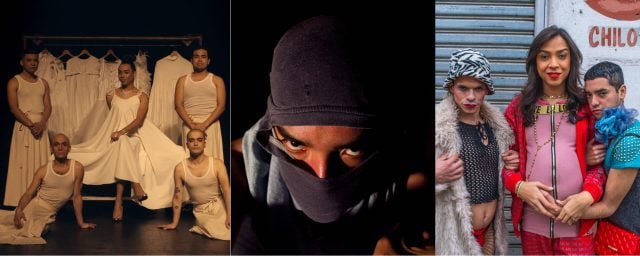
Throughout its journey, the company has developed a poetic deeply tied to memory, human rights, and the ethics of care, maintaining a sustained dialogue with audiences in Chile and around the world.
In this context, the play Painecur continues to expand its territorial reach, reaffirming the relevance of a dramaturgy that critically interrogates the present through the lens of history and memory.
Last October, this iconic national group launched its trajectory project with a successful international tour of Painecur in Ecuador, further establishing its place as one of the most significant dramaturgies in contemporary Chilean theatre.
The tour included performances at prominent venues and festivals in the country: the Teatro Nacional Sucre in Quito; the Teatro Pumapungo in Cuenca, as part of the Festival Escenarios del Mundo; the International Theatre Festival in Manta at the Centro de Artes La Trinchera; and the International Festival FIARTES-G in Guayaquil at the Teatro Casa Zona Escena.
In total, the performances attracted over 1,700 spectators, while three training workshops conducted by the company engaged 40 participants, strengthening artistic and educational exchanges with local creators.
The Ecuador tour was made possible thanks to support from various Chilean entities including the Cultural Corporation of Puente Alto, the Museum of Memory and Human Rights, the Cultural Corporation of Recoleta, and the Cultural Corporation of Vicuña; and in Ecuador, from the Chilean Embassy, Production Company Sendera, the Teatro Nacional Sucre, Teatro Patio de Comedias, the Festival Escenarios del Mundo in Cuenca, the Manta International Theatre Festival, and the International Festival FIARTES-G in Guayaquil.
This process of international circulation is the result of a network built through the Hecho en Chile International Festival, an event dedicated to performing arts directed and produced by the company, forming part of the actions of the Hecho en Chile Performing Arts Cooperative—a pioneering cooperative model in the national scenic sector.
This collaboration has facilitated the reactivation of international circulation of works after the pandemic and established new forms of collaboration between cultural institutions in Chile and Ecuador.
The aim of this associative strategy is to enable independent companies like Lafamiliateatro to engage on equal footing with national theatres, international festivals, and various cultural agents, creating a journey that transcends the artistic and manifests as a concrete exercise in cultural diplomacy and strengthening the regional scenic ecosystem.
This international management has promoted long-term Latin American scenic exchanges, strengthening international networks and enhancing the circulation of both Chilean performing arts in the region and Latin American productions in Chile.
For Lafamiliateatro and the Hecho en Chile International Festival, themes such as migration, memory, and human rights are not just responses to current events, but rather integral to a sustained concern. The festival’s curatorial line—now in its sixth installment—has emphasized dialogue with Latin America, recognizing that social fractures, forced displacements, and struggles for dignity and justice permeate the region as a common body.
Continuing this work, following its recent tour in Ecuador, Lafamiliateatro hosted the play “Esperando al Coyot” in Chile, reinforcing its commitment to an interconnected, critical, and dynamic Latin American scene.
The play was presented on December 4 in a special performance for students at the Parque Cultural de Valparaíso, followed by a free public performance on December 7 at the Casa de la Cultura Víctor Jara Auditorium in La Cisterna.
Ultimately, the production was showcased on December 10 at the Teatro del Centro Cultural de Puente Alto, a municipality that holds 3.1% of the foreign resident population in the Metropolitan Region, also featuring a free public performance.
The tour also included a workshop at the Theatre School of the AIEP Professional Institute, which was a practical lab for designing physical scores based on psychological tools for actors.
Led by Juan Andrade—a playwright, director, and renowned international curator—participants explored how motivation, emotional state, stage tasks, and interpersonal relationships organize action on stage. The workshop included the creation of small scores and training the eye to analyze and direct physical-motivational works.
Teatro a Mil
Looking ahead to 2026, Lafamiliateatro will kick off the year with performances at the Teatro a Mil International Festival, one of the most significant performing arts events worldwide.
With over 300 performances and a solid national and international track record, Painecur will participate in PLATEA 2026, the festival’s platform dedicated to promoting international circulation of performing arts.
This initiative aims to connect programmers with distributors, producers, and artists, strengthening networks, alliances, and opportunities for internationalization from Latin America to the world.
The company is preparing for this international encounter with performances that will feature surtitles in English and Portuguese, thanks to translations by Katherine Boyle (King’s College of London) and Sebastián Pinto.
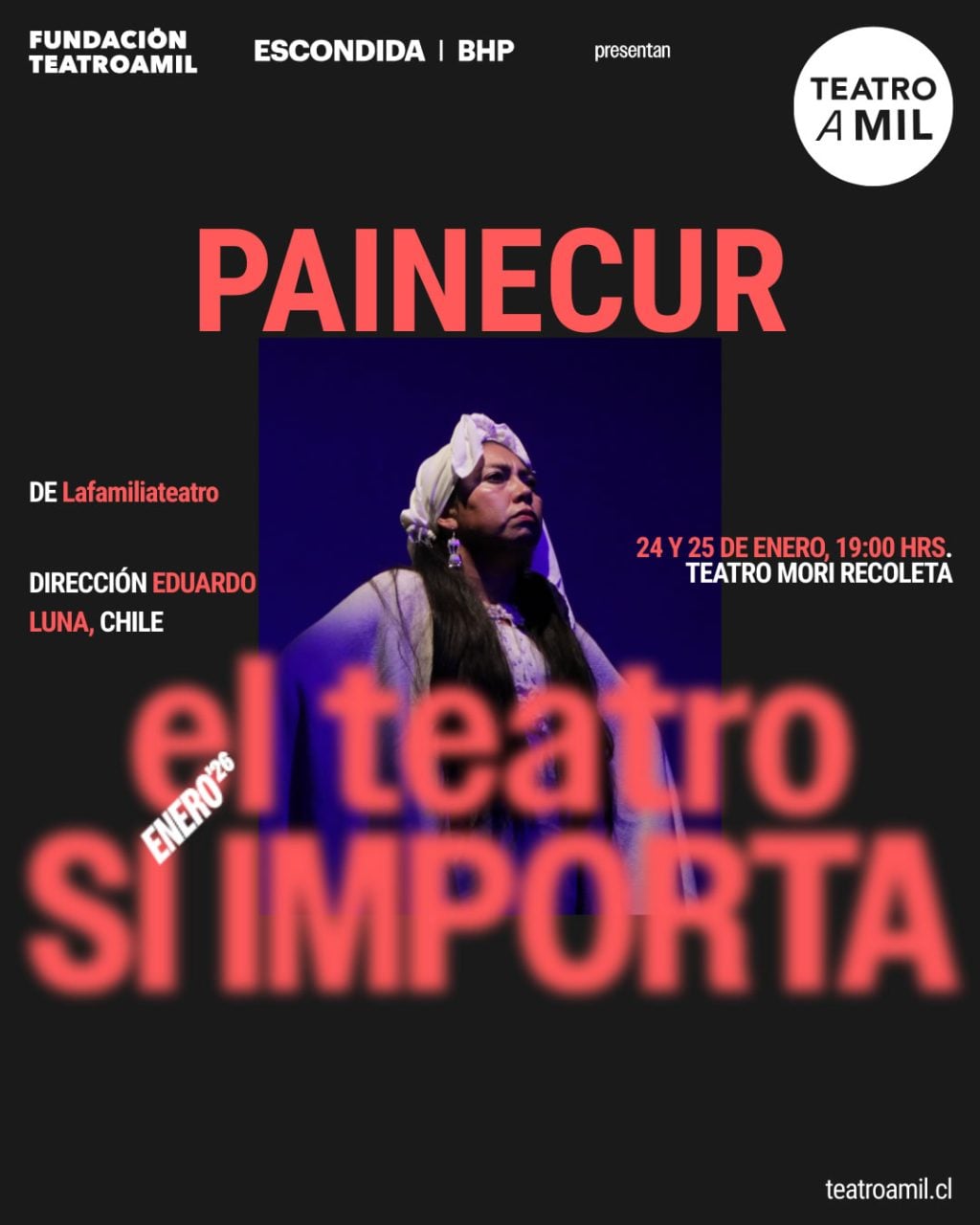
This emblematic production from the company will be performed on January 24 and 25 at 19:00 hrs at Teatro Mori Recoleta, located at Bellavista 77 (corner of Purísima). Tickets are available on the Teatro a Mil Festival website.
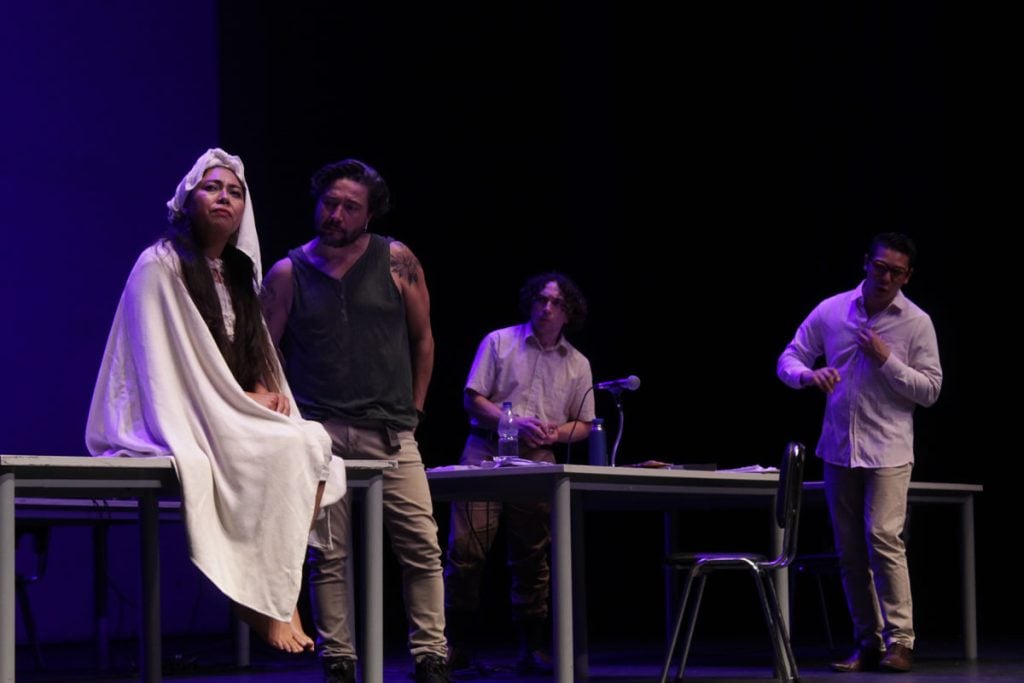
It’s noteworthy that “Painecur” has traveled through 14 of Chile’s 16 regions and has undergone internationalization processes in six countries across Latin America and Europe.
The play has received significant awards, including: the Juan Radrigán Prize for Best Dramaturgy; Best Cast at the 10th Contadores Awards; Best Dramaturgy Award from the Ministry of Cultures Literary Awards (2018); Audience Award at the FENTIC Festival in Calama (2019); and Best National Play at the 18th FINTDAZ Festival in Iquique (2025).
Founded in 2004, Lafamiliateatro has carved a unique path in Chilean theatre over its 21-year history.
Since its inception, it has dedicated itself to staging original dramaturgies that explore the recent historical memory of the country, addressing cases and events that directly challenge our identity and social fractures, opening critical reflections on the present from anthropological, political, and cultural perspectives.
Its productions—such as “Painecur,” “Levitas,” “Mauro,” and “Niña Astronauta”—have marked milestones in original creation and domestic and international circulation, consolidating the group as one of the most coherent and persistent voices in contemporary Chilean theatre.
This journey was recognized in 2025 with the award of the Performing Arts Companies Trajectory Fund, a distinction that incorporates Lafamiliateatro into a select group of companies that have made a sustained contribution to memory, creation, and community engagement across the territory.
Moreover, this recognition not only ensures continuity for its work but publicly validates the cultural and political impact of a company that, through independence and self-management, has enriched the Chilean repertoire, broadened access to historically excluded audiences, and reinforced the notion of theatre as a collective space for resistance, dialogue, and care.
Meanwhile, the Hecho en Chile International Festival is an event that articulates contemporary creation, community, and international circulation from a cooperative and situated approach. It brings together Chilean and Latin American works from diverse disciplines in direct dialogue with the territories in which they are presented.
Driven by the Hecho en Chile Performing Arts Cooperative, this model promotes collaboration, solidarity networks, and collective decision-making. Its structure enables artists, communities, and programmers to engage in ethical and sustainable exchange practices.
The programming unfolds in various municipalities across the Metropolitan Region, working with cultural spaces, local organizations, and communities connected to the themes of each work. Each performance includes mediations, meetings, and experiences that deepen the relationship between art and territory.
The artistic selection is based on the diversity of languages, territorial relevance, social memory, gender perspective, inclusion of children and youth, and the quest for works that engage with contemporary urgencies through ethics of care, cooperation, and artistic depth.
A key element is the RUTA HECHO EN CHILE – Meeting with International Programmers. This market proposes a unique experience of connection between international programmers, artists, and communities. It is not a traditional market: it’s an immersive journey where each work is presented in its own territorial, social, and cultural context.
Since 2023, the Hecho en Chile Festival has built a unique model of exhibition and scenic circulation: a territorial festival that links works, communities, and programmers through cultural routes, mediations, and situated experiences.
The first editions established a “market-experience” in popular municipalities, subsequently expanding its work toward territories marked by memory, migration, and socio-environmental issues, and incorporating the Hecho en Chile Market for emerging companies.
Starting in 2024, the festival opened an international dimension with Brazil, integrating indigenous, Afro-Latin American, and gender-focused themes. In 2025, the Foco Chile in Brazil in collaboration with the University of São Paulo showcased the festival as a cultural cooperation agent in Latin America.
With over 6,000 attendees and dozens of programmers from Latin America and Europe, the festival has established itself as a space where art, territory, and community converge to enhance the circulation of Chilean theatre in dialogue with the world.
El Ciudadano