Original article: Lautaro Carmona, aborda las autocríticas tras el gobierno de Boric y los desafíos frente a Kast: “Se puede ser leal, pero no obsecuente”
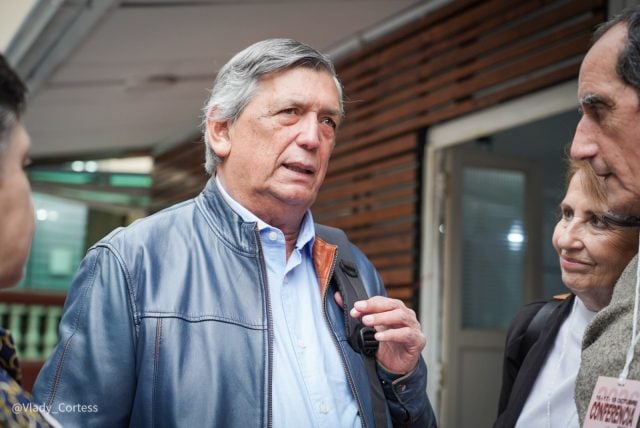
In a rapidly changing Chile, Lautaro Carmona, General Secretary of the Communist Party of Chile, confronts tough questions as he reflects on the self-criticism following Boric’s administration and the challenges posed by Kast: «loyalty doesn’t mean obsequiousness,» he states.
After the Communist Party’s National Conference, Carmona approaches this interview with a self-critique that doesn’t hide behind parliamentary minoritarianism or the safety of trenches. He acknowledges a disconnection with broad sectors of the populace, the challenges in communicating a transformative project, and the necessity to rebuild a direct connection with voters, including those who have lost faith.
In light of the rise of the far-right and the government of José Antonio Kast, Carmona highlights that the battle for sense-making is not confined to Congress but unfolds in the streets, unions, neighborhood councils, and everyday life. «Loyalty can exist without obsequiousness,» he asserts, marking a political distance without abandoning the coalition.
Under the slogan «Organize the strength, dispute the direction,» the Communist Party aims to transform their assessments into strategy, recovering initiative, prioritizing grassroots organization over electoral immediacy, and building majorities from concrete demands for employment, wages, health, and security. This conversation tackles issues of mistakes, loyalties, sovereignty, and the future—a dialogue with Lautaro Carmona to grasp how the transformative left intends to contend with the prevailing narratives at a time marked by the criminalization of social protests, budget cuts, and protection of the most vulnerable.
By Bruno Sommer Catalán
-Lautaro, the National Conference document of the Communist Party
No protection from being a parliamentary minority. It clearly states that «governing is not just about wielding power» and warns that without a transformative project, there is a risk of merely «managing the state and the existing model». In light of the experiences of the Frente Amplio and the Communist Party in La Moneda, what is the deepest strategic error the transformative left made upon assuming government, and how does the PC avoid repeating this logic in the future?
-As the Communist Party, we have an obligation to rigorously evaluate our participation in President Gabriel Boric’s government, as this is an experience in state tasks from which we must draw lessons and conclusions.
One of our main self-critiques involves the disconnection with significant sectors of the population, weaknesses in communicating our project, and a lack of a more recurrent, diverse, and direct bond with citizens. It is not enough to address those who share our ideas; we must also engage with those who think differently and understand their expectations.
We need to strengthen our mass party, enhance our communication policies, and reestablish a closer connection with the people. Only then can we take responsibility for our omissions, correct mistakes, and glean lessons for future challenges.
–You assert that loyalty to the government cannot mean renouncing the Communist Party’s own principles. How is this distinction practically enacted? Were there specific moments during Boric’s term when the PC felt it should have distanced itself more and did not?
-We understand that being part of a coalition implies a full commitment to the shared project, but that does not mean renouncing our own positions. Loyalty can coexist with independence.
During President Boric’s administration, we had significant differences, particularly in foreign policy regarding Cuba, as well as in issues related to workers’ rights. We raised these differences openly and responsibly, without triggering a crisis or questioning our membership in the government. In fact, we remained committed until the very end.
Discontent, the Far-Right, and the Battle for Meaning
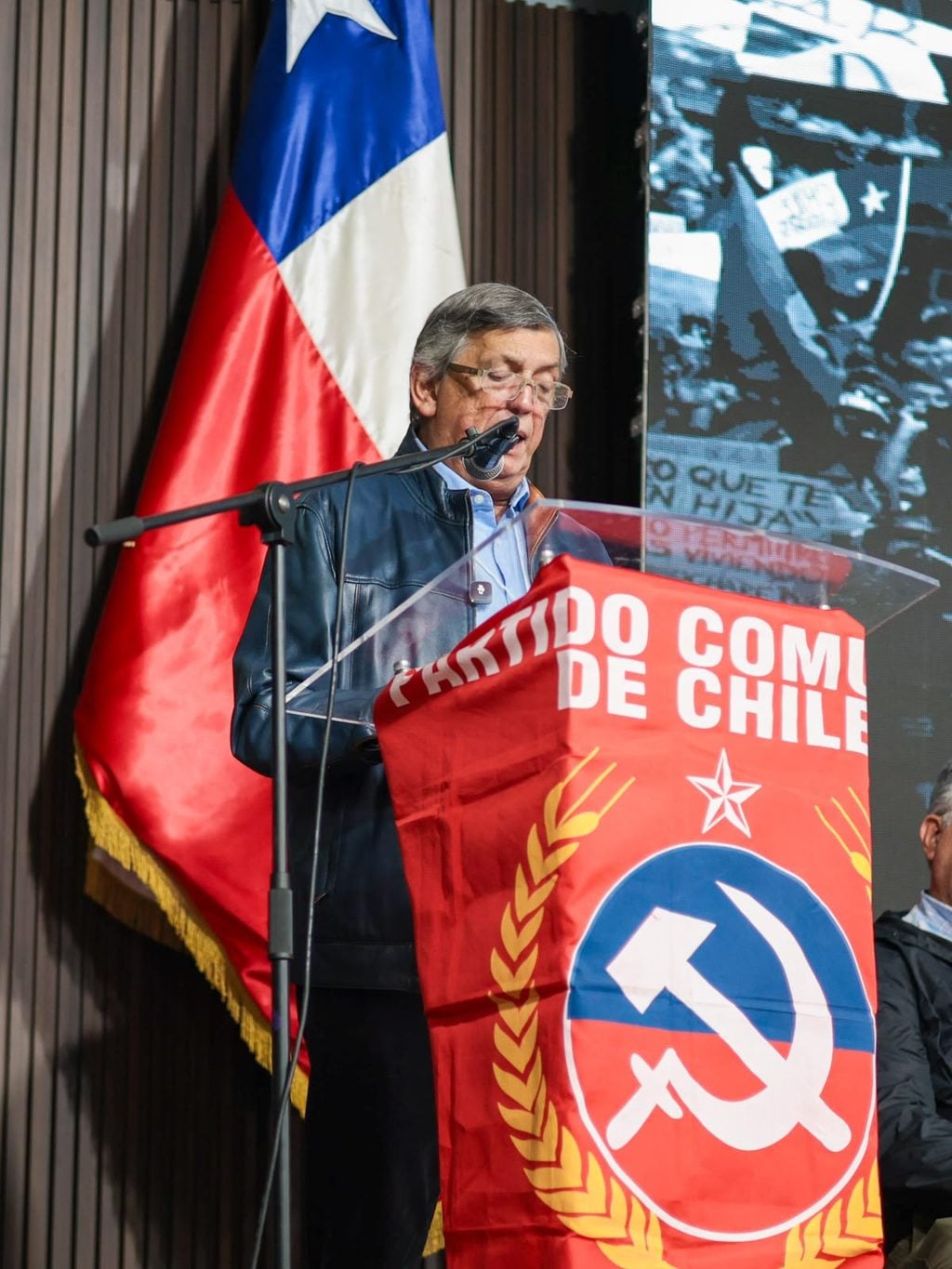
–The text asserts that votes for Kast came from workers who «voted out of punishment, fear, and neglect,» and that discontent does not automatically evolve into political awareness. Specifically, how does the PC plan to contest this common sense? How does one communicate with a worker who voted for the right without coming off as arrogant and telling them they are wrong?
-We cannot disqualify those who voted for a different option. As a Party, we must take responsibility and acknowledge that we were not able to reach a significant part of the population. For a long time, our policy focused on those who participated in elections, sidelining those who did not.
The challenge is to rebuild that connection, be more present in people’s everyday lives, and communicate directly with the populace. The exercise of government must not distance us from our social base or diminish our capacity to listen and understand their demands. Politics must serve everyone, voter or non-voter.
–The document strongly emphasizes that security «is a popular demand we will not abandon» and that we must approach it with a democratic and comprehensive proposal. How does that proposal differ from the right’s «iron fist» narrative in everyday discourse and in populated areas, where militarization is sometimes seen as an immediate solution?
-The difference lies in our proposal for a democratic security policy, with professional and strengthened police forces, not militarization. This requires unwavering respect for human rights, avoiding the criminalization of social mobilization, and involving municipalities, social organizations, and communities in crime prevention. Security must ensure peaceful coexistence for all and combat organized crime across all social sectors, not just in the most vulnerable areas.
Political Strategy: «Mass Work» vs. Elections
–The central slogan is «Organize the strength, dispute the direction,» prioritizing grassroots work over institutional efforts. In a political system that rewards electoral coalitions and the immediacy of positions, how does this organic approach to prioritizing action manifest practically? Does the Communist Party risk political isolation by prioritizing street advocacy over electoral agreements?
-There is no contradiction between territorial work and electoral participation. Our aim is to strengthen organization and popular engagement so that elections become an expression of that prior work. Political representation must be built from concrete commitments to the community’s needs, regardless of holding public office.
–The document outlines a «real tactical shift» and the need to «regain political and social initiative.» Given the current Chilean political landscape, what will be the first concrete and verifiable step the PC takes in the upcoming months to prove this Conference is not just a new diagnosis, but a real action plan?
-The first step will be to bring the PC’s proposals into the spaces where citizens organize, such as unions, neighborhood councils, and communities. The priority will be to address concrete demands like employment, wages, health, and security, with distinct proposals compared to the government. This work should also be shared and coordinated with other political forces in the opposition.
Program, Economy, and Development Model
-The Party proposes a new development model toward socialism, with public ownership in energy, mining, transportation, and food, along with a state that intervenes in markets. Knowing the resistance the terms «nationalization» or «socialism» evoke in moderate sectors, how will you build consensus to make this proposal mainstream? Do you believe that the economic crisis will make people more receptive to these measures?
Building majorities must start from the concrete needs of the population and their everyday experiences. It isn’t about rushing ahead but first deepening democracy, social justice, and transforming the current model. From that experience, the PC must develop a political pedagogy that explains its project and fosters greater proximity to citizens.
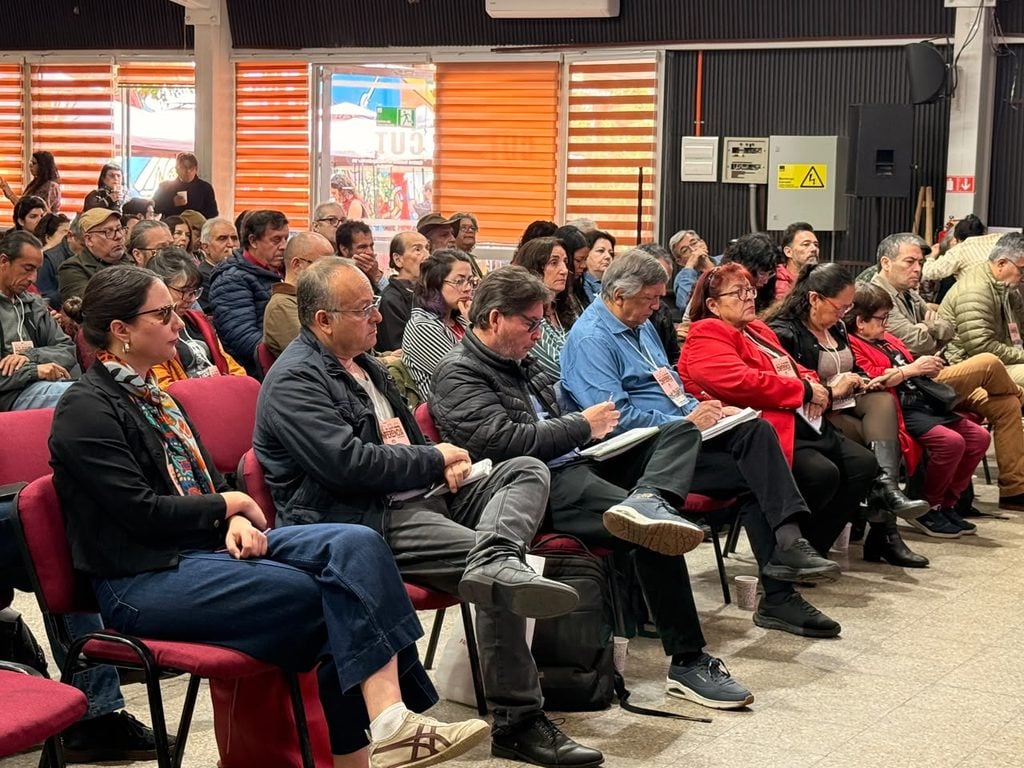
–In the section on urgent demands, you propose a detailed employment plan and a reactivating budget. However, the current government intends to reject it. What is the PC’s strategy to drive social mobilization around the budget, considering that citizens today seem more concerned about security and the cost of living than fiscal policy?
The strategy is to link the budget with the daily needs of the population, such as employment, wages, health, and cost of living. The PC advocates a reactivating budget with public investment that reinforces construction, small businesses, cooperatives, and the local economy. The aim is to demonstrate that there are concrete alternatives for improving income and stimulating the economy, beyond the government’s responses.
Internationalism and Sovereignty
The text denounces that Kast’s government has led Chile to a subordination to the U.S., mentioning the «Shield of the Americas» and Antarctica. In a multipolar world, how does the PC define national sovereignty today? Does it extend beyond the defense of natural resources and include a clear stance on free trade agreements or technological dependence (like artificial intelligence)? How does Chile ensure it remains a multipolar nation without becoming trapped in a single bloc?
National sovereignty is based on self-determination, integration, and respect among nations, free from subordination to any power or bloc. Chile must maintain trade and cooperation relations with various nations, leveraging complementarities to boost its own development. Trade agreements can be valid tools as long as they do not limit autonomy or the country’s strategic interests.
By Bruno Sommer
Obtén tu Pasaporte y apoya a El Ciudadano
Elimina la publicidad, accede a contenido exclusivo y sé parte de la comunidad.
Cancela en cualquier momento · Sin permanencia