Original article: «Nadie las obligó»: Marcel culpa a las AFP por pérdidas del Fondo E y plantea compensar a los afectados
Marcel Blames Pension Fund Managers for E Fund Losses and Advocates Compensation for Affected Members
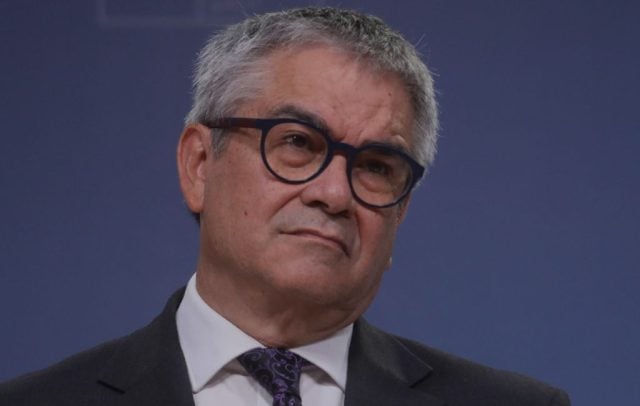
“It is clear that what has happened with the E Fund is related to decisions made by the fund managers. No one forced them to take all these derivative positions; no one compelled them to do so with the fund that is communicated to citizens and members as the least risky,” stated former Finance Minister and former Central Bank President, Mario Marcel.
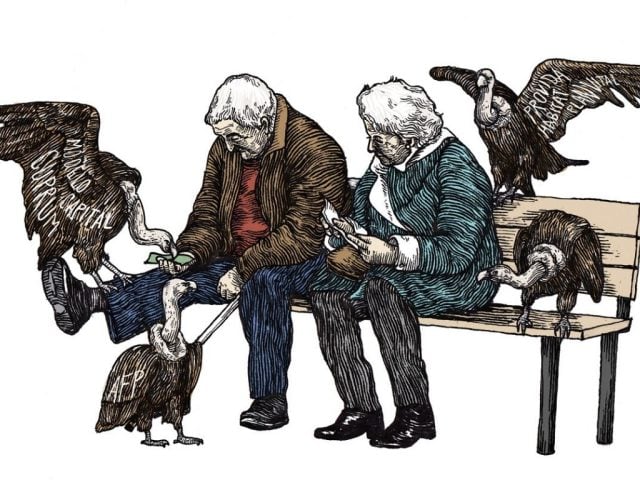
The ex-head of the treasury held the Pension Fund Managers (AFP) responsible for the massive losses recorded in that fund and proposed that the industry should consider a mechanism to compensate the most affected members.
In a discussion with Radio ADN, he indicated that the AFPs made their own investment decisions, including positions in interest rate derivatives, without any regulatory obligation compelling them to do so.
Pension funds have recorded losses of roughly USD 7.7 billion due to bets on U.S. rates, with an estimated impact exceeding USD 11 billion on retirement savings. The E Fund, regarded as the most conservative in the system and encompassing nearly 770,000 members, experienced a real decline of 10.4% between January and September 2026, marking its second worst performance on record.
In light of this critical scenario, the president of the AFP Association, León Fernández de Castro, asserted that there were no “crazy” decisions or operations outside the norm or the law regarding the fund’s management, while the managers argued that only 10% of E Fund members are over 60 years old and nearing retirement.
In Marcel’s view, these arguments are insufficient. He suggested that the pension system needs to protect each individual member, not just averages, and recalled that historically those who do not fit the model desired by the AFPs have been excluded.
“The pension system is one where we must consider each member, it’s not a matter of averages, and it has been common in the past for AFPs to make calculations excluding certain members who do not adapt to the model or the calculations they wish to perform,” he explained.
He noted that the situation highlights the behavior exhibited by AFPs in recent years and reminded listeners that both the Superintendency of Pensions and the Central Bank had warned about these risks before the losses materialized.
Additionally, he pointed out that the regulation limiting operations with derivatives was prepared months in advance, as rules regarding investment limits of the AFPs must go through a proposal from the Superintendency to the Technical Investment Council as well as a public consultation before being approved and published. He emphasized that the AFPs were aware of its implementation in October but did not take action.
For this reason, he expressed his rejection of attempts to hold the regulator or the government of former President Gabriel Boric responsible, as was done by Economy Minister Daniel Mas.
“These are measures adopted by the previous administration that were rectified when this government began; had it not been for that, the impact would have been far worse,” Mas indicated. In response, Marcel remarked that this type of statement only serves to “reduce the responsibility of the managers in something that was a result of their decisions”.
Apologies and Compensations
The ex-minister also referred to the implementation of mechanisms or formulas to compensate affected members and mentioned a letter from economist Sebastián Edwards, which highlighted the responsibility of the boards and urged fund managers to coordinate with one another to initiate campaigns.
“Perhaps they should also consider a way to compensate the most affected members, which, if they are as few as they claim, might not be so difficult,” he suggested.
He warned that the 10% of members nearing retirement are risking about 10% of their pension and indicated that, due to the pension reform increasing average amounts by around 25%, these members would lose approximately half of that improvement as a result of the decline in the E Fund.
“The problem is that, once a person retires, it is no longer reversible. It is different for younger members who can wait for market conditions to change and for the funds to recover,” he emphasized, according to CNN Chile.
In this regard, he urged fund managers to provide explanations and apologies, as well as to explore alternatives that enable compensation for the most harmed members.
In his view, the AFPs should start by offering explanations and apologies and then assess whether they can generate any compensation proposal.
Projects to Force AFPs to Compensate for Massive Losses
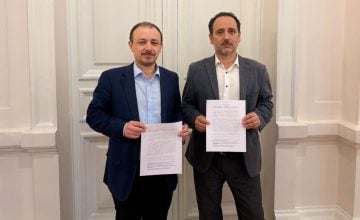
Former Minister Mario Marcel was asked about legislative initiatives aimed at modifying the commission charges or mandating managers to return the losses, such as the proposed law “Return the Money” presented by Senator Daniel Núñez (PC) and Congressman Luis Cuello (PC), which stipulates that AFPs must compensate members of the E Fund who incurred losses between January and September 2026 within a maximum of one year from the law’s publication, returning the difference of their savings adjusted according to the CPI, especially to protect those nearing retirement.
Regarding this, the former finance minister indicated that the provisions established within the pension reform approved in January 2025 would be reviewed and recalled that this law replaces multifunds with generational funds, which aim to adjust the portfolio to the age of the members without the need for continuous asset transactions, incorporating a benchmark that penalizes AFPs whose performance falls below.
To conclude, he criticized the government of President José Antonio Kast for allowing campaign-style intuitions to persist and for members of his team, such as Minister Mas, to choose to blame former authorities for the losses faced by the AFPs.
“The truth is that for the public, at least judging by the polls, this is becoming less and less convincing,” he remarked.
Obtén tu Pasaporte y apoya a El Ciudadano
Elimina la publicidad, accede a contenido exclusivo y sé parte de la comunidad.
Cancela en cualquier momento · Sin permanencia